🛠️ Fix threads like a pro—because your engine deserves precision!
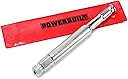
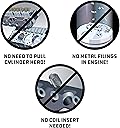
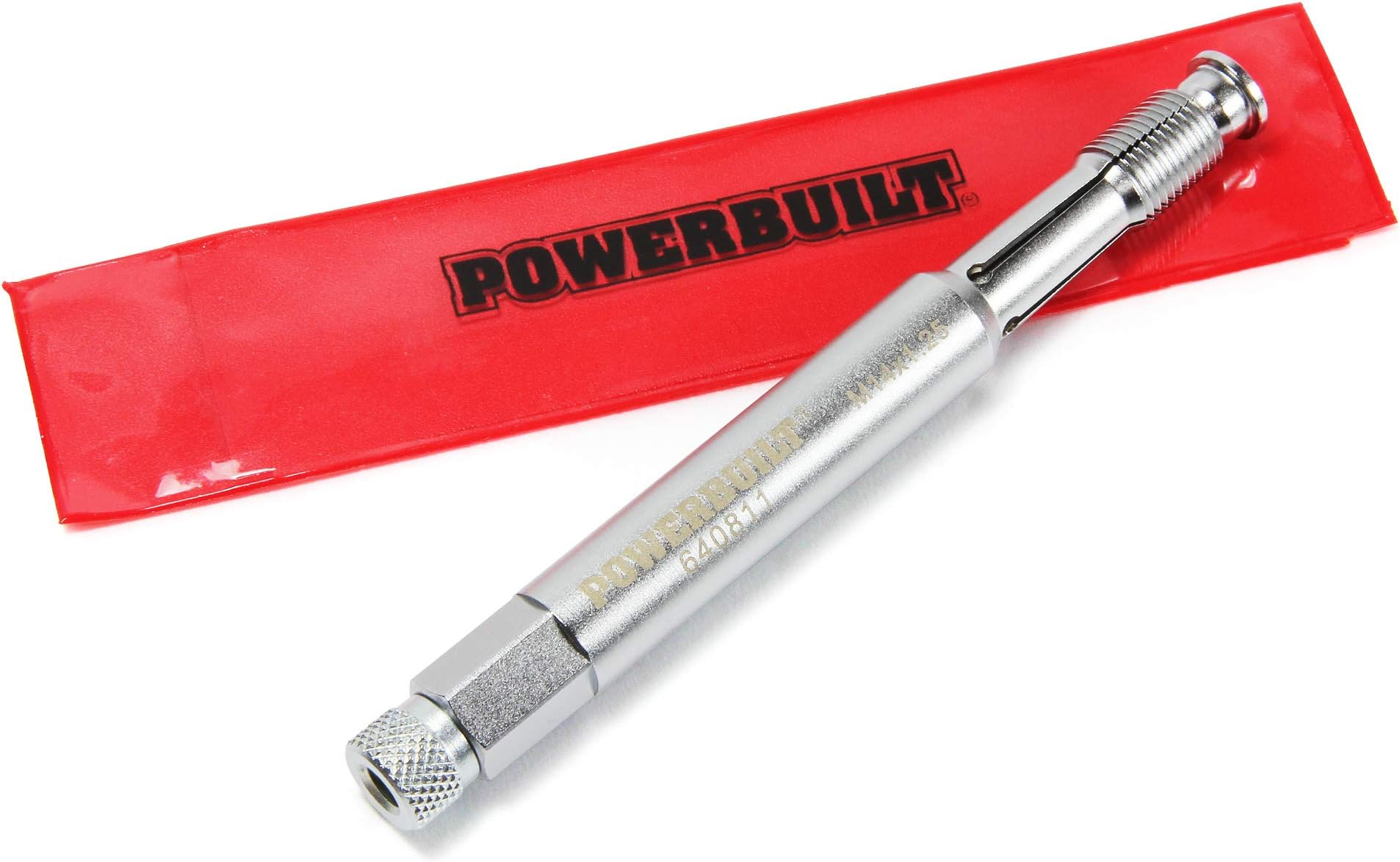
The Powerbuilt 14mm Back Tap Spark Plug Thread Repair Tool is a patented, collapsible device designed to restore damaged spark plug threads efficiently. Made from heat-treated 4118 steel and meeting ANSI standards, it repairs fouled threads without removing cylinder heads, saving time and preventing debris from entering the engine. Compact and durable, it’s an essential tool for motorcycle and automotive professionals seeking reliable thread repair.


| Manufacturer | Powerbuilt |
| Brand | Powerbuilt |
| Model | Back-Tap Thread Repair To |
| Item Weight | 5.6 ounces |
| Product Dimensions | 4.79 x 9 x 1 inches |
| Item model number | 640811 |
| Is Discontinued By Manufacturer | No |
| Manufacturer Part Number | 640811 |
H**R
This thing works! Great tool!
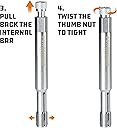
I was hesitant to order because there were some negative reviews, but since I'd already stripped the threads in my generator's engine and needed something, I went with this one. And it worked perfectly. If you want great results, take your time and play with the thing. Learn how it works. Snap it fully open, pop it closed again, slowly open it, all that stuff. Work with it. First of all, you want to make sure it works before you put it in your engine; if those expanding thread pieces are going to break off (like one review said), then you definitely want that to happen OUTSIDE your engine! But you want to play with it to see where the knob engages, where the expanding plunger stops spinning and starts gripping and spreading the threads outwards, etc. Second, do NOT put grease on the expanding plunger. You need friction there, you want it to grip the inside of the expanding thread "leaves" or whatever you want to call them. Grease up the threads plenty, you need that grease, but don't put grease where it can get on the inside of the leaves. Third, go slow, take your time, and as you're removing it and cutting new threads, if it suddenly gets a whole lot harder to turn, don't just force it through. Back it off a little. Reverse it and thread it back in maybe 1/4 turn, and then reverse it again and try removing it again; you will probably find that it works smoother the second time it traverses that same spot. What's happening is that as it's cutting new threads, chunks of metal are getting caught in the threads and binding up. You don't want to just force your way through that. By reversing and backing up, it lets those chunks of swarf get caught in the gaps between the four expanding "leaves", getting them out of the way of the threads, so it's much smoother to remove the second time you try to pass that same section. Fourth, go in a few passes. Don't expand it fully the first time you try it! Do like the instructions say, expand it some for the first run but not all the way. For my first run I tried to make the grooves between the leaves basically parallel, so the threads were pretty much even over the whole tool. Remember how many turns of the screw it takes to get it to that size. Then minimize it, grease it up, put it in, expand the leaves to that same size by backing the screw out to that same size, and extract it slowly from the socket. Then clean it up, get all the grease off it (especially between the leaves, where most of the swarf will be), and then split the difference between the expansion size you had (where the grooves are parallel) and the fully-expanded size. Find that middle ground, remember the number of turns of the knob necessary to get it to that size, and then minimize it, grease it, etc, same a the first pass. Then clean it off and grease it up and get ready for the final pass. Put it in the hole, hold the tool down with a wrench of the right size, and yank the rotating knob as far out as it will go so the leaves snap fully open, and then extract it once again, backing off when encountering higher resistance and then going forward again. Once you get it fully removed that third time, you should have perfectly functional threads again in the spark plug hole. I can tell you I did. For getting rid of the grease, I used the red can of Brakleen (chlorinated), and it washed the tool spotless. I hope to never use it again, but am very glad I have it. Really saved my neck (and my generator).
H**O
Works Well For Its Purpose
Works well for what it's made for. Understand this is not designed to re-tap super damaged threads. It's more for chasing and possibly repairing minor damage to sparkplug threads. Saving the original threads vs helicoils is always better because helicoils will fail and are never as good in terms of longevity. Also, to install helicoils, you have to thread in new bigger threads first and depending on the spacing of the sparkplug holes in the cylinder heads, that is not always possible. Have the piston at bottom dead center and insert tool. Once tool threads are all the way through, expand the tool and chase the sparkplug threads from the inside towards the outside of the sparkplug hole. This design prevents trash, debris, and other foreign objects from going inside the combustion chamber during the thread chasing and possibly causing problems/damage in the future.
T**E
Worth every penny!
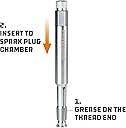
This little tool is worth it's weight in gold! Had a JD mower come in with a cross threaded spark plug hole. This tool goes in with some grease to collect any shavings and lubricate. Make sure it's straight. You can feel when backing it our when it engages the threads by hand, and it will turn smoothly. Gradually tighten the screw and back it out by hand until it starts to get tight on the damaged threads. Use a wrench and gently bring it out. Takes about 3 times, each time adding a little more tightness. when you have the tool fully engaged, it wont tighten up anymore, you should still be able to back it out by hand until it gets to the damaged threads, then work it back and forth gently with a wrench. It'll take some time. Don't force! It is doing it's job. You will feel it getting easier each time you turn it back and forth. After you have it out, clean up and hand start your spark plug and you can tighten up to the gasket by hand, then snug properly with a socket. Done! This is a very good tool, works well. Note: Just don't get too much grease on the cone shaped wedge that expands the threads. It needs some friction in order to tighten up and expand the cutters.
D**R
A life saver!
I didn't know such a tool even existed until I luckily talked to an auto machinist who told me about this type of tool. I thought I was going to have to pull the (cast iron) head after I started a spark plug wrong due to space restrictions and component interference at that particular plug...then stupidly thought the plug was threaded properly when I went back and tightened it with a ratchet. That only completely cross-threaded the first two lead threads. I discovered my mistake a few months later when that plug finally blew out of the head. I was going to try to get lucky with a 14 mm x 1.25 tap to hopefully clean up the lead threads enough so I could install a new plug (knowing this probably wouldn't work, but I had to try). I went to the local auto machine shop to see if there existed some kind of an adaptor that would allow me to use a ratchet on the tap since there wasn't enough clearance above the frame to use the large tap handle needed for this size tap. That's when the head machinist put me onto this tool. They even had another brand of the tool in stock at the associated parts store, which I purchased...for $91 including tax. Later on I Googled 'back tap thread repair tool' and found that Amazon carried a different brand of the same thing which normally retailed for $40 but was on sale for $20 plus $5 S&H and no tax. So I took the $91 tool back and bought the other brand from Amazon. Loosely following the directions, the tool worked like a charm. Two passes through...the first slightly loose and the second with the cutters expanded all the way...and I was able to start a new plug (I had to play with it just a bit to get it in the new groove) and smoothly screw it in all the way to the seat by hand, and then use a wrench to do the final tightening. Problem solved without pulling the head. I had to pull the intermediate steering link to make room to work the tool...which had I done to begin with I wouldn't have started the plug wrong in the first place. Laziness! One word of caution though...you need to have sufficient good threads at the bottom end for this tool to work and also to retain the plug. If the entire length of the hole is cross-threaded (or if there are insufficient good threads remaining) such as might be the case with an aluminum head, this tool will do you no good. In that case you would have to drill and re-tap it for an insert or helicoil. But it's well worth the price to have it in your toolbox just in case. Might save you a big repair bill or a heck of lot of work.
C**N
Good in a pinch
This is a good tool for the money. If the threads for your spark plug are chowdered up, you basically have three options: a new head (rarely needed), drill out and tap the head for a helicoil (probably the best option), or chase the threads. If you make sure that you can clear the piston when using this tool, and clean up any debris before you install the spark plug, this works as a good, comparatively quick, low cost first option. If you've only got half (or less) of the threads left, you can at least use this to install a plug for a drive to the mechanic for a proper helicoil insert, saving $100 on a tow bill. The only "flaw" I noticed when using the tool is that once it's greased up, the center rod that pulls in the cone shaped plunger wants to spin so it was impossible to fine tune how deep the threads cut. The only way I could get it to tighten was to just fully pull back on the knurled nut, tighten it down as good as possible, and chase the threads in one pass. I got lucky and it worked out. I would like to see something like a slot in the rod with a roll pin to keep it from spinning, but considering it did the job I can't complain too much. The only other issue I had was with the length of the tool, and that was only a minor issue for my situation. Because of the location of the spark plug hole it was difficult to maneuver to tighten the nut with the tool fully inserted. 2-3 more inches would have really been helpful (true on many levels). I was eventually able to mess around with some long handled needle nose pliers to get it set (also true on...). Had I been working on a spark plug near the firewall I don't think this tool would be long enough to work.
T**W
Got the Job Done
I have a Dewalt power washer with the Honda engine spark plug hole tightly recessed between the muffler, air cleaner, and OHC valve cover. The valve cover is so high vis a vis the spark plug angle, it's impossible to use a ratchet socket wrench to remove or tighten the spark plug. Nice design Honda! I ended up cross cutting the spark plug hole threads, as I hadn't noticed the issue when changing the spark plug the first time. I heard about this tool on YouTube and read the reviews on Amazon. Mark C.'s review was especially helpful in its cautions and steps to use. I received the tool today and went to work. I removed the air cleaner cover to give me more room. When I attempted to also remove the muffler cover, two of the screws (one top screw and one side screw) would not come out. Plan B would have been to completely remove the muffler from the engine block, but I wasn't going there, so the muffler cover stayed on. Thanks Honda! Following the instructions on the package and the guidance provided by Mark C., I greased up the tool threads and slowly expanded the tool threads as I inserted, removed, inserted, removed, etc. the tool. I made 5 trips up through the threads until I had completely expanded the tool threads. I never tried to "torque" the tool as it was rethreading the hole. When it felt some resistance, I just jiggled the tool around a bit to get past the resistance. The spark plug hole threads looked pretty good after the fifth time, so as final step, I made one last insertion and removal starting at the outside of the hole, screwing the tool in, and then unscrewing it.... which is the reverse of how the tool actually works to rethread the hole. The tool threads screwed in and out without an issue, so it was time for the spark plug. I hand tightened the plug a few revolutions and then used long reach dual pivot needle nose pliers to screw the plug in until it was fully inserted into the hole. As I final step, I was then able to give the spark plug a final snug fit with ratchet socket wrench. I replaced the air cleaner cover and we were ready for launch. The engine fired up on the third pull and worked just fine. As for the tool, the company could expand on the directions as I found Mark C.'s guidance more helpful. Putting a company-developed video on YouTube wouldn't hurt! I would also suggest the tool turn knob that is rotated to expand the threads inside the engine could be better designed to be turned in tight spaces. I had to use normal size needle nose pliers to rotate the knob. Finally, remember to grease the tool threads on each insertion into the engine block .... and then clean it off after the tool is removed from the hole. Keeping metal shavings out of the cylinder seemed like a good idea..... Nice tool!
B**J
Works!
This tool worked. Top two or three threads on a VW Beetle were stripped. Normally you have to drop the engine to repair the threads. Followed directions and it wasn’t working. The post that gets pulled into the tool to expand the cutters just kept spinning and the would not expand to cut. Frustrating. They need to design that rod so it can’t spin. So pulled it out of cylinder, unscrewed the tool to release the rod. Wrapped the rod once with thick electrical tape. Shoved the rod and the tape back into the tool and tried again. My redneck tool modification worked. Ran the tool three times - last time used pliers to tighten the nut 1/4 turns twice for a good Final Cut. Worked great. Slowly massaged the new spark plug and it seated perfectly. This saved me 100s of bucks and many hours of labor.
J**Y
This is an awesome tool glad I found this
I'm doing this comment today to help others after reading all the bad comments. I bought a 2007 Ford Ranger with 200k miles on it. Back some 100k miles ago someone replace the spack plugs did ok with the first 3 plugs but the 4th was badly crossed into the head. See first pix the rusted plug is #4 . What a mess it was leaning to one side so the wire wouldn't plug all the way into the valve cover. The engine is a 2.3l DOHC inline 4 cylinder engine. First off is you have to bring the piston up to top dead cylinder just #4. See 2nd pix. I didn't have much room to work with. I used infor from a Mark C. and cut a slot in the top of the shaft just enough to catch with a pocket screw driver. I counted the turns 5 1/2 complete turns from bottom to all tight. I lubed the threads with synthetic grease. Inserted to tool all the way and tighten the nut 1 1/2 turns extracted it slowly back and forth 1/8 movement until it came all the way out of the cylinder turning counter clockwise. Clean lube and loosen tool reinsert into the s-p hole with more grease. Tigthen 3 complete turns and slowly extracted. Repeat third time at 5 1/2 turns counterclockwise till it came out of the hole. Then I chase with my second s-p chaser by hand to check ease of turning. Installed #4 spark plug. See third pix tools still like new. Repeat 1, 2 and 3 with my second chaser by hand now all 4 spark plugs goes in correctly. Done. The tool was not easy to use. The shaft Is to short even tighten all the way doesn't come thru the nuts. The shaft needs to be longer maybe 1/4 inch. Then the tool should be offered in two sizes an inch shorter for those tight places and maybe 2 inch longer for those 4 valve cylinder you know the dual cam heads. If it was longer then maybe I wouldn't have to remove the valve cover, intake and all that I had to remove to use this tool. Then I can't use a socket on because it wouldn't go over the nut. Had to use an open end wrench at an angle to turn the tool. jesss On cast iron heads this tool may not work well. Recommend 1/2 turn of the nuts of the shaft at a time with 7-8 pass thru. The key is working slowly. Anyway what worked for me may not work for you. I'm so glad I found this tool. It saved me from pulling the head and I feel that on the next tune up everything will be just fine. I was scared to use this tool because of all the negative comments. Now that I'm done I'm glad that I gave it a try. So worth the money I suspect those others should not be working on engines. Can't be forced have to work it slowly.
Trustpilot
2 weeks ago
2 weeks ago