We remain fully operational. Our teams are working around the clock to ensure your deliveries continue safely.

DOWNLOAD THE APP


Customer Services
Copyright © 2025 Desertcart Holdings Limited
DOWNLOAD THE APP
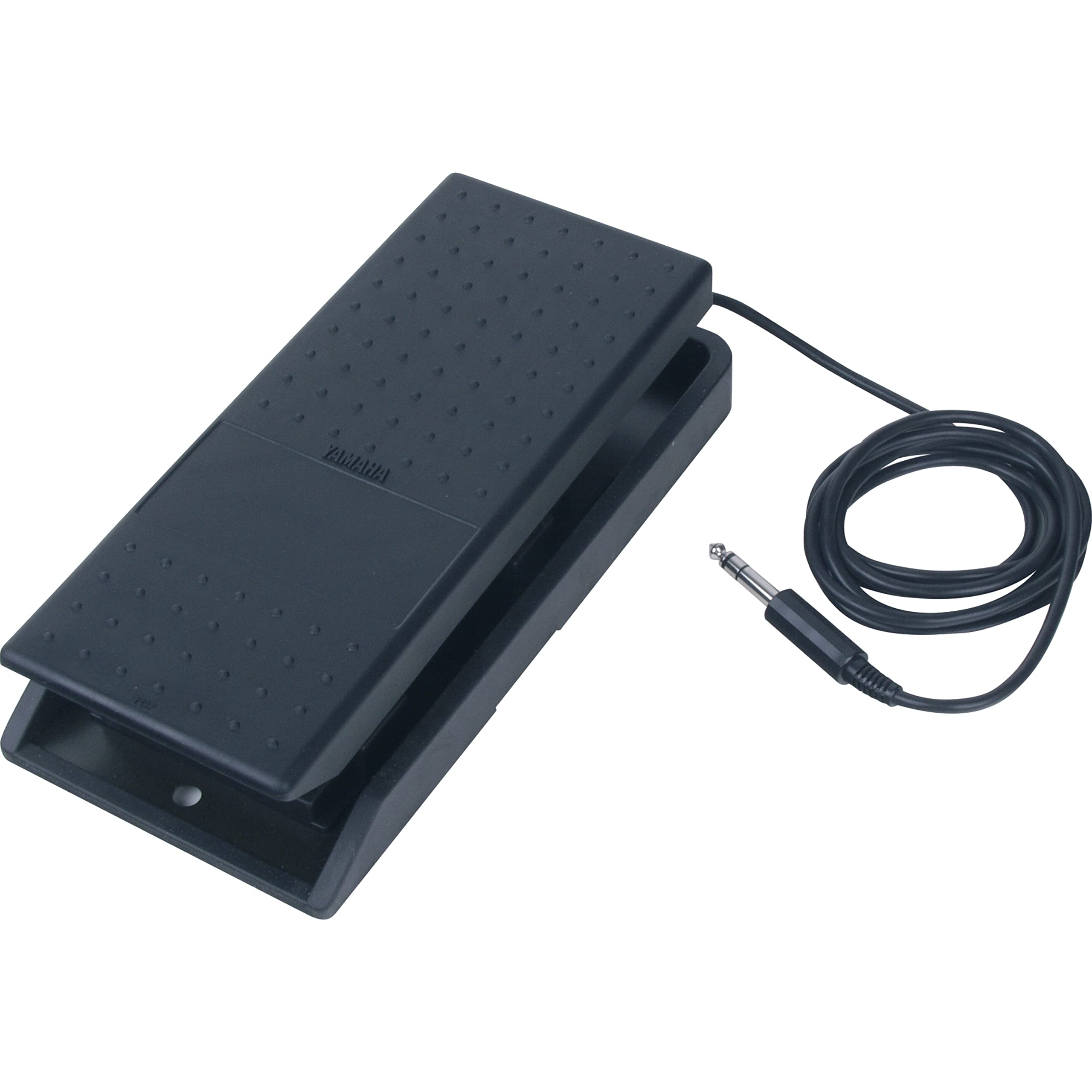
🎹 Elevate your sound with every step — the FC7 pedals your passion forward!
The Yamaha FC7 Volume Expression Pedal is a professional-grade, heavy-duty foot controller designed for precise volume and effect modulation. Featuring an adjustable pedal angle, spring tension, and a metal connection plate for multi-pedal setups, it offers tailored comfort and robust durability. Compatible with a broad range of Yamaha keyboards, the FC7 delivers seamless plug-and-play performance with a 5-foot cable and 1/4" phone jacks, making it an essential tool for expressive musicians seeking dynamic control on stage or in the studio.











| ASIN | B000UJHIS8 |
| Batteries | 1 Unknown batteries required. |
| Best Sellers Rank | #1,893 in Musical Instruments ( See Top 100 in Musical Instruments ) #16 in Keyboard Pedals & Footswitches |
| Body Material | Metal |
| Brand | Yamaha |
| Color | 1 Year |
| Color Name | 1 Year |
| Connector Type | 1/4 Inch (6.35mm) Audio Plug |
| Customer Reviews | 4.6 4.6 out of 5 stars (1,394) |
| Date First Available | December 1, 2004 |
| Global Trade Identification Number | 00086792581941, 04957812459440 |
| Hardware Interface | 1/4-inch Audio |
| Is Discontinued By Manufacturer | No |
| Item Weight | 1.5 pounds |
| Item dimensions L x W x H | 10.75 x 5.25 x 2.75 inches |
| Item model number | FC7 |
| Manufacturer | Yamaha Corporation of America |
| Material | Metal |
| Material Type | Metal |
| Number of Items | 1 |
| Product Dimensions | 10.75 x 5.25 x 2.75 inches |
| Signal Format | Analog |
| UPC | 086792311944 086792581941 |
| Unit Count | 1.0 Count |
| Voltage | 9 Volts |
L**.
Works perfectly on my Hammond XK-1, using default settings. P-n-P.
My used Hammond XK-1 didn't come with a volume pedal. Or a Leslie foot switch for that matter. I can recommend getting a Yamaha FC-4 foot switch for Leslie and another one for piano sustain pedal. Those are nice, and that's what made me consider another Yamaha product for this expression pedal, which I have missed. There was of course a lot of differing opinion, Hammond v Yamaha v Korg etc. That's how these things go. I was a little puzzled by some reports of the pedal range being fast or slow or touchy. I need not have worried about that, and since I could see only one other Hammond mentioned in these reviews I thought I had better write something. It works great. I just replaced my main board battery which died accidentally, due to longer than normal inactive storage. It wasn't low, it was 100% dead and no volts. All presets got reset to factory values, and the whole instrument went back to default-everything. When I plugged in the FC-7 it worked perfectly, immediately. Right outta the box. Case closed. If you are controlling your Hammond XK-1 by the panel volume knob, you really need one of these. Instructions on how to interface it: Open box, plug it into the little hole back there. If that fails somehow, your default foot controller settings may have gotten changed. There is more info below, specific to checking that on the XK-1. If the FC-7 doesn't work perfectly on the first try. The FC-7 is heavy duty, rubberized, of substantial construction and then some, and has a nice spring detent at the full volume position so you don't hit a hard stop when you are maxxed out. Yeah, you can adjust the instrument gain settings so detent is actually about 90% of full volume, and then you have an extra 10% boost whenever you push it beyond the spring detent. But I just prefer simple. Cord storage is under the toe end, wrap it around the small reel and 1/4 inch plug-holder down under there. I haven't tried the Hammond original equipment pedal because I didn't know if it was worth the premium price, but this one is more like it. Now I know how much I missed the foot pedal. The FC-7 is a nice piece of equipment, and a suitable addition to the outfit. Happy I bought it. ===== The remainder of this is info specific to the Hammond XK-1. It may help if you can't understand the manual... it is very difficult for me, as it was written with Japanese sentence construction. Of course the English is very good, it's just that I find I can read the words and it takes me a while to decipher what it really said. If your pedal is jumpy or too fast, you may need to restore your default settings, listed here: Menu Button, #4, up, up. (The up key is numeral 8) Source = Pedal (Normal) (This is the default setting. Spin the Value knob if you need to change it.) (There is a Monitor Value displayed next. Mine runs smoothly from 0 to 127, when operating the pedal with defaults. Check yours here.) Right, right, right, right. (The right key is the numeral 2) LEVEL shows minus 35, the default value. (Spin the Value knob if you need to change it.) LF LIMIT shows minus 20, the default value. HF LIMIT shows minus 30, the default value. Gain shows 110%, the default value. Push the Exit button, then Play button. For the Yamaha FC-4 Leslie foot switch, that is a tip/sleeve plug. (I call it a mono 1/4" phone plug.) The default foot switch settings work for me. But note that there is a second set of settings provided for a different plug, and the unused settings must be disabled. (The default is, both types are enabled!) Menu Button, #4, up, up, up. MODE, TIP: LESLIE S/F= ALT (This is the default for alternating operation. Push for fast, push again for slow.) Next, go cursor-right one more step. MODE, RING: Twirl the Value knob to say OFF. Push the Exit button, then Play button. If you somehow have a foot switch that is a Tip/Ring/Sleeve type (I call it a stereo 1/4" phone plug) then I believe you need to reverse both values. That is, MODE, TIP should be switched off and the MODE, RING should say LESLIE S/F = ALT. I don't have a weird plug to check that with, but the idea is to choose one and disable the other. So you definitely don't want both plug mode types to be enabled at once. You can still get it to work by pulling out the plug very slightly and playing with it, but that doesn't seem like such a great operating idea.
E**A
Cool sweep pedal!!
A must have if you need to add foot expression to your rig. Just plug and play easy to use. Hard construction, feels solid and good value for the money. It worked perfect for my KRONOS 2. Very recommended.
J**S
Worthy of all the positive reviews
The Yamaha FC7 is a very nice expression pedal that will replace my Moog EP3.. The FC7 is very well designed and built, very sturdy with a good weight...It stays in place and feels very solid underfoot. The 30 degree throw angle offers very smooth and accurate transitions. I find it very easy to make smooth and precise changes to both volume and synth parameters without over or undershooting what I am aiming for. I play standing and the option to adjust the throw limits for that position make it very comfortable in that position. Why is it replacing the Moog EP3? The Moog is a very nice pedal as well...solid build, smooth operation, stays put, removable (replaceable) cable. Where it loses out the FC7 for me is its tread size, overall height and throw angle. With the tread in the horizontal position the FC7 height is 2" where the Moog is 3.5", so your foot is much higher off the floor than the foot bearing your weight. The Moog tread measures 8" x 3" where the FC7 tread is 9.5" x 3.75" which my size 12 feet vastly prefer. Finally, the throw angle of the Moog is quite a bit less than the 30 degrees of the FC7. I find it much easier to make smooth transitions and accurate adjustments with the FC7. If you value fast action over precise adjustment and have smaller feet the Moog may be perfect for you. I do have a few nit-picks with the FC7 - First, the cable is permanently attached to the pedal. I would really prefer a jack and a separate cable both for repairability and reliability. Second, there is no polarity switch, something almost every other pedal on the market, including the Moog, has. Why? I have no idea other than stubbornness on the part of Yamaha. In order for the FC7 to work properly with my Arturia Keylab 61 MKII I had to construct a short dongle that swapped the ring and tip leads thus reversing polarity. Easy enough, but not as easy as flipping a polarity switch. It is likely easy to open up the pedal and re-solder the cable switching the tip and ring leads, but then it is permanently in that configuration and won't work with keyboards requiring a standard tip/ring config. I choose to retain both options by using (or not) the dongle. So in the end, I consider the FC7 superior to the EP3 for my purposes. It is also (usually) slightly less expensive.
S**Y
Very sturdy and reliable, with some caveats.
The construction of this pedal lives up to its reputation. It's heavy, and built like a tank. The movement is very smooth, and I expect it will work perfectly forever. My only complaints are that it's wiring is incompatible with Kurzweil and some other brands, requiring a special polarity reverser. For something this well-made, it's surprising they didn't include a polarity switch. Also, with certain patches I can't get to full silence, so I suspect the MIDI output never actually reaches zero. Still, it's a cut above any other pedal I've tried.
R**R
Pump up the volume!
Durable product, well-made, looks great, works easily, thank you!
C**D
Great keyboard companion
Good weight and feel for Organ and strong parts
M**U
Good
R**R
I used to own similar item many years ago.perform well as expected. I am happy and satisfied.
R**M
Bom pedal, cumpre o que promete mas achei a inclinação muito forte para quem toca sentado. Acho que tem jeito de regular. O preço é que é meio salgado, pois a maioria das funções que existem no SX600, podem ser feitas com um pedal FC5 que é bem mais barato.
M**E
Nach jahrelanger Arbeit mit dem M-Audio EX-P und dem Akai Expression Pedal, wollte ich mal ein bisschen mehr investieren und habe mich für das Yamaha FC-7 entschieden. Das Ding geistert ja schon seit gefühlten vierhundert Jahren durch die Musikerwelt, vermutlich hat schon der olle Bach das Schwellwerk seiner Hauptwerk-Software damit gesteuert... ;) DIE QUALITÄT Seinen Ruf als unkaputtbarer jahrelanger Begleiter hat das Pedal zurecht, es wirkt alles sehr wertig und extrem stabil. Das Kabel ist fest dran und lässt sich nicht abnehmen, was natürlich nervig wird, wenn es mal beschädigt ist, aber auf der anderen Seite einem nervigen Wackelkontakt durch eine beschädigte Buchse vorbeugt. (Mein Spezialgebiet *hust*) Auch, wenn das bedeutet, dass man das Kabel nicht so einfach transportieren kann, gefällt es mir so besser. Das Kabel ist 1,5m lang, wem das - wie mir - zu kurz ist, der kann einfach ein Stereo-Verlängerungskabel dranhängen. Die Unterseite ist gummiert, zusammen mit dem ordentlichen Gewicht des Pedals sorgt das dafür, dass es definitiv da bleibt, wo man es abgestellt hat. Ich verwende es auf ziemlich rutschigem Parkett - kein Problem. Das Gewicht liegt nicht zuletzt an der imposanten Größe; auf diese breite, leicht genoppte Auflagefläche passt mein Fuß auch mit fetten Biker Boots noch sehr bequem drauf. DER EINSATZ Im Gegensatz zu meinen bisherigen Pedalen hat das FC-7 einen viel längeren Regelweg - nach allem, was ich so gelesen habe, wohl sogar den längsten aller Pedale auf dem momentanen Markt. Das heißt, man hat genug Spielraum, um Parameter wirklich gefühlvoll und präzise ansteuern zu können. Der Widerstand ist sehr angenehm, genau richtig; man bekommt schnell ein gutes und sehr organisches Spielgefühl - es macht einfach Spaß mit dem Ding! Für Gitarristen, die ein wah-wah Pedal suchen, könnte der lange Regelweg aber ein Kontra-Argument sein, auch, weil sich ein flacheres Pedal im Stehen deutlich angenehmer spielen lässt. Allerdings lässt sich das Pedal mittels Schrauben an der Unterseite ein Stück auf die eigenen Bedürfnisse anpassen, besonders toll finde ich hierbei die Fortissimo-Funktion: Dabei regelt das Pedal nicht, wie sonst von offen = 0 und zu = 127 des gewünschten Parameters , sondern stoppt im geschlossenen Zustand, je nach Einstellung, zB schon z bei 119. Übt man dann weiterhin ordentlich Druck auf das Pedal aus (in etwa so, als wolle man bei einem Keyboard Aftertouch aktivieren), gibt die Federung nach und man hat Zugriff die höchsten Werte (In meinem Beispiel: 120 - 127) Geiler Scheiß! ;) DAS PROBLEM Ich verwende das Pedal an einem Novation SL61 Mk3, einem Roland FP-90 und dem BeatBars Adapter E&F2M, bei allen drei Geräten hatte ich das gleiche Problem: das Pedal sendete nicht linear. Auf dem ersten Viertel des Regelwegs schossen die Werte blitzschnell bis etwa 90 hoch, der Rest verteilte sich auf die anderen drei Viertel, wo es dementsprechend viel langsamer wurde. Dieser Sprung machte das Pedal eigentlich komplett unbrauchbar. Nachdem Yamaha und Roland bekanntermaßen ganz gerne ihre Produkte spezifisch gegen eine Verwendung mit Geräten des jeweils Anderen entwickeln, war ich mir schnell sicher, dass hier ein Kompatibilitätsproblem und kein Hardware-Fehler vorliegt. Und in der Tat: das Ding ist für manche Keyboards falsch gepolt. Beim Sustain-Pedal kennt das vermutlich jeder: Ist die Polarität verkehrt herum, wird der Ton dauerhaft gehalten und unterbrochen, wenn man das Pedal drückt. Beim Expression-Pedal scheint dieses Phänomen allerdings etwas komplexer zu sein (irgendwie auch logisch) und hat nicht zur Folge, dass das Pedal einfach bloß andersrum funktioniert, sondern eben unregelmäßige Parametersprünge fabriziert, Die meisten Sustain-Pedale haben einen Polaritätsschalter für dieses Problem, das FC-7 nicht. Wat nu? DIE LÖSUNG ... ist zum Glück super einfach. Theoretisch ließe sich das wohl recht simpel löten, allerdings habe ich zwei linke Hände und hätte das Pedal natürlich nicht mehr zurückgeben können, wenn ich es vermurkst hätte. Bei BeatBars selbst bin ich dann auf einen Adapter gestoßen, der die Polarität umkehrt und explizit damit beworben wird, dass er die Verwendung des FC-7 mit dem E&F2M möglich macht. Kostet 21 EUR, ist unter dem Namen "TRS Polarität Adapter" u.a. beim Musicstore oder BeatBars direkt zu finden und funktioniert einwandfrei; nicht nur mit BeatBars' eigener Hardware, sondern auch an meinem Roland FP-90 und dem Novation SL61. Interessanterweise war das aber weit und breit der einzige die Polarität umkehrende Adapter, den ich gefunden habe. Warum das nicht mehrere Hersteller anbieten, ist mir schleierhaft. FAZIT Mit dem Pedal könnt ihr wirklich nichts falsch machen, es ist stabil, besonders präzise, individuell anpassbar und wird euch mit Sicherheit viele Jahre als treuer Begleiter dienen. Selbst, wenn eure Keyboards umgekehrt gepolt sind, gibt es simple Abhilfe. Ich habe mein FC-7 übrigens als Super-Schnäppchen für nur 56 EUR mit der Beschreibung "gebraucht - akzeptabel" gekauft und konnte ehrlich gesagt beim Besten willen keine Gebrauchsspuren erkennen. Nur so als Tip ;) Schnappt es euch und habt Spaß!
A**A
Büyük kolaylık. Her klavyeciye kesinlikle şart.
Trustpilot
2 weeks ago
1 month ago