
DOWNLOAD THE APP


Customer Services
Copyright © 2025 Desertcart Holdings Limited
DOWNLOAD THE APP

From the brand Manning is a publisher of computer books, videos and projects for software developers, engineers, architects, system administrators, managers and all who are professionally involved with the computer business. We also publish for students and young programmers, including occasionally for children. How we get our start? We published our first book in 1993 and have been learning from our successes, and even more from our mistakes, ever since. Every new book teaches us something that helps us improve. What makes our products unique? "Independent" means we are not owned by a large corporate entity and are free to make our own decisions. This has allowed us to innovate and be flexible and to quickly adjust what we do as we go. What do we publish? We publish standalone titles as well as a number of book series. How we get our start? We published our first book in 1993 and have been learning from our successes, and even more from our mistakes, ever since. Every new book teaches us something that helps us improve. What makes our products unique? "Independent" means we are not owned by a large corporate entity and are free to make our own decisions. This has allowed us to innovate and be flexible and to quickly adjust what we do as we go. What do we publish? We publish standalone titles as well as a number of book series. More from Manning Visit the store More from Manning Visit the store In Action Books Introduces new technologies to working technical professionals. Typically intermediate level. In Action Books Introduces new technologies to working technical professionals. Typically intermediate level. In Practice Books Cook-book-style references, generally organized in order of difficulty. Typically intermediate level. In Practice Books Cook-book-style references, generally organized in order of difficulty. In Depth Books “second” books on technical topics that cover key areas a greater levels of depth and detail. Typically intermediate-advanced level. In Depth Books “second” books on technical topics that cover key areas a greater levels of depth and detail. Typically intermediate-advanced level. In a Month of Lunches Books Introduces core technical topics via a series of small lab-based lessons that should each take about 30-45 minutes to complete. In a Month of Lunches Books Introduces core technical topics via a series of small lab-based lessons that should each take about 30-45 minutes to complete. Grokking Books Tutorials with a graphical teaching style designed to offer a deep understanding of a technologies foundations. Grokking Books Tutorials with a graphical teaching style designed to offer a deep understanding of a technologies foundations. Get Programming Books Structured tutorials built around hands-on exercises and progressively more difficult capstone projects Get Programming Books Structured tutorials built around hands-on exercises and progressively more difficult capstone projects Bookcamp Books Collections of 6-10 medium-sized projects similar to what a reader will face on the job. Typically intermediate level. Bookcamp Books Collections of 6-10 medium-sized projects similar to what a reader will face on the job. Hello! Books Designed to be a gentle first book on a technical topic. Beginner level. Hello! Books Designed to be a gentle first book on a technical topic. Beginner level. Review: Absolutely excellent in depth practical explanation - It's been years since I read a software book cover to cover, methodically. This one is well worth a second or third read if you are interested in Tensorflow and Keras or neural networks in general. His crumpled paper analogy early on alerted me to the intuitive depth of this book. You do need just enough understand of linear algebra to appreciate what a vector space is to fully appreciate this analogy (this is not as hard as it sounds either, I promise. If you can do the first few videos on Khan Academy for linear algebra or half hour with a good tutorial, you'll be more than fine). He avoids too much reliance on equations as the means of explanation, which for me, with barley enough linear algebra to tell a dot from a cross product, is great. To be clear, it is best (in this whole field actually) if you understand differential calculus sufficient to appreciate the result of the power rule is a function not a number, and the afore mentioned linear algebra. If you spend an hour assuring yourself you can at least vaguely grasp this, then the more involved explanations will be very straightforwards. I emphasise this aspect because it's my own weakness - I have to work to focus on simple equations. To make simple to intermediate models, following this book you still won't need much, if any depth of the maths skill, so don't let my mention of it out you off. It's a great solidly practical and wide ranging exploration of doing many tasks with deeplearning. I recommend it with the Coursera developer certificate from DeepAi to any total beginner in neural networks. Python knowledge needed? I've coded with Python for approximately ten hours of actual experience but I am a software developer. So either good experience in other languages or the ability to work with simple python constructs and classes. A beginners course will help suffice it if you really don't have either. The second book pictured is also excellent, worth taking in when you've gotten halfway through this one. The author recommends it and he's absolutely right. Review: Clear Explanation of Concepts, but Keras May Not Be the Best Choice - To me, this book is great—it clarifies the concepts very well. However, it would be much better if it used PyTorch instead of Keras.






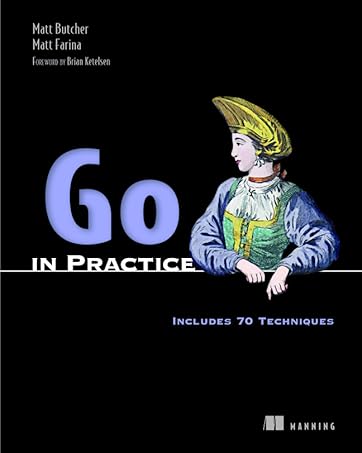


| Best Sellers Rank | 347,743 in Books ( See Top 100 in Books ) 443 in Introduction to Programming |
| Customer reviews | 4.7 4.7 out of 5 stars (440) |
| Dimensions | 18.73 x 3.3 x 23.5 cm |
| Edition | 1st |
| ISBN-10 | 1617296864 |
| ISBN-13 | 978-1617296864 |
| Item weight | 1.07 kg |
| Language | English |
| Print length | 400 pages |
| Publication date | 7 April 2022 |
| Publisher | Manning Publications |
S**E
Absolutely excellent in depth practical explanation
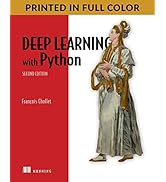
It's been years since I read a software book cover to cover, methodically. This one is well worth a second or third read if you are interested in Tensorflow and Keras or neural networks in general. His crumpled paper analogy early on alerted me to the intuitive depth of this book. You do need just enough understand of linear algebra to appreciate what a vector space is to fully appreciate this analogy (this is not as hard as it sounds either, I promise. If you can do the first few videos on Khan Academy for linear algebra or half hour with a good tutorial, you'll be more than fine). He avoids too much reliance on equations as the means of explanation, which for me, with barley enough linear algebra to tell a dot from a cross product, is great. To be clear, it is best (in this whole field actually) if you understand differential calculus sufficient to appreciate the result of the power rule is a function not a number, and the afore mentioned linear algebra. If you spend an hour assuring yourself you can at least vaguely grasp this, then the more involved explanations will be very straightforwards. I emphasise this aspect because it's my own weakness - I have to work to focus on simple equations. To make simple to intermediate models, following this book you still won't need much, if any depth of the maths skill, so don't let my mention of it out you off. It's a great solidly practical and wide ranging exploration of doing many tasks with deeplearning. I recommend it with the Coursera developer certificate from DeepAi to any total beginner in neural networks. Python knowledge needed? I've coded with Python for approximately ten hours of actual experience but I am a software developer. So either good experience in other languages or the ability to work with simple python constructs and classes. A beginners course will help suffice it if you really don't have either. The second book pictured is also excellent, worth taking in when you've gotten halfway through this one. The author recommends it and he's absolutely right.
S**D
Clear Explanation of Concepts, but Keras May Not Be the Best Choice
To me, this book is great—it clarifies the concepts very well. However, it would be much better if it used PyTorch instead of Keras.
D**S
Excellent deep learning tutorial
Deep learning tutorial, excellently balanced between hands-on examples and deeper concepts explained in an intuitive, non-mathematical way. Very well structured chapters explain step by step the workflow for framing, developing and deploying a real world model. Easy to follow, uses informal language, but with great depth. Highly recommended.
M**A
Good book to have
Well-structured
Y**N
Book quality is excellent in condition
Delivered wrapped with vynil cover and good vivid colours in content
O**T
In depth and practical
Whilst a little tough to follow for a beginner (which I am), I have found this a useful entry point to understanding neural networks.
A**X
A walkthrough of his product and description of how it works without explanations
I'm on page 299 as I write this and and I'm a software engineer with a physics PhD who wanted a refresher on neural networks and to try some deep learning methods using tensorflow 2.0 on a side project I'm working on. The book starts with a surface level overview of deep learning and avoided specific computer setup information (which is fine, to some extent) but it continuined in a similar manner throughout the rest of the book. He specifically says he won't include any mathematical expressions but he also doesn't give any explanation on how it works, just surface level descriptions. I'd have expected some theory (and high quality diagrams and labelling in lieu of explaination - incl axes labels in places) but it's really just an informally written walkthrough and feels like something is missing. You end up relying on a lot of background knowledge and doing a lot of leaping yourself. Perhaps a good primer for the unitiated who don't want the detail and want something working faster than I do but was disappointed with every page turn. There's probably a good book out there that does example code with underlying theory/explaination that leaves you coming away with a better understanding (rather than just knowledge/awareness) but this isn't it. Reminds me of a bad lecture/tutorial where the guy is just trying to get through his material in too short a time period and get the mixed ability class to try the tasks and come back to him with problems. Otherwise print is of good quality, some diagrams rushed but come out well, code formatting is reasonable. Requires basic python knowledge and familiarity with numpy. For its faults, this book does give you an overview of tensorflow by exploring some methods - no prior experience needed.
J**N
Very Cheap made
This is a great and informative book and it really just gets to the point on how to start learning NN and deep learning, But the actual book itself is so cheap, they clearly have cut corners on the paper for the coloured ink, you can can see straight through to the other paper to the point you can read the next page without turning over, also the actual overall package is very flimsy and I think after a few more uses this book will just disintegrate. I wouldnt recommend buying this book if you are just going to read electronically. I however do recommend this book for its content as its brilliant. If you need to learn the mathematics side, then buy a book specific for that.
S**M
The quality of the book itself is really good. I also love the content.
J**H
It's a good book and reads well. It could use some formatting changes to make some of the content more digestible. But overall a great book.
F**.
Uno dei migliori libri in commercio di macchine learning, in particolare sul deep learning usando python e tensor flow.
O**R
Es un libro excelente, el autor explica conceptos complicados de una forma sencilla y entendible. Realmente hizo un gran trabajo de pedagogo, además estás aprendiendo del mismísimo autor de Keras, el framework más popular para machine learning. Eso sí, es importante tener conocimiento de programación y de conceptos matemáticos (cálculo, geometría, derivación, etc) ya que el Deep Learning es básicamente eso, pura matemática; vectores, matrices, operaciones vectoriales, espacios geométricos en varias dimensiones, etc. Cabe aclarar que el libro NO usa notaciones matemáticas; para darle sencillez, el autor decide usar en su lugar líneas de código que lo hacen mucho más digerible. Sin embargo, tener el conocimiento de estos conceptos te da el poder de entender lo que se está haciendo y de lo que se está hablando. PD: el libro en físico incluye todas las versiones digitales! Incluso Kindle!
R**R
Good book for Deep learning but one should know the basic knowledge of Numpy, Pandas and Data Visulaization and Machine Learning.
Trustpilot
4 days ago
2 months ago