We remain fully operational. Our teams are working around the clock to ensure your deliveries continue safely.

DOWNLOAD THE APP


Customer Services
Copyright © 2025 Desertcart Holdings Limited
DOWNLOAD THE APP
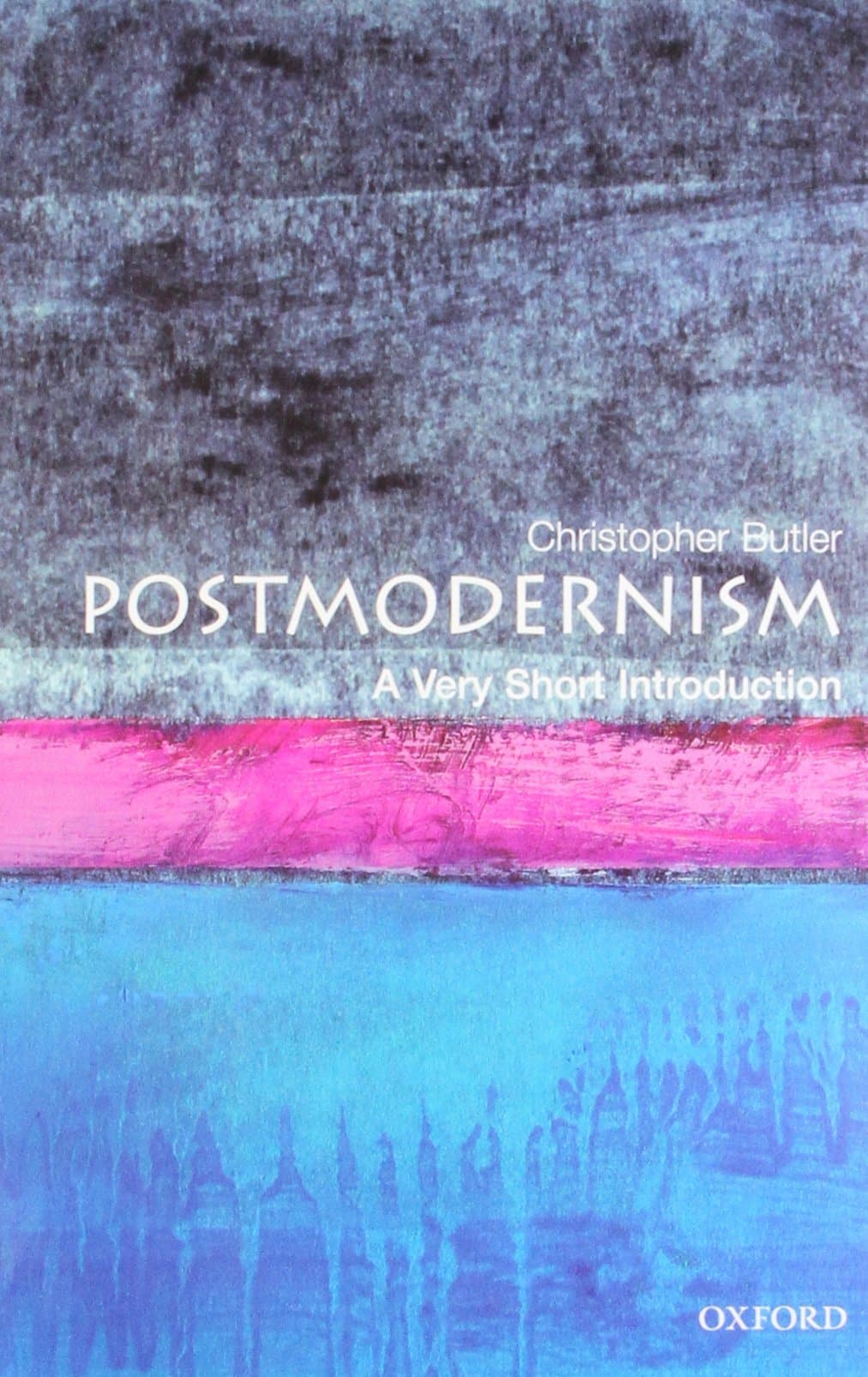
From the Publisher Review: Postmodernism Roots - This is a superb account of one tenth of the postmodern pie - the linguistic slice, originating with Saussure and flowering after WWII in the work of Levi-Strauss, Roland Barthes, Foucault, Derrida, Deleuze, Debord, Baudrillard and Yank-Yale Lit Crit proponents of the textual-semiotic thread. This is a myopic understanding of postmodernism and leads to anomalies such as Robert Venturi ( the godfather of postmodern architecture according to Charles Jencks) declaring "I am not a postmodernist". All of Butler's remarks regarding discontinuities in postmodern music can be traced to a myopic and very common misreading of noontime post WWII - mid-1960s post-colonial philosophizing as the dawn patrol. Professor Butler fails to see the much larger forest of postmodernism origins ca 1912 ( Titanic sinking symbolizing the de-throning of The Enlightenment Project). Postmodernism's origin was a colossal culture-wide phase change beginning with the paradigm shifting work of Wilbur Wright ( pitch, roll and yaw) Frank Lloyd Wright ( dynamic symmetry) Schoenberg ( atonal composition) Cezanne/Braquasso and the deconstruction of the 450 year narrative paradigm in painting, Isadora Duncan dismantling baroque conventions in dance, Einstein rethinking Newtonian physics, Tesla-Mieles-radio-motion pictures accelerating all media, and Ferdinand Saussure's reconceiving linguistics from its linear historical (diachronic) approach to the lateral, structural relationship heuristic of sign and signified (synchronic). The prevailing Kool Aid ( 1955-1985) would have one believe that the Saussure-inspired tribe of post WWII invented all of postmodernism from whole cloth and that when their weltanschauung evaporated at 9-11 that all of postmodernism had breathed its final breath. Postmodernism is alive and well as The Enlightenment's new dance partner as they have finally merged with the development of the digital-cyber-social media rhizome mat characterized by self absorption and the 8 minute attention span. Secret: Postmodernism is a manifestation of neocortical hardwiring, with us since we learned to use our outsize neocortex 50 thousand years ago. PoMo precepts will be with us as long as there are left-brain and right brain humans. All of the extant human world and all of human history is subject to the spotlight as it swerves from here to there from Mo to PoMo to UltraMo and back in fresh epistemic expression defined by new technologies. This spotlight shines upon Enlightenment weltanschauung for a couple hundred years then it shines on our PoMo and now UltraMo tendencies but it's all here all the time. Professor Butler successfully wrestles his 1960s alligators but is ignorant of the scale of the swamp he has chosen to drain. Parodic pastiche-collage are secondary signifiers. The great PoMo originators were synthesizers and true inventors not parodists and pasticheurs: self-conscious, self-advertising meta-commentators. Parody is a quality of second generation or third generation PoMo. Once Postmodernism was established by Braquasso et al, parody, pastiche and snark along with gender politics and women's lib were simply piling on the rapidly accelerating bandwagon. The 20th Century iteration of Postmodernism was launched in 1912 not in 1955 or 1965 and 100% of Butler's manifesters of the movement, whether in literature, philosophy, music or painting can easily be traced to one of the 1912 circle of genuine paradigm-shifting genius. As long as ailerons and rudders control aircraft we will be swimming in Wilbur water. For the whole story watch my 6-hour lecture "The History of Postmodernism on vimeo @ my blog: theblissengine.com Review: Overall good book, I guess - Overall good book, I guess. It provides a clear intro to postmodernism. The author, however, in my opinion, is too negative about the topic. Expect a bit more difficulty in reading this compared to other books from this series.



| Best Sellers Rank | #250,536 in Books ( See Top 100 in Books ) #107 in Philosophy Aesthetics #317 in Modern Western Philosophy #455 in Art History (Books) |
| Customer Reviews | 4.3 out of 5 stars 389 Reviews |
J**.
Postmodernism Roots
This is a superb account of one tenth of the postmodern pie - the linguistic slice, originating with Saussure and flowering after WWII in the work of Levi-Strauss, Roland Barthes, Foucault, Derrida, Deleuze, Debord, Baudrillard and Yank-Yale Lit Crit proponents of the textual-semiotic thread. This is a myopic understanding of postmodernism and leads to anomalies such as Robert Venturi ( the godfather of postmodern architecture according to Charles Jencks) declaring "I am not a postmodernist". All of Butler's remarks regarding discontinuities in postmodern music can be traced to a myopic and very common misreading of noontime post WWII - mid-1960s post-colonial philosophizing as the dawn patrol. Professor Butler fails to see the much larger forest of postmodernism origins ca 1912 ( Titanic sinking symbolizing the de-throning of The Enlightenment Project). Postmodernism's origin was a colossal culture-wide phase change beginning with the paradigm shifting work of Wilbur Wright ( pitch, roll and yaw) Frank Lloyd Wright ( dynamic symmetry) Schoenberg ( atonal composition) Cezanne/Braquasso and the deconstruction of the 450 year narrative paradigm in painting, Isadora Duncan dismantling baroque conventions in dance, Einstein rethinking Newtonian physics, Tesla-Mieles-radio-motion pictures accelerating all media, and Ferdinand Saussure's reconceiving linguistics from its linear historical (diachronic) approach to the lateral, structural relationship heuristic of sign and signified (synchronic). The prevailing Kool Aid ( 1955-1985) would have one believe that the Saussure-inspired tribe of post WWII invented all of postmodernism from whole cloth and that when their weltanschauung evaporated at 9-11 that all of postmodernism had breathed its final breath. Postmodernism is alive and well as The Enlightenment's new dance partner as they have finally merged with the development of the digital-cyber-social media rhizome mat characterized by self absorption and the 8 minute attention span. Secret: Postmodernism is a manifestation of neocortical hardwiring, with us since we learned to use our outsize neocortex 50 thousand years ago. PoMo precepts will be with us as long as there are left-brain and right brain humans. All of the extant human world and all of human history is subject to the spotlight as it swerves from here to there from Mo to PoMo to UltraMo and back in fresh epistemic expression defined by new technologies. This spotlight shines upon Enlightenment weltanschauung for a couple hundred years then it shines on our PoMo and now UltraMo tendencies but it's all here all the time. Professor Butler successfully wrestles his 1960s alligators but is ignorant of the scale of the swamp he has chosen to drain. Parodic pastiche-collage are secondary signifiers. The great PoMo originators were synthesizers and true inventors not parodists and pasticheurs: self-conscious, self-advertising meta-commentators. Parody is a quality of second generation or third generation PoMo. Once Postmodernism was established by Braquasso et al, parody, pastiche and snark along with gender politics and women's lib were simply piling on the rapidly accelerating bandwagon. The 20th Century iteration of Postmodernism was launched in 1912 not in 1955 or 1965 and 100% of Butler's manifesters of the movement, whether in literature, philosophy, music or painting can easily be traced to one of the 1912 circle of genuine paradigm-shifting genius. As long as ailerons and rudders control aircraft we will be swimming in Wilbur water. For the whole story watch my 6-hour lecture "The History of Postmodernism on vimeo @ my blog: theblissengine.com
R**S
Overall good book, I guess
Overall good book, I guess. It provides a clear intro to postmodernism. The author, however, in my opinion, is too negative about the topic. Expect a bit more difficulty in reading this compared to other books from this series.
R**Z
Spot On; Highly Recommended.
This is an excellent installment in a very useful series. Butler’s ‘very short introduction’ to postmodernism packs in a great deal of information and successfully characterizes the movement/phenomenon. This is no mean feat, since postmodernism is sometimes used as a philosophic nexus, one that is associated with capital-T Theory and the work of the French Nietzscheans (though Lacan receives no attention here). ‘Postmodern’ is also used to characterize fiction, photography, conceptual art, architecture (especially) and, to a lesser degree, music. Butler gives examples of all of these and attempts to make sense of a notion that is quite slippery. For example, Jameson’s famous account of the Westin Bonaventure hotel in downtown Los Angeles as quintessentially ‘postmodern’ is debatable. It does not, for example, have features that call attention, obstreperously, to function, as the Frank Gehry house on the west side of town does. The Bonaventure is ‘reflexive’ to the viewer because the viewer sees his reflection in the exterior but it is not reflexive in the sense that John Barth’s novels (or, for that matter, TRISTRAM SHANDY) are/is. In other words, this is a thicket and Butler leads us through it with great skill and lucidity. The overall characteristics of postmodernism are discussed in detail; it is anti-humanist, anti-foundational, intensely skeptical, relativist and deeply suspicious of traditional notions of truth, meaning and reasoning. It is anti-empirical and jealous of science’s cultural positioning as well as its truth claims. It denies the reality of the ‘individual’ and is anxious to deconstruct any remaining faith in the reality and authenticity of ‘history’. Like the internet it collapses history into the momentary and substitutes imagery for argument. Some of the Amazon reviewers have considered Butler to be contemptuous of postmodernism and, in effect, an unfair judge. I disagree; I find him to be quite fair. There are many commentators who see postmodernism as closer to the armament of the antichrist than a philosophic/cultural current. Since we are now 14 years beyond the publication of Butler’s book it has become increasingly clear that postmodernism’s impact has waned significantly. English department applicants to graduate specialties in Theory have shrunk to almost none and current graduate students are often heard to say that they feel lucky that they escaped this particular time in literary studies. Many believe that Paul Boghossian has cut the heart out of relativist/constructivist approaches in his FEAR OF KNOWLEDGE: AGAINST RELATIVISM AND CONSTRUCTIVISM (2007). Of course, it has long been a staple of those who would criticize relativism that those who would aspire to be relativists must stand somewhere. You cannot assert the authority of relativism without, simultaneously, undercutting your own argument. The same is true of Derridean deconstruction. The endlessly sliding signifier problem and the inherently contradictory nature of language problem are often dissolved by simple context. Deconstructionists are troubled by the fact that the Greek word for medicine is also the word for poison, but as Donald Greene has pointed out, we have no confusion with regard to the meaning of the word when we see one person with a sore back take a single Valium and another desperate individual take 50, washing them down with Scotch. Similarly, ‘cleave’ means to both join and separate, but we have no trouble understanding this when we hear a minister urging a marrying couple to cleave to one another and when we see an Amsterdam diamond expert preparing to cleave a large stone. Postmodernists have urgently informed us of the weakness of Enlightenment rationality but used Enlightenment tools to defend themselves against their critics. As Thucydides put it, “it is a habit of mankind to entrust to careless hope what they long for, and to use sovereign reason to thrust aside what they do not desire” (noted by Victor Davis Hanson in his brilliant new book on WWII). Butler attributes the postmodernists’ contempt for the Enlightenment to the fact that reason, logic and the empirical method have deflated the claims of both Marx and Freud (which, for them, are essential): “Postmodernists are by and large pessimists, many of them haunted by lost Marxist revolutionary hopes” (p. 114), a point explored at length by Stephen R. C. Hicks in his very important EXPLAINING POSTMODERNISM (2004). Frederick Crews has now deflated the claims of Freud once and for all (try to find his influence on a contemporary Psychological Sciences department) and the numbers are in on the number of people slaughtered in Marxist states. Hence the argument that the use of Enlightenment principles and techniques has undercut Marx; thus, the postmodernists attempt to undercut the Enlightenment and get back into Marxist business. Ultimately, Butler concludes, “the enduring achievements of postmodernism are therefore likely to be found not within philosophy or politics, or even in moral thought, but within the artistic culture” (p.123). In short, it will be remembered in the way that Dadaism and Surrealism are remembered. It will provide influences here and there and a few of its principles will be seen in our information technology but it will not displace Platonic idealism, Aristotelian empiricism or other foundational philosophic structures. I believe that this is spot on. Highly recommended.
B**T
Truly challenging reason and concepts
I really liked reading Butler little book here. Enough said of postmodernism's thinking. If I was to offer again some kind of course in the humanities --I would now require three readings. 1) Yuval Noah Hatari --Sapiens A Brief History of Humankind 2) British Liberal Party journalist (I don't think they have any seats in Parliament currently) Edmund Fawcett Liberalism The Life of an Idea. This man can write a sentence. 3) And this little digest of postmodern concepts and reasoning Glenn Ward Postmodernism (Teach Yourself) These would allow me to ramble on with my brilliant fravorite notions, such as: Liberalism is the definition of what's modern. The American Liberal Way is all of Washington DC. All of it --layer on layer, the whole thing --the Supreme Court, the Legislature, The President and his dozens of agencies, millions of bureaucrats, and the millions in the Lobby --the Lobbyists. And then more layers of our State and locals governments. Samuel Adams idea --more layers of government --definitely not less --to drown everyone's special interest. Jefferson was satisfied to separate and balance power into the three branches. Adams was delighted to go further and drown power interests in more layers and power entities. The more layers the better to offset each other. What is modern, liberal, in America is all of our government and all of our economy --Wall Street, Madison avenue marketing, Modern liberal America is all of the huge Washington DC and all of the huge New York City. The beginning of the Age of Abundance. Huge and growing. We expect Science, Technology, the Economy --Abundance --will solve some problems. The World Bank says that finally less than a billion humans lived in extreme, dire poverty last year. And they believe all will be lifted above this horrible measurement by 2030. What can America do with a medium household income of $100.000? That is just twice what we already enjoy --$52,000/year. The center of American politics and culture is not some kind of bell shaped curve of lots of half-ignorant people in the center between left and right wing extremists. The center, the heart, of American politics and culture is Corporatism --the corporations and their opinion maker --television. The television commercials. Let's face it --the Center of America is us corporate lackeys. With good paying college educated jobs and about s many much poorer paying No-College-Degree jobs. The old Bourgeois and Proletariat. The political parties particularly, corporate America's television, and TV's supporting journalism and intellectual efforts --do like the sentimental idea of ignorant America seriously listening to TV and the newspapers to tell them what issues are important and what important posture candidates are holding. We are supposed to be undecided. No one is "undecided'. Ever since high school we know the difference between Republicans and Democrats. The Party job holders and TV needs the nearly billion dollars spent on campaigning. It's a sweet myth --like so many bad ideas all cultures have suffered --and could not change. All people have suffered bad ideas --America is licked in the wretched notion of a right to too many very high powered and uncontrolled guns. It's deeply a part of us. There is so much to talk about. And this Postmodernism is part of the stuff needed today to begin to build their own knowledge base and opinions.
M**K
Good Book
Great Read
J**L
Excellent intro, but with a little author's bias
I really enjoyed this little book, as I do most books in the series. You get a thorough, but simple, introduction to post-modern theory, with looks into how it intersects multiple fields, such as literature, art, and even politics. My only criticism is that the author is very critical of post-modernism, and this comes through in the text. Criticism in itself is fine, and gives the theory balance; I was distracted, however, at points with what I felt was bias in the reading. I still recommend it, but the bias keeps it from getting 5 stars.
M**D
Not an introduction...has a picture of naked woman inside
The worst thing about the book is that it's not an introduction. It presupposes the reader already has an in depth knowledge of several recent philosophical movements/thinkers like Foucault. If that was the case, one would surely have a good idea of what postmodernism was. Rather than an introduction, the book seems to be a condensing of an already very advanced level book. I found the book put quite a large emphasis on the artistic aspect of the movement, which is least interesting, according to modern socio-political movements and culture wars. The book also failed to discuss how the ideas of post-modernism have been heavily mainstreamed into western academic institutions since at least the 1990s, which is essentially why postmodernism ideas have become so widespread. Also unfortunate, is that the book fails to have a warning that it contains a photo of a topless almost nude women; not the kind of book you want sitting around the house for kids to discover nor to take it to another country where such material can place you in legal trouble (I travel/work abroad). Finally, the author is quite anti-postmodernism, and while I don't agree with a lot of postmodernist ideas, postmodernism is presented in quite a negative way and accordingly it also fails to explain why some of those ideas developed. Such one-sided books fail to appreciate aspects of ideas that are important or valid (like the wielding of power in society), even if they've been analyzed or acted on incorrectly.
J**K
I actually think I understand it now!
This is the best concise clear non-use of obfuscating language description of postmodernism I have thus come into contact with. It is even critical at points which is something that I've always found lacking in books on postmodernism before. It's always been as if the editors were trying to shove some agenda down my throat they didn't want me to understand they just wanted me to repeat: "Deconstruction! Deconstruction!". I can now make my own informed opinions and not bow down to incomprehensible wisdom of Foucault, Derrida, and Lyotard as I was expected to in college. Thank you!
Trustpilot
5 days ago
2 weeks ago