
Buy anything from 5,000+ international stores. One checkout price. No surprise fees. Join 2M+ shoppers on Desertcart.
Desertcart purchases this item on your behalf and handles shipping, customs, and support to Argentina.
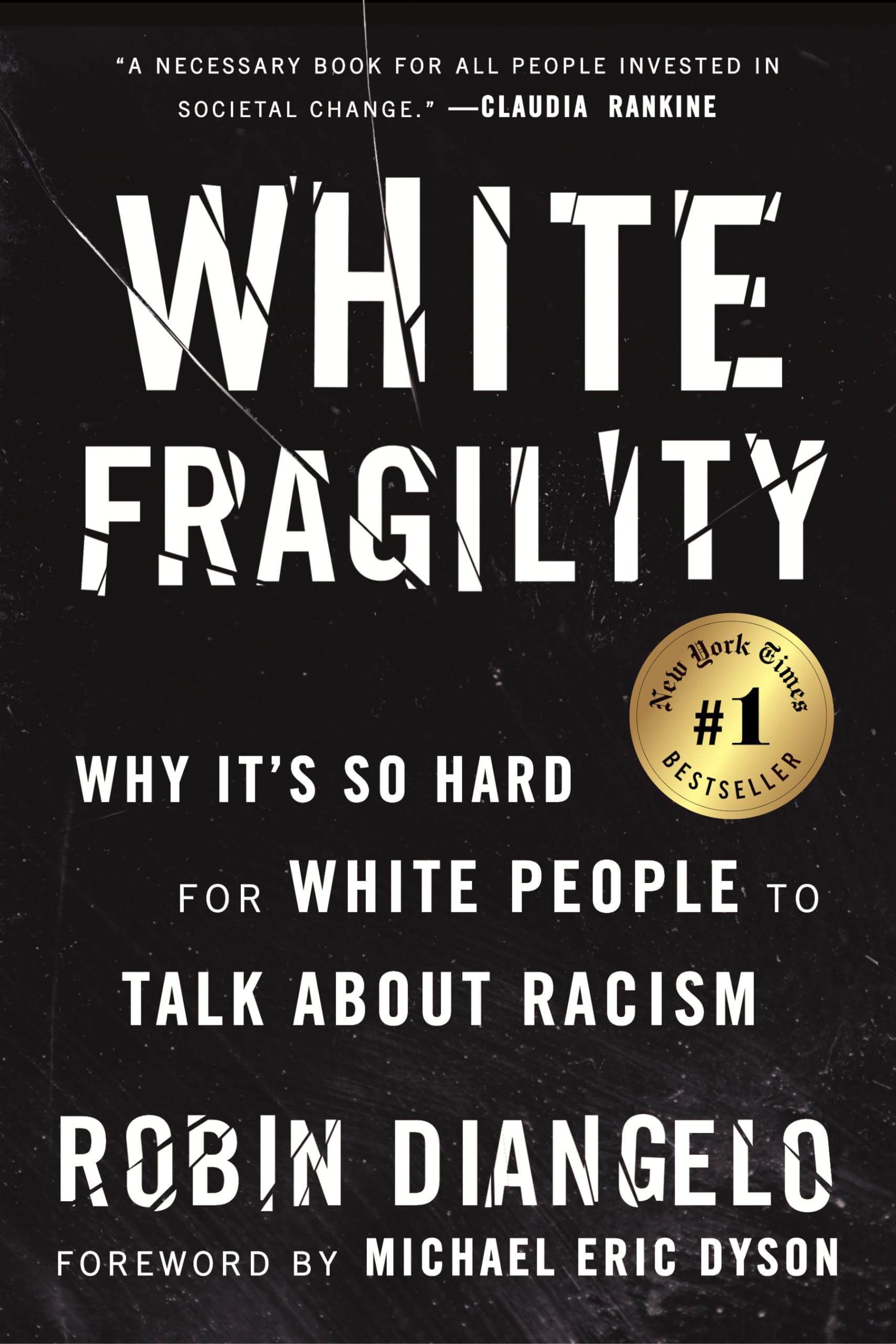
The New York Times best-selling book exploring the counterproductive reactions white people have when their assumptions about race are challenged, and how these reactions maintain racial inequality. In this โvital, necessary, and beautiful bookโ (Michael Eric Dyson), antiracist educator Robin DiAngelo deftly illuminates the phenomenon of white fragility and โallows us to understand racism as a practice not restricted to โbad peopleโ (Claudia Rankine). Referring to the defensive moves that white people make when challenged racially, white fragility is characterized by emotions such as anger, fear, and guilt, and by behaviors including argumentation and silence. These behaviors, in turn, function to reinstate white racial equilibrium and prevent any meaningful cross-racial dialogue. In this in-depth exploration, DiAngelo examines how white fragility develops, how it protects racial inequality, and what we can do to engage more constructively. Review: Excellent! - An excellent, informative read! 5/5 Review: price - nice to read


| Best Sellers Rank | #10,688 in Books ( See Top 100 in Books ) #13 in Cultural Anthropology (Books) #20 in Discrimination & Racism #53 in Sociology Reference |
| Customer Reviews | 4.5 out of 5 stars 48,015 Reviews |
C**I
Excellent!
An excellent, informative read! 5/5
D**M
price
nice to read
P**F
I am walking the bumpy road toward justice and equality. This book, though not perfect, has helped.
I, like many in these turbulent times, am learning a lot about racism. I still feel like I donโt have the right language (or good sense) to navigate the pitfalls of expressing myself clearly and without bias or unintended racism. I have come to the point--this book has certainly helped me along--of realizing that, despite my erstwhile claims of being โnot racist,โ I have perpetuated racist ideas unintentionally and ignorantly and have unwittingly supported systems of power and racist policies to the detriment of people of color. I feel a certain duty to confess. I feel the tightness in my chest and my clammy palms as my baked-in white fragility bristles at the idea of admitting to my privilege and failures to be โnot racist.โ These, I hope, can be feelings of change building in my chest and the motivation toward sustained action for equality preparing my hands to do the work. My fingers fumble along the keys trying to peck out a reasonable analysis of this book, but ultimately I know I am really just writing about my own response to the presented ideas. I've scanned a few other reviews railing against the authors myopia, but I am instead focusing on what the book has contributed to my personal journey toward anti-racism. The author starts this book by uncovering a key component of white privilege and therefore fragility: the rarity of needing to view ourselves racially. I am not an impartial, unbiased observer of racial tensions. I am a white person in the midst of a racist society whose structures of power are oriented toward providing advantages to people like myself to the detriment of others. These can be hard pills to swallow as is clear by the vast swaths of humanity who regurgitate them along with their reflexive claims of having black friends or being a good person who doesnโt see race. Iโm starting to feel the lumps in my throat from all the hard pills Iโve been swallowing recently, but it feels like my responsibility to at least try to digest these ideas. As she concludes her first chapter, Diangelo writes, โThe racial status quo is comfortable for white people, and we will not move forward in race relations if we remain comfortable.โ As the book continues, the author clarifies important definitions for terms like discrimination, prejudice, and racism. A crucial aspect of her definition of racism is the idea of power. Racism isnโt just a pre-judgmental stereotype or negative action along racial lines, but collective prejudice โbacked by the power of legal authority and institutional control.โ An unbalanced societal power dynamic is required to fuel this systemic racism and it is therefore linked to white supremacy in America. Diangelo supports the somewhat controversial claim, โPeople of color may also hold prejudices and discriminate against white people, but they lack the social and institutional power that transforms their prejudice and discrimination into racism.โ She then continues to build on ideas from the first chapter as she reiterates that whiteness needs to be acknowledged not as a neutral or normal racial state, but a racial identity on equal ground with all others. Oneโs whiteness, additionally, automatically associates one with the locus of institutional power and structural advantage. Advantages unavailable to people of color in America. Diangelo then takes some time to trace the ever-mutating history of racism in America, focusing primarily on the evolution and institutional insidiousness of racism post-1960โs. Here she focuses on notions such as color blindness and unconscious perpetuation of racist ideas and structures. Moving on, Diangelo talks of the racial experience of white people who โdonโt carry the psychic weight of race.โ White people enjoy freedom of access and movement, a collective cultural agreement to eschew racial discomfort, an idealized nostalgia for the good olโ days, and the ability to view racism as something that happens to people of color rather than something for which white people are responsible. The book then explores the dangers of viewing racism as a binary disposition. This seems a bit redundant, but the author takes time to address popular apologetics such as โI was raised to see everyone as equal,โ or, โfocusing on race is what divides us.โ In another somewhat repetitive chapter, Diangelo then explores โanti-blackness.โ She seems to focus on overt examples of white self-elevation and oppression of black people where her argument may have been advanced further by examining the institualization of anti-black policies in our society. The next two chapters explore triggers of white fragility and are summarized well in a concluding paragraph: โWhite equilibrium is a cocoon of racial comfort, centrality, superiority, entitlement, racial apathy, and obliviousness, all rooted in an identity of being good people free of racism. Challenging this cocoon throws off our racial balance. Because being racially off balance is so rare, we have not had to build the capacity to sustain the discomfort. Thus, whites find these challenges unbearable and want them to stop.โ Diangelo goes on to give examples of white fragility in her experience leading diversity training groups. A particularly helpful insight was the trend of white people to make conversations on racial discomfort about their own hurt, suffering, or feelings of being misunderstood. This, she argues, is just another example of white fragility and white privilege. Additionally, white fragility requires that race be addressed in ways that are palatable to white sensibilities. In contrast, the author offers this alternative: โHow, where, and when you give me feedback is irrelevant--it is the feedback I want and need.โ I particularly appreciated this practical point of racial engagement. I need to listen to and believe people of colorโs experience of racism at this time of social crisis (and, of course, on an ongoing basis). โThe method of delivery cannot be used to delegitimize what is being illuminated or as an excuse for disengagement.โ In concluding, the author offers some practical pointers for how people can responsibly engage in conversations of race. She notes that, when asked about what white people can do, she challenges them to examine how they have come this far without knowing how to address racism. Maybe itโs a lack of education or exposure or isolation from diversity. She urges that white people take the initiative to examine their privilege and fragility and treat addressing racism as we would a terminal diagnosis of a little-known disease. Research, read, seek out others with experience, do your homework. While her advice and strategies are helpful, I think Diangelo misses a key component which, to be fair, may simply lie outside the scope of her work. Namely, if racism is a systemic issue with white people as the primary benefactors, shouldnโt there be a weight of responsibility for anti-racist white people to actively pursue shifting the power dynamics within these systems? Shouldnโt we move beyond examining assumptions and learning to communicate by taking action for social reform? It seems if one follows her argument to its conclusion, the political ramifications of racism cannot be ignored and white political inaction is tantamount to actively sustaining our unbalanced societal structures. So, I walk away from this book more open to introspection, more careful in examining my positions of privilege due to my racial identity, more eager to accept feedback, and more motivated to be an ally who is active in my pursuit of change for the sake of justice rather than settling back into my comfortable white cocoon of the status quo. I found this book to be a helpful nudge for white people like myself to engage in racial conversations. It does seem to pull some punches and is repetitive at times, but it nonetheless advocates for movement toward justice and equality and is therefore a worthwhile read. B+
J**E
A Helpful Book for White Americans Seeking a Better Understanding of Our Roles in Systemic Racism
I had heard quite a bit about this book, both positive and negative. I decided I needed to read it for myself, both to educate myself on the topic of systemic racism and to form my own opinion of the book. I found the book to be both challenging and enlightening. The author definitely challenges white readers to change our perspective on systemic racism in America and the role we play in that system. In reading the first half of the book, I was troubled a bit by DiAngelo's terminology and word usage. She uses terms such as "racism" and "white supremacy" differently from their more common usages. She is careful to explain her usage and definitions. However, it still took a bit of getting used to. I was also a bit troubled that her terminology seems intended to make her primary intended audience, white Americans, uncomfortable. However, by the time I finished the book I realized DiAngelo does this on purpose because she sees discomfort as an essential step for most white Americans to begin changing our racial paradigm and begin developing stamina for discussing racial topics without reverting to familiar defensive tactics. Reading this book also helped me better understand some past conversations I found confusing. It is always easier to communicate when all participants understand the terminology being used. I feel I also have a better understanding of some of the harsh critiques of this book. Not only is the book intentionally uncomfortable for most white Americans to read, but it also uses terminology differently from common usages. The result is it would be really easy for a reader to take offense... and equally easy to grab a quote out of context that comes across as having a completely different meaning from the author's intent. Now for some discussion of what the book does not do: 1. It does not promote a socialist agenda. 2. It does not advocate for financial reparations. 3. It does not mention the phrase "Critical Race Theory." 4. It makes no mention whatsoever of capitalism. 5. It is neither un-American nor anti-American. 6. It is not opposed to sound Christian doctrine, nor to the Gospel, nor to the Bible. 7. It is not divisive. 8. It does not seek to make white Americans feel guilty for things done by our ancestors. On the contrary, the whole point of the book is to help white Americans better understand systemic racism and our role in that system, so we can begin to learn to do better at a personal level. I found the message of this book quite compatible with the commandment of Jesus Christ to love others as He has loved us. DiAngelo displays both humility and hope in how she shares personal stories of her own experiences and struggles. DiAngelo is an educator by profession. Her book is very educational. And her vision for reducing inequities of systemic racism is through education. I highly recommend this book to anyone (especially white Americans) who would like to learn more about systemic racism and our roles in those systems, as well as how we can begin to do better. I would caution any white reader to read this book with a teachable attitude, prepared to learn. If approached from a position of arrogance, you will likely just come away frustrated and angry.
R**H
Highly recommend!
Great book! Very educational!
F**6
My Family's Legacy of Service to America.
Whew!!! Well where do I start? God Bless Dr. D'Angelo! My opinion is that several of the sad small comments were as if not more interesting than the book. Many commenters proved your exact point 1000%. I'm confident you have grown solid steel skin. A little about my life as I feel you research running thr3 my veins. I'm a babyboomer of the 50's. I can relate 100% to your research to the point as if I was the laboratory specimen/rat with tears in the research and development of your book. I was born into a family of successful east coast musicians (son of a DC musical scholar, writer, composer, big band director, former 1st, 2nd, 3rd, and lead trumpeter for Duke Ellington, Cab Callaway, Hal Davis and others and directed band throughout the US) - I was initially introduced to the forces of racism (FOR) at the tender age 10 after forced by city zoning law (Color of Law) to integrate into a all white school at the 5th grade; where I could understand the hate toward me but i endured and made stsrting positions on the school's baseball and football teams but denied membership before the first game and removed from the team due to the Boys Club of _____'s segregation policy; years later forced into a majority white student body high school and played junior and varsity football, wrestled, ran track and offered a sports scholarship. My abilities on the football, track, and wrestling practice sessions were recognized and constantly praised by coaches, however as one of 5 non- white players on my team and non- white humans present in the entire stadium during games causes me or others to never become starters. Later in the military I excelled in physical training, testing, academics GPA and maximum scores on test and marksmanship however the FOR appeared daily for over 20 years of military service from the day of enlistment entrance at the lowest rank in my military speciality field to senior leader on 3 continents and 3 wars leading hundreds of soldiers. I acquited 3 degrees from well known universities during my military career. Subsequently to military retirement the FOR appeared very often over the next 20 as a member of a very well known federal agency representing the US Constitution and Laws. Almost everyday from 1993 to 2016 I was reminded of FOR. I am happy to have had the pleasure and blessings to have read and shared this research phenomenon with my love ones of several races. I'm blessed to have a very diverse circle of family and friends throughout the US, Europe, Asia, and Africa. Dr D'Angelo I feel the blood and tears through my veins in your words and Youtube video. It took me back to the ability to recall and see the named and faced of hatreds since my first experience in 1965. Since Linda Hervieux's book about the untold story of the black soldiers of D-Day Invasion of WWII that acknowledged my father, uncles, and their friends of stories in my home of their WWII experiences, discrimination and pain when I was of 5th grade aged which I didn't understand and they were in their 50s and 60s. I now understand your maxtrix of the system the Forefathers, William Lynch and others established institutional structures during the infancy through The Reconstruction of America. I'm a proud father and grandfather who's often asked questions by my children about my military and law enforcement career. I often tell them "I was a proud soldier. Not because of the 52 medals and awards listed on my DD-214 or hung on my walls; but I was that which many did not want to be. A Soldier, born and raised as an American. Your and Linda's covers a legacy of the men and women in my family's history from 1919 until today. Thank you and may God Bless you and your family. Thank you for your service. You and Linda deserve the Medal of Freedom for you many years of research to make this world a better place. You're a decorated soldier. My weapon was weapons of war. Your is you mind and intellect (Ph'd.) Thank you Doctor. You are a HERO!!!
E**N
An Important Read for this Important Time
This year marks the ninth in which I plan to read and review a book a week. Over the years, I've been fortunate to read so many great books, meet other book lovers, and learn about the community at large. A new year also gives me the opportunity to reflect on my past and plan for my future. 2020 was a historic year for many reasons, but one thing that is undeniable is that for many this was the beginning of a national reconning with the ugly truth of systemic racism and police brutality. The horrific murders of Geroge Floyd and Breonna Taylor, to name just a few, sparked much-needed conversations and calls to action. When a co-worker recommended I read Robin DiAngelo's White Fragility, a book meant to help white people come to terms with their place in a system built upon racial inequity, I knew it would be a valuable resource in continuing my own journey toward becoming a more effective ally. I read the book last year but decided a re-read would be an appropriate way to begin this new year of blogging and reviewing. Before reading this book, I considered myself to be fairly in touch with the imbalance built into our country. I've noticed the times when I was afforded opportunities that were only available to me as a white man. I've had open conversations with friends and co-workers about how their experiences differ from mine, and those conversations helped me to see a perspective that I was blind to. DiAngelo, a white woman herself, presented topics that further dismantled my existing perceptions around race and helped me to see things in a more well-rounded way. Here's the thing, even as someone conscious of the differences in society for people of different ethnicities, I was still complicit in perpetuating those same systems that I recognized as wrong. It is difficult for anyone to admit that they have perpetuated systemic racism, but it is undeniable that I've been complicit in this very system. In terms of my own reading, I was shocked to realize how inequitable the entire publishing industry truly is. As someone who publishes a review of a book each week, I feel that I bear a responsibility to consume and present reviews of diverse stories from diverse storytellers. I read 52 books in 2020, and only 4 of those were written by a BIPOC author. Simply put, that is not good enough. White Fragility by Robin DiAngelo asks us to not only recognize our place in systemic racism but to actively take action to fight against it. However small my impact in the larger book community may be, I feel moved to do more, share more, and continue learning more. Each month this year, I will resolve to read and review at least one book by a BIPOC author. This small goal on top of my annual reading goal will serve to broaden my perspective while sharing a wider variety of authors and stories. I may not be able to change the publishing industry as a whole, but I can certainly impact the kind of books that I choose to read and share here on A Book A Week. Happy New Year and happy reading!
R**H
Possibly A Good Conversation Starter from A Flawed World View
A friend of mine recommended that I read this book to educate myself on race and white privilege. I noticed that it was written by a white woman who is an anti-racist educator and sociologist, and another woman who is an actress. Right away, I figured the book was going to be garbage. The last thing I want is to be lectured by white women about race. Then, I read it, and to my astonishment, it is pretty coherent. This book clearly articulates the concepts of white privilege and racism, and the systems in place that reinforce it. The ideas in the book are fairly seductive, and when I first read it, this was my impression, which I will leave here unedited: First, the book completely nailed my experience of race. Every time the author pointed out something about messages that white people absorb about people of color, I was able to think about my own experience and how it exactly matched what the author was describing. In addition, whenever the author would describe how white people talk about race, I would often be able to identify that pattern in my own behavior or that of my friends. Second, the book often preemptively identified my reactions to the material and addressed them. At times, I would catch myself thinking, "Yeah, but...", and almost right away, the text would say something like, "The reader might be thinking..." followed by exactly what I was thinking, plus an explanation of that thought pattern and why it is questionable. The anecdotes about her experiences teaching anti-racism courses are fantastic. If you don't want to read the book for those, then just look at the one-star reviews here at Amazon. They perfectly illustrate the defensive, angry responses and logical fallacies that people use when confronted with the uncomfortable fact that they benefit from a system designed for them. As the author repeatedly stated, apparently to no effect for some readers, this is not equivalent to saying that these people are bad--only that they should reflect on and be aware of what is happening in an effort to change it. Another thing I really liked was the history of the term "white", and why all light-skinned people get labeled as white, and why. I often wondered about this, and now I have an explanation. If I have issues with the book, there are probably two. One is that it is repetitive, and two is that the author occasionally makes statements about "race, like gender, is socially constructed". Until I decided to educate myself about "Cis Fragility", I think the author should stick to race, leaving gender out of it. Edit: Now, after having spent several months reading critiques and studying up about Critical Theory, I have more context for my initial reaction and the actual concepts presented in this book, and I want to amend my initial review. First of all, I do want to acknowledge that the book does articulate the concept of White Privilege very well, and has been valuable to get me to examine my own views about race. When I complained about the bad ideas in the book to the friend who recommended it, he responded that at least I was thinking about race and racism, and that's probably more than I've done that in my entire life, and he's right. I have light skin, and I haven't had to think about race much, and I acknowledge that this book has been thought-provoking and a good "conversation starter". But now the bad news: The foundation of this book is Critical Theory, which is, in my opinion, a not very useful world view in that it is unlikely to improve the quality of anyone's life long-term. Why? It is basically a religion. It states that the world is controlled by invisible, all-pervasive forces (privilege and oppression), which are difficult to measure and impossible to disprove. Critical Theory contains postmodern concepts such as that there is a no objective truth, only "lived experience", and that speech can be violence. As such, any attempts to measure or respond with facts can be construed an attack that needs to be shut down. This is, frankly, a frightening idea. When you step back from it, any supposed solution to racism that requires us to not only acknowledge skin color, but treat people differently because of it, is suspect. Critical Theory even preaches that well-proven philosophies such as Individualism and Meritocracy are flawed. Why? Because we can never escape from racism (or homophobia or sexism or transphobia, etc.) based on group identity. Therefore, meritocracy cannot work, and no one can be treated as an individual. I am already seeing some of my friends posting articles on Facebook about how white people have nothing to contribute about race and racism and shouldn't dare to question what people of color are saying on the subject. I freely admit that I might be one of the least knowledgeable person when it comes to issues of race and racism, but it also makes me nervous that it is not my inexperience that is apparently the problem, but the color of my skin. Probably the most damning (or inspiring) statement I have read about the concept of White Privilege was something along the lines of: We used to seek to eradicate discrimination and disenfranchisement, and give everyone equal opportunities. But, now the absence of discrimination and disenfranchisement is called "privilege", and rather than seek to spread this to everyone, we are now discriminating against and disenfranchising entirely new groups of people in order to achieve "social equity", since any inequality is now considered evidence of privilege, racism, sexism, etc. This new Critical Theory approach makes absolutely no sense to me. In short, what the author terms White Fragility is actually "being crapped on fragility". No one likes to be told they are less worthy because of their skin color, that they have nothing to contribute, that they are complicit in systems they have no knowledge of or power over. If this is what people of color have been dealing with their entire lives, I have a new appreciation for any of them that have encountered it. So: Really bad theoretical underpinning and a misreading of reality, but still thought provoking and somewhat useful. Three stars.
C**S
~ Every White person should read this ~
White Fragility is written by a White author for White readers. Every White person must read this book. What I got from this book is that itโs like a tool or a guide even, to help us as White people understand out actions. What Diangelo portrays is that as White people we are too hung up on our own White Privilege, and we can be racist without even being aware that we are. As Shae from bookswithshae says, โRacism is the symptom of White Supremacy.โ In White Fragility, Diangelo is very candid about her racism and so rightfully call herself out. She openly talks about how she has realized her racism and that of other White people. She covers topics of racism and White Supremacy, how race shapes the lives of white people, The Good/Bad Binary and White Fragility in action. There was a lot of controversy around whether this book was going to be used in this buddy read because Diangelo uses the N-word uncensored. I as many people donโt agree with this but as someone said during the live show, to disregard one book on the N-word is to disregard racism, you have to be made uncomfortable if you wish to learn. Diangelo also covers White tears. Diangelo states โWhite womenโs tears have a powerful impact in this setting, effectively reinscribing rather than ameliorating racism.โ White womenโs tears can be harmful. This is seen in a statement within White Fragility about a White woman and a Black man Emmett Till. โโฆ. Emmett Till, a fourteen-year-old boy who reportedly flirted with a white woman โ Carolyn Bryant โ in a grocery store in Mississippi in 1955. She reported his alleged flirtation to her husband, Roy Bryant, and a few days later, Roy and his half-brother, J. W. Milam, lynched Till, abducting him from his great uncleโs home. They beat him in the Tallahatchie River. An all-white jury acquitted the men, who later admitted to the murder. On her deathbed, in 2017, Carolyn Bryant recanted this story and admitted that she had lied.โ This absolutely sickens me and goes to show how much us White people can be so harmful to Black people. This women cried wolf and the symptom of doing that led to an innocent black mans death. As White women we need to keep our emotions in check when is comes to situations like this. Diangelo covers a lot and writes in a way to make you think of your actions and make a change to them. The epitome of White Fragility is critism for the wrong us as White people can and still do towards Black people. But critism is progress and progress is what we need. Someone said a line within the live show that bookswithshae hosted and I had to note down; โWords are a start but if you stop at words and empty gestures then your words mean nothing. Focus your energy on actions not words.โ Educate yourself and make a difference to your actions and use your voice to amplify Black voices.
D**A
An easy and illuminating read
A very illuminating and informative read. I enjoyed it very much, and so did my family.
S**I
Un libro fondamentale, lo dovremmo leggere tutti.
Peccato non esiste una versione in italiano (al momento). Nonostante l'autrice sia americana e parli dal punto di vista statunitense, questo libro รจ assolutamente universale. E' illuminante e scritto in maniera molto chiara. Ho avuto il piacere di condividere la lettura con alcune amiche e potermi confrontare con loro su ciรฒ che via via apprendevamo. Aiuta ad aprire la mente, evolversi e diventare persone migliori. Sto cercando di convincere tutti i miei conoscenti e amici a leggerlo.
T**A
Must-Read that made the topic of racism so much more approachable for me!
Picked this book because as like a lot of white people, I was frustrated with the topic and always trying to be a good ally and it feeling like it was never enough. This book is a gamechanger. It's a short but densely-packed read. You enter it maybe a little worried that it'll be frustrating again (but at least limited to a few pages) and leave - most of all! - a lot calmer, with a much clearer head. My frustration is almost entirely replaced with a curiosity and a better idea how to navigate an issue that is so much bigger than oneself.
P**N
A raw reflection of the world we inhabit
I would like to call it an eye opening commentry on the reality the majority of the world has been living since the last few centuries. But I think this book has just put the thoughts of the majority into words. It's a sharp, unembellished commentary on the reality around us.
Trustpilot
2 days ago
1 day ago