![The Pianist (2 Disc Special Edition) [DVD] [2003]](https://m.media-amazon.com/images/I/81f7eArPN3L._AC_SL3840_.jpg)
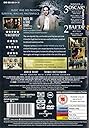
The Pianist (2 Disc Special Edition) [DVD] [2003]
Product ID: 64527382
Details
- ColourColour
- FormatPAL
- LanguageEnglish
- Runtime2 hours and 29
Desertcart purchases this item on your behalf and handles shipping, customs, and support to Argentina.
Product Description Award-winning drama telling the true story of pianist Wladyslaw Szpilman's experiences in Warsaw during the Nazi occupation. When the Jews of the city find themselves forced into a ghetto, Szpilman finds work playing in a café; and when his family is deported in 1942, he stays behind, works for a while as a labourer, and eventually goes into hiding in the ruins of the war-torn city. The film won the Palme d'Or at the Cannes Film Festival and Oscars for Best Actor (Adrien Brody), Best Adapted Screenplay (Ronald Harwood) and Best Director (Roman Polanski). desertcart.co.uk Review Based on the extraordinary events of Polish musician Wladyslaw Szpilman's life, The Pianist gave Roman Polanski the chance to revisit and distil his own experiences living as a Polish Jew during World War II. A long-awaited project for the director, this personal angle has resulted in a deeply affecting film that marks a startling return to form for Polanski. Szpilman (Adrien Brody) is a pianist recording a recital for a local radio station when bombs drop on Warsaw in 1939, just before the Nazi occupation of the city really begins to take hold. As he and his family are slowly stripped of their rights, they endure the humiliation of being forced to live in a walled ghetto, already overcrowded with the entire Jewish population of Warsaw. In a lucky twist, Szpilman is handed the chance to escape, given that he leaves his family in the ghetto to be inevitably shipped off to concentration camps, becoming a fugitive living in terror and isolation. Taking a classical and measured approach to structure and style, Polanski's elegant film depicts the brutalities and dehumanising experiences that Szpilman endured without making him a hero; he is more of an observer who is tortured by what he helplessly watches. With the film focusing on events entirely from his experiences yet furnished with very little dialogue, Brody gives a subtle yet powerful performance and the end result is devastating. This is as much a standout film for Polanski as it is for his immensely talented leading man. On the DVD: The Pianist arrives on disc with a surprisingly sparse amount of extras. Only one is really substantial: "A Story of Survival", a 45-minute making of feature which gives a lot of time to Roman Polanski and his own experiences; both of making the film and relating it to his time spent in the Krakow ghetto during World War II. Adrien Brody also features, talking about his preparation for the role and his experiences working with Polanski on such a personal project. Featuring alongside is footage of the real Warsaw ghetto taken by Nazi soldiers and the photographs used as a basis for some of the film's key scenes. Most poignant are the images of the real Szpilman, who died in 2000, still finding pleasure in playing the piano despite his horrendous past. A photo gallery, trailer, posters and filmographies are perfunctory additions. --Laura Bushell Review: Very good movie - Excellent movie Review: A very moving, enthralling film - The talented Jewish pianist, Wladislaw Szpilman (1911-2000), is the central character in this absorbing film by Roman Polanski who had plenty of personal and family experience on which to draw for this war film, set in Warsaw during the Nazi occupation. Szpilman was a well-known pianist of exceptional talent who found himself in the ghetto with all its dehumanised deprivation. Adrien Brody's performance is engrossing and his features seem to become more gaunt and drawn with every sequence and his eyes simply emit a raw fear which draws viewers into his soul. Throughout the film, he captures what must have been a harrowing, inhuman and terrifying experience. His musical spirituality draws others in and the power of his music overwhelms even the toughest Nazi who sees Szpilman, not as a Jew but another human being, one with a stunning talent which seems to diminish the war and all its inhumanity, reminding him of what he once was. It is an exceptionally powerful film which asks deep questions of its audience but, ultimately, it leaves them with a deeper awareness of their own humanity. BACKGROUND "As set out in his memoir, Szpilman found places to hide in Warsaw and survived with the help of his friends from Polish Radio and fellow musicians. In November 1944, Szpilman was hiding out in an abandoned building when he was found by a German officer. Surprisingly, the officer did not kill Szpilman, but instead after finding out that he was a pianist, asked Szpilman to play for him on a piano they had found. After that, the officer showed Szpilman a better place to hide and brought him bread and jam on numerous occasions. He also offered Szpilman one of his coats to keep warm in the freezing temperatures. Szpilman did not identify the German officer until 1950. His name was Captain Wilm Hosenfeld. Despite the efforts of Szpilman and the Poles to rescue Hosenfeld, he died in a Soviet Prisoner of War camp in 1952." Highly recommended - one of Polanski's best.
| ASIN | B00007KGC5 |
| Actors | Adrien Brody, Emilia Fox, Frank Finlay, Maureen Lipman, Thomas Kretschmann |
| Aspect Ratio | 16:9 - 1.77:1, 16:9 - 1.85:1 |
| Best Sellers Rank | 31,735 in DVD & Blu-ray ( See Top 100 in DVD & Blu-ray ) 891 in Military & War (DVD & Blu-ray) 895 in Historical (DVD & Blu-ray) 1,725 in DVD Home Cinema Devices |
| Country of origin | United Kingdom |
| Customer reviews | 4.7 4.7 out of 5 stars (4,507) |
| Director | Roman Polanski |
| Is discontinued by manufacturer | No |
| Language | English (Dolby Digital 5.1) |
| Media Format | PAL |
| Number of discs | 2 |
| Package Dimensions | 19.1 x 13.6 x 1.6 cm; 90 g |
| Producers | Alain Sarde, Robert Benmussa, Roman Polanski |
| Rated | Suitable for 15 years and over |
| Run time | 2 hours and 29 minutes |
| Studio | Universal Pictures Video |
| Writers | Ronald Harwood |
K**T
Very good movie
Excellent movie
R**R
A very moving, enthralling film
The talented Jewish pianist, Wladislaw Szpilman (1911-2000), is the central character in this absorbing film by Roman Polanski who had plenty of personal and family experience on which to draw for this war film, set in Warsaw during the Nazi occupation. Szpilman was a well-known pianist of exceptional talent who found himself in the ghetto with all its dehumanised deprivation. Adrien Brody's performance is engrossing and his features seem to become more gaunt and drawn with every sequence and his eyes simply emit a raw fear which draws viewers into his soul. Throughout the film, he captures what must have been a harrowing, inhuman and terrifying experience. His musical spirituality draws others in and the power of his music overwhelms even the toughest Nazi who sees Szpilman, not as a Jew but another human being, one with a stunning talent which seems to diminish the war and all its inhumanity, reminding him of what he once was. It is an exceptionally powerful film which asks deep questions of its audience but, ultimately, it leaves them with a deeper awareness of their own humanity. BACKGROUND "As set out in his memoir, Szpilman found places to hide in Warsaw and survived with the help of his friends from Polish Radio and fellow musicians. In November 1944, Szpilman was hiding out in an abandoned building when he was found by a German officer. Surprisingly, the officer did not kill Szpilman, but instead after finding out that he was a pianist, asked Szpilman to play for him on a piano they had found. After that, the officer showed Szpilman a better place to hide and brought him bread and jam on numerous occasions. He also offered Szpilman one of his coats to keep warm in the freezing temperatures. Szpilman did not identify the German officer until 1950. His name was Captain Wilm Hosenfeld. Despite the efforts of Szpilman and the Poles to rescue Hosenfeld, he died in a Soviet Prisoner of War camp in 1952." Highly recommended - one of Polanski's best.
D**S
Stunning in every way
Biopic - 2002 Academy Award-winning and Golden Globe-nominated film starring Adrien Brody (who won the Academy Award for Best Actor for his role as "Władysław Szpilman" in this film). his is a monumental film in so many ways and here is the Wikipedia review that sums it up - https://en.wikipedia.org/wiki/The_Pianist_(2002_film). And for Music lovers it is especially poignant with two memorable scenes for pianists, not least the occasion when Szpilman is hiding in a room with a piano he dare not play (torture) and the other where he has to play for a Nazi Officer. The sound track for this film is also outstanding and for Chopin lovers in particular, it won't disappoint. In 2003, the music won the César Award for Best Music Written for a Film, and was also nominated for the BAFTA Award for Best Film Music. The Chopin pieces are played by Polish pianist Janusz Olejniczak and the original score piece was composed by Wojciech Kilar. The music in the actual movie also includes pieces by Beethoven and Bach. 1."Nocturne in C-sharp Minor (1830)" - Frédéric Chopin, Score at IMSLP (4:12) 2."Nocturne in E Minor, Op. 72, No. 1" - Frédéric Chopin (4:31) 3."Nocturne in C Minor, Op. 48, No. 1" - Frédéric Chopin (5:57) 4."Ballade No. 2 in F Major, Op. 38" - Frédéric Chopin (7:41) 5."Ballade No. 1 in G Minor, Op. 23" - Frédéric Chopin (9:01) 6."Waltz No. 3 in A Minor, Op. 34, No. 2" - Frédéric Chopin (5:13) 7."Prelude in E Minor, Op. 28, No. 4" - Frédéric Chopin (2:34) 8."Andante spianato in G Major" - Frédéric Chopin (4:28) 9."Grande Polonaise brillante in E-flat major" - Frédéric Chopin (9:31) 10."Moving to the Ghetto Oct. 31, 1940" - Wojciech Kilar (1:52) 11."Mazurka in A Minor, Op. 17, No. 4" - Frédéric Chopin (3:42)
P**B
No subtitles
Absolute great film however the digital copy on Amazon doesn’t give you subtitles when they’re talking in a foreign language which is annoying cause you don’t know what’s going on
L**H
Outstanding
Even if it's just an excert, Adrian Brody leaning the coda from Ballade no. 1 for this film while basically starving himself to look the part is insanely impressive. I had seen that scene before, and to my pleasure the rest of the film is even more heart-wrenching. It's shocking that in many ways the film might not even go far enough to show Szpilman's true suffering, having been moved around in hiding much more than twice and by around 30 different people between 1943-44 (including to my surprise Witold Lutosławski, a great composer who is not in the movie), but what it does show is more than enough to get the point across. Władysław Szpilman's survival through these years is an extroadinary feat, grinding him down to nothing but his artistry and his life. Even when he claims it's no longer his
A**K
History
I love that movie. Beautiful history
F**M
The Pianist worth a watch
Ever so good film
A**R
epic and emotionally beautiful
the solo piano sound track compliments the harsh true story of the WW2 period for the European Jewish citizens, told from the perspective of a musician and artist of the time. Superbly cast and a well shot piece of cinema .
K**T
Execellant!!!!!👍🏻❤
C**N
Super film qu’ont ne trouvent nulle part aux magasins, bien reçu dans les temps! Merci Amazon!!!!
N**O
THE PIANIST is the movie that made Adrien Brody the youngest-ever Best Actor Oscar winner, but it was hardly the first movie about the Holocaust. Where it differs from movies like SCHINDLER'S LIST is in its particular focus: not so much "the Holocaust" as the Warsaw ghetto and one man, young Jewish pianist Wladyslaw Szpilman (Brody), successfully eluding the Nazis thanks to the kindness of an unwilling Nazi, Captain Wilm Hosenfeld (Thomas Kretschmann), and then establishing himself as a successful concert artist. THE PIANIST is based upon Szpilman's memoirs of the same name. As Szpilman's family is sent off to a death camp a third of the way through THE PIANIST and never appears again, it would be tempting to call the film "Adrien Brody's show all the way." But in fact the film's first distinction lies in its painstaking period detail: everything looks right out of 1940's Continental Europe, from the costumes, to the narrow side-streets, to the house interiors -- to the truly spectacular set depicting a bombed-out Warsaw just before its liberation by the Russians. Yet nothing is romanticized: the filth of the ghetto is just as credible as is the exterior of a genteel cafe that excludes Jews. The actors playing the Szpilmans were all cleverly chosen to form a believable-looking family, with Brody and Jessica Kate Meyer as his sister Halina resembling their mother (Maureen Lipman) and the other siblings, Regina and Henryk (Julia Rayner and Ed Stoppard), resembling their father (Frank Finlay). A last, gratifying detail is the fact that Brody plays most of his piano solos (the majority of them by the great Polish composer Chopin) himself. In a film about a pianist, it would have lessened the impact had the solos been entrusted to a double. (I believe the only time a double -- Polish pianist Janusz Olejinezak -- is used is for an intricate passage during the film's closing credits. All you see, however, are his hands.) Against this superb backdrop it is, in fact, Brody's performance that carries the film. Director Roman Polanski could hardly have found an actor with more strikingly dark looks, or one who wore the period costumes better -- or one who could be so riveting while actually saying very little. As a character who spends so much of his time quiet and alone, Brody's expressive face, with its famously prominent nose and big, sad green eyes, is exactly what was needed. Take, for instance, the moment in the film when Szpilman noisily drops some crockery in an apartment where he is hiding. In the seconds following the accident, a range of emotions -- from shock and dismay to acceptance and even mild amusement -- flit subtly across Brody's features. Watch the way he struggles to dissemble as the deportation train leaves the ghetto with his family aboard, or the way he looks both exhausted and cold to the point of numbness as he sinks into a waiting chair in a safe house. Whatever the emotion or mood, Brody finds the proper expression, vocal or (most often) physical, for it. Several touching moments (most of them from Brody) aside, THE PIANIST lacks the sentiment (not to be confused with sentimentality) of some other Holocaust dramatizations. In place of warmth, it generally offers a terse look at events of the period, emphasizing the randomness and senselessness of them. This probably should not be called a drawback; but two drawbacks I believe the movie does have are that a few of its "bit" actors are hammy and that its final "running from the Nazis" sequence (which ends with Szpilman meeting Hosenfeld) goes on a bit too long, exciting as it is (I invariably jump at several moments). These drawbacks are not serious, of course, and should not deter you from checking out this great movie. You will be on the edge of your seat as I was, I promise you that!
J**N
A very good movie about a talented man who played the piano during the Hollocaust.
S**E
L ho vidi da piccolo mi piacque, l ho rivisto da grande ed è uno dei miei preferiti, storia vera della seconda guerra mondiale che narra la tragica storia del pianista!
Trustpilot
3 weeks ago
1 month ago