

The Catcher in the Rye
Product ID: 5938873
⭐4.4/5 rating from 47,910 readers
📚75 years of timeless literary impact
🏙️Iconic NYC setting capturing adolescent angst
Desertcart purchases this item on your behalf and handles shipping, customs, and support to Argentina.
📖 Dive into the ultimate coming-of-age story that defined generations!
The Catcher in the Rye, published in 1951 by Little, Brown and Company, is a seminal American novel by J.D. Salinger. Celebrating 75 years, it follows 16-year-old Holden Caulfield’s poignant journey through New York City as he grapples with identity, loss, and the transition to adulthood. With over 47,000 reviews averaging 4.4 stars, it remains a top-ranked classic in teen literature and censorship discussions, beloved for its candid, relatable narrative and enduring cultural impact.

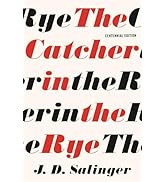


| Best Sellers Rank | #13,667 in Books ( See Top 100 in Books ) #7 in Teen & Young Adult Classic Literature #7 in Censorship & Politics #22 in Classic Literature & Fiction |
| Customer Reviews | 4.4 out of 5 stars 47,910 Reviews |
G**D
If a body catch a body coming through the rye
"Anyway, I keep picturing all these little kids playing some game in this big field of rye and all. Thousands of little kids, and nobody's around - nobody big, I mean - except me. And I'm standing on the edge of some crazy cliff. What I have to do, I have to catch everybody if they start to go over the cliff (...)" J. D. Salinger is an American novelist and best known for this very book, The Catcher in the Rye, which is considered a classic of USA's literature, being in Times list of 100 best books since 1923. This book tells a rather uninteresting story of this sixteen-year-old character Holden Caulfield and his wanders through New York for a couple days, after his expulsion from his boarding school, exposing the real face of teenager's life, in which the main character is also the narrator. What is perhaps more interesting is that he has such a depressed and lonely way of life that it is almost impossible not to have anything in common with this global character, who is supposed to represent the transition from childhood to adult life. When I started reading this book, I found out that I was addicted to it, even though it had no plot at all. It really doesn't, it's just a dude telling about his life. But it is Holden who you are actually reading. I have never read, in my whole life, such a descriptive and well-developed character. You actually feel that you are reading a teenager's book who has failed in about four schools, not an intellectual like J. D. Salinger. That's probably why the book is so addictive: it's a clean and straightforward writing, which makes it feel real, a very real account. I do have a lot against writers and philosophers who are claimed to be wonderful and swell, but they can't write clearly such as Salinger does. This book may be read by anyone - in fact, it is aimed to teenagers and I do recommend them to read - and anyone who reads this book will understand what it is talking about. Some of them may not like, but they will surely get the least of it. Holden Caulfield is this teenager that wanders around New York and lives a very teenager life - don't forget this book was written in the 50's - and finds himself in the transition from child to adulthood; facing problems like an adult - and that's probably why Salinger set him alone in NY - but still with a mind of a kid. While he tries to evolve, starts to find out that everybody looks fake and lousy, but he turns out to be a complete hypocrite, which is probably the main purpose of the book. The title deserves five stars just for itself. Although you read the book until about the middle without getting where the author is trying to get you to, when Holden hears a little boy singing this song about a catcher in the rye - which he actually misspelled -, everything starts making sense. Holden flies through the book trying to find a shoulder to lean on, someone that will hold him while he's passing through his puberty, sexual life and depressing times of adolescence; and that's what he searches, even unaware of what's actually happening. While he's not getting anything that's valuable from his current relationships - which are represented by his Pencey school and his friends in there -, he goes way back to the innocence of childhood and brings back his old memories and relationships in attempt to survive the hard times that is entering the adulthood. But when he actually gets to those memories, he is not a kid anymore and his mind has changed. In this quest of finding "a catcher in the rye", Holden even unburies his dead brother Allie and contacts people who are still in their innocent times - such as his sister - and people who are really in the adulthood, like his old teachers. This transition is easily seen in every sense. From trying to drink being a minor to a massive change of his views on the world, contrasted by what he remembered things to be and what they really are right now. I highly recommend this book to anyone. This is surely one of the best - if not the best - novels I have ever read in my entire life. Although aimed to teenagers, this story is surely universal. 100/100
S**S
great read
amazing book
L**N
“I thought what I’d do is I’d pretend I was one of those Deaf Mutes.” (On Literary Censorship)
Holden Caulfield has been making the rounds again. Originally published in 1951, J.D. Salinger’s Catcher in the Rye maintains an unsavory status. While it is no longer banned with as much frequency as its early days — from 1961 to 1982 it was the most censored book in American schools and libraries — Holden Caulfield’s distinctly troubled and troubling voice solidifies its place as a novel rife with incredibly vocal and cyclical detractors. According to the ALA, it was the 10th most frequently banned or challenged book from 1990 to 1999. Around a month ago, following a rather strange list of books and authors a poster considered “problematic”, Catcher made its seemingly annual rounds on Twitter, where people extolled their dislike for the book and its protagonist. So what gives it such staying power, and what made it such an issue for so many in the first place? That it should be taught in schools seems natural given its teenage protagonist and his struggle to find his place amid the interim world of childhood and adult . Being depressed and/or disillusioned at 16 is a cliché for a reason, after all. No matter how much we want to brush it under the rug, kids struggling to find their way in a society that emphasizes so strongly knowing the path of your future at such a young age is so common it’s hardly interrogated — it’s almost expected. So why, then, is there such a strong movement to stifle works that might help students understand or at least work through their emotions at such a chaotic time of life, and why is such a familiar protagonist so widely misunderstood and/or hated? Teachers have been fired for teaching Catcher. It’s been challenged or outright removed from schools and libraries since 1960 for “vulgar language”, sexual references, violence, and any number of other easy to grab buzzwords. It’s even been accused of being “part of a larger communist plot” and having had something to do with multiple shootings, from Reagan’s assassination attempt to John Lennon’s murder. The truth of it is, though, it’s the story of a 16 year old boy sitting in a mental institution recounting the story of how he ended up there, starting it out with “if you really want to know” and regretting having said any of it by the end. That this book was written in 1951 and so accurately depicts the numbness and emotional roller coaster of depression is both impressive and upsetting. That Holden Caulfield is received with such a range of response speaks just as much to the way we treat mental illness as the way we treat books. The reality no one wants to acknowledge — especially those seeking to ban the book from their children — is that Holden’s excessive use of language, his approach to dealing with sex, everything for which he is most commonly criticized are all perfectly ordinary high school student experiences even today. Everything parents seek to shield their children from are things they’re doing outside of earshot. Perhaps the most painful thing about Holden Caulfield’s character and the bannings tied to him relate to the “sexual references”. Reading Catcher in the Rye is an experience in reading mental illness and trauma in a palpable way. From page one we feel the weight of his life and emotions, even as he brushes some of the most traumatic happenings off with a sentence. There is every evidence — even an outright declaration — that Holden has experienced childhood sexual assault, which naturally complicates his relationship to sex and seems to prevent him from “getting sexy” with any girl, even when he wants to. Consequently the scenes where he is reckoning with this tension get interpreted as vulgarity. One of Catcher’s most harrowing scenes comes when he runs away to his former teacher’s house and wakes up to find this previously trusted authority figure stroking his head, sending Holden into the spiral that eventually lands him in the hospital. The description of his meltdown is painfully familiar to anyone who’s been in a similar situation. While it is perhaps not surprising that a book about a male sexual assault victim struggling to feel solid in a world that seeks only to push him toward the next milestone for societal success rather than actually listening to his pain, asking no real questions until he lands in a mental institution, it is unusual that it should garner the kind of reputation it has. That it is tied to things like assassinations — both attempted and successful — is odd to say the least when you reckon with the story itself, but may make sense when you consider the way most people consume art. People see what they want to see when it comes to things like literature and film. If they want an angry outcast out for revenge against society to justify their actions then they’ll find one. If they want an immoral character promoting violence, that’s what they’ll see. Most of what gives Holden Caulfield his staying power in the cultural conversation is his complexity. What makes him complex is the refusal to interrogate the fact that the way he interacts with the world is common to victims of things like assault. We’d rather see him as problematic than lost, more troublesome than desperate for help. He regrets telling his story to so many people because he starts missing the people he had flashes of connection with, however volatile. Meanwhile his point is proven by the way we react to him: no one, it seems, really wanted to hear about it after all.
J**A
An amazing story
A lot of people don't give this book a chance, which I think is a real shame. The way it's written, the main character, or outdated social norms seem to annoy many people to the point where they can no longer even attempt to enjoy or find meaning in the novel. People fail to see how original this book is, considering the fact that it was written at a time in which questioning the norm would be frowned upon. And this book questions everything about our society and culture that most just willingly accepted. Catcher in the Rye is an odd recollection of a couple days in the life of the main character, Holden Caulfield. The story is an interwoven thread of Holden's account of this time and his past memories, thoughts, and feelings, that pull the story way off topic. It's jumbled, it's clumsy, it's amusingly random, and yet it's so real. Holden's voice stays true and consistent throughout, and it feels like he's talking right to you and explaining his world to you as best as he can. There are no frills, no exquisite detail or anything else added to the story. It's straightforward and direct. The way the story is told definitely something a lot of readers will hate. The improper grammar also will cause some to cringe. Readers also may not like the digressions, or the slow pace, or the long ramblings Holden sometimes falls into. It all depends on what you think makes good writing. If you think of good writing in the sense of correct grammar, beautiful descriptions and a flowing plot that moves constantly forward, you will probably dislike this book. But if you read it with the hope of getting into the mind of a troubled teenager and learning about the way he sees the world, I think you will enjoy this book. I think that a lot of people will be able to identify with Holden and his feelings and confusion and worries. And although things have changed a lot since the time the novel takes place in, I found that almost everything could be adapted to fit in today's world. The ideas behind everything are just as true today. However, the reader has to remember that people had different viewpoints at that time than today, and so a lot of viewpoints were different. This book is wonderful. I was skeptical at first, but after reading this story, I found so much I could connect with and so much that is and will forever be true to humanity. It's not for everyone, but I think some will be able to really appreciate it for what it is.
B**N
Meh
Main character is annoying. The writing style is very good but the story content was not. Spare me the hype. Glad I finished it.
R**E
Dealing with Late Struggles of Youth
One scene that has always stuck in my mind in "It's A Wonderful Life" is when George Bailey and his future wife were talking and George was taking his time on making his move to kiss her for the first time, when in the background an old man said "Well are you going to kiss her or not, ahh youth is wasted on the young." To my way of thinking many classic novels which we as in our youth had to read and study and be tested on in high school and later in college, were actually never really fully understood or appreciated. To me, I was told to read these books and later the teacher or the professor would lecture and have active discussions in detail of the nuances and literal and figurative interpretations on the intentions of the author and the real plot of what the author was trying to convey to the reader. The better students would learn the triggers of success and mimic their instructor's persuasions and add "a little" of how the novel affected them in their young lives. But my take on many of these classics actually confused me and being the rebellious student that I was I usually didn't go with the program and in many instances took my rebellion in the force of protest and usually ended up with an old-fashioned hook a C. I did the same thing when I first read "Catcher in the Rye" in fact being very much like Holden Caulfield in my studies of this novel. The fact remains that as one grows older one gains from life experiences and is able to appreciate life on a wider and more knowledgeable scale. I have spent most of my academic life reading and writing of history and life memoirs of things that have actually happened. My studies were based on things that have happened. However I find myself being brought back to the classics and with that added maturity, I have found out that I do indeed understand them better. J. D. Salinger was really writing of his youth when he wrote this book. Holden Caulfield is a dysfunctional youth who in all reality hates the concept of growing up and following teacher or parental guidance or instruction. Being born to wealth and surrounded by siblings who all seemed to be normally adjusted youths, Holden held out to be the family "black sheep." The traumatic effect of his younger brother's death had deeply disturbed Holden. In fact this event may have started the trigger that he would rather remain a child and not grow up in the "phony" lifestyle of being an adult. The other key sibling that Holden held in very high regard was Phoebe who he regarded as not only as a sister but a person who personified the goodness in the essence of what youth is. Simple and loving! The book is written in the first person by Holden Caulfield and it tells of his relationships with his classmates, teachers and his parents. It is written in the mind of a seventeen year old which is contradictory, whimsical, funny, mad, nonsensical and at times very funny. In fact it does represent the brain of a person who has not fully developed. To tell you the truth this writing in the vernacular of a teenager, represents the brilliance of Salinger's writing. Some youth can adapt to the adult world and move on; others like Holden have a very hard time in doing so. My review intent is not to give away the meaning and plot of this classic book but to rather engage the reader to see that this book is indeed of deep meaning in which I never recognized 46 years ago. The meaning of the title makes sense as it never did before and as an added insertion to my discoveries I found this book to coincide greatly with the story of "Peter Pan." If you have never read the book do so. If you read it as a young student, I daresay read it again, it will surprise you!!!!
K**N
Very happy with my purchase
Waited years to read this. Very happy with the book.
P**M
America’s own classic!
Catcher in the Rye was written in 1951. Years later, in 2026, they’re still selling reprint paperbacks between 250,000 and 1,000,000 copies a year. That ought to tell you something.
V**E
The Catcher in the Rye
It's as advertised. I have also attached pictures of how the book looks without the cover for those interested.
S**A
..
جودة الورق رديئة بس الطباعه كويسه
T**Y
Sysetms of Philosophy
I first read “The Catcher in the Rye” some time in either 1964 or more likely early 1965. That is over 54 years ago now. There are some similarities between my 17-year-old self then and the 16 year old Holden Caulfield. Both of us were naïve and having trouble transitioning into adulthood. The frustration of not understanding what was happening to us resulted in the same sort of anger within me as it did in Caulfield. He directed his anger outward and blamed the world. I took my anger inward and blamed myself. I entered university only a few months after having read the novel. The main thing that I recall about that reading of the novel is being given a lift by a philosophy professor who was curious as to how someone who was so young (I was 17 but looked more like 12) was getting along in university. A philosophy course was mandatory in first year. There were four choices - Philosophy 100 to Philosophy 103. I chose Philosophy 100 because it was first on the list. I was so naïve that I didn’t understand that the 100 course was designed as the first course for those majoring in the subject. The others were much easier and intended for everybody else. I remember the professor who picked me up asking me about the course. I answered him truly that I did like it. However, I do remember in the theory of knowledge of having a significant amount of difficulty understanding the difference between a correspondence theory of the truth and a coherence theory. I was young and very naive like Holden. For me then, reality was reality and there was one sort of truth. That there could be many types of truth was something that I had just not encountered as such. Holden faced the same sort of difficulty. He had difficulty understanding the changes going on around him. His reaction to this is anger and to run away from the world. He refuses to confront his troubles and acts out by refusing his work in school. He runs away from school and his parents and hides out in New York. He has escape fantasies of setting up a new life in the west. Like Holden, I found myself in a world that required emotional and intellectual skills that I just not grown into. The professor asked me about what I had been reading. I told him about Holden and his talk about 'phonies.' I had much to learn about the world. The novel is presented in the voice of an adolescent. Holden’s reaction of anger and escape are not untypical. However, this reaction is not limited to adolescents and the novel’s themes are not limited to them. This reaction of anger and denial is common when people are confronted with situations which challenge their preconceptions. There are many truths in the world and the truths that one finds thought life change with forces that lie both within us and without us. The novel is an examination of this for me. Reading it again now at 71 is something quite different from what I recall of reading it at 17. It does make me realize the naivete of how I understood the world then. I realize now how much I have learned from others over those 54 years of my life. I remember being puzzled by people talking about social theories of knowledge and of seeking out books on philosophy which could help me understand just what they meant. I recall how they helped my understand that I could not understand the difference between correspondence and coherence theories not because I did not understand the answer but because I did not know what the problem was. Life and the knowledge of others did teach me humility. I might have called people ‘phonies’ back then but I wouldn’t now. I would like to meet that philosophy professor again and talk to him about ‘The Catcher in the Rye’ again.. Now that I’m not that Holden Caulfield any more but a different one who is willing to listen and try to learn. It took me about 3 days to read the novel this time but maybe one could say that I have been reading it for the last 54 years.
M**I
Boring
The book is extremely boring.
C**A
Consegna rapidissima e ottimo stato del prodotto
Arrivato molto prima del previsto, il libro è in ottime condizioni, non fosse per qualche angolino di pagina spiegazzato (davvero niente di ché) si direbbe nuovo. Grazie per la celerità 😄
Trustpilot
1 month ago
2 weeks ago