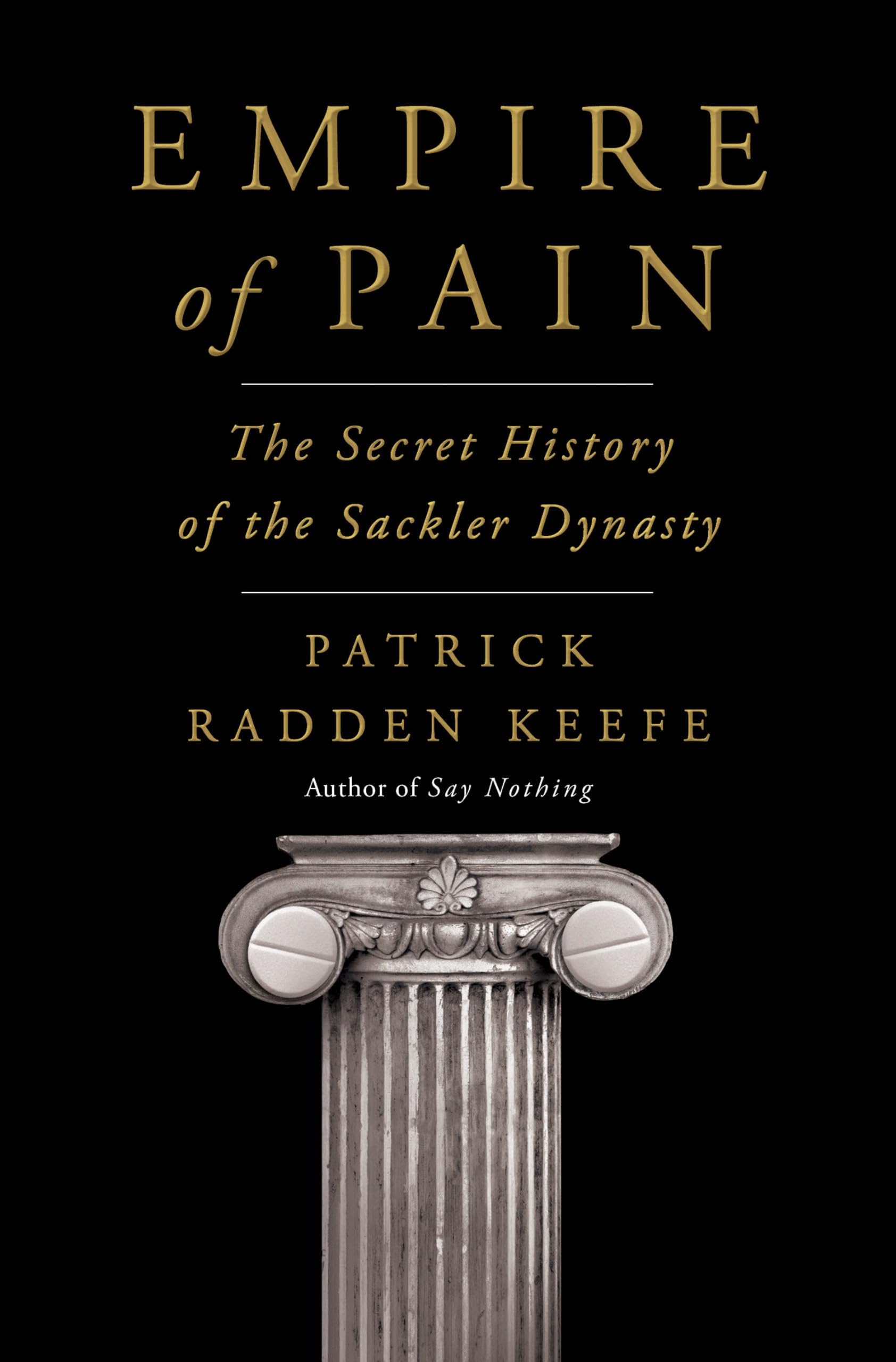
Empire of Pain
Product ID: 303884819
Desertcart purchases this item on your behalf and handles shipping, customs, and support to Argentina.
desertcart.in - Buy Empire of Pain book online at best prices in India on desertcart.in. Read Empire of Pain book reviews & author details and more at desertcart.in. Free delivery on qualified orders. Review: A shocking story well-researched and well-narrated - This is the third such book that I have read in the last couple of years, the other two being “The Billion Dollar Loser” on WeWork and on Adam Neumann and “Bad Blood” on Theranos and on Elizabeth Holmes. While the first is about a business built on hubris and the second about a complete fraud, “The Empire of Pain” was the most shocking of the three. It is about a legitimate business that was extremely successful but one that was built using several unethical means and one that ultimately caused the death of thousands of Americans. The book traces the history of the Sackler family and of Purdue Pharma, starting with the early years of Arthur , Mortimer and Raymond Sackler, children of an immigrant family in New York. Their parents desired their sons to become doctors, given the perceived nobleness of the profession, which turns out ironic given the later history of the family. The first section traces the lives and the initial wealth creation of the three brothers, especially that of Arthur. It gives an insight into their ambiguous views on integrity around medical products and conflicts of interest and their desire to be recognised as a leading family in the country. The second section is about the rise of OxyContin as a majorly profitable drug for Purdue, the issue of widespread addiction caused by it and Purdue’s attempts to fight the hundreds of legal cases. The final session is about the third generation and the eventual fall of the company. The book is extremely well-researched and written in a way that makes it interesting reading despite the subject matter and the length of the book. The Sackler empire was built on Roche’s Librium and Valium, especially the latter. By the time Valium was controlled, it was used by 20 million Americans and became the most widely consumed — and abused — prescription drug. The second generation of Sacklers multiplied that wealth with OxyContin.It could be argued that OxyContin was a legal drug, approved by the FDA, but the fact was that America did not have an opioid crisis before the drug’s introduction. It is also clear that the company was aware of the problem for a long time but chose to ignore it for selfish reasons. And its usage of its legal teams, influential government representatives, threats and otherwise Machiavellian methods to thwart any attempts to stop it is simply shocking. The lack of oversight by government institutions is particularly galling — as Keefe puts it, “the opioid industry is, among other things, a parable about the awesome capability of private industry to subvert public institutions”. As I write this review, the Sackler family appears to have got away with it. They have had to pay billions of dollars as penalties, have had to give up their stake in Purdue Pharma and have to bear the ignominy of seeing their family name stripped away from many of their philanthropic attempts. However, they still have several billions of dollars of wealth created by the opioid crisis, have had no criminal charges against them and seem to have procured immunity against future legal liabilities. And that’s indeed a pity! Pros: Extremely well researched, the narrative style makes it an interesting read despite its length Cons: The length of the book to some extent Review: A must buy and read - the most compelling story of corporate evil - This *outstanding* book by Patrick Keefe is special for me 'coz it amplifies: - the moral challenge entrepreneurs have to 'do right' at the cost of losing millions and alternatively succumbing to self-satisfying excuses that eventually harm people. (In my case, the resolve is NOT to build "real money mobile games" that addict people). This book is a masterpiece! Why: - Apart from "Red Notice" (reviewed by me), it's the only other book I've read that mentions real-life threats to the author's life (implying the deep impact). - An critical story to learn - as a business grows, the hard choice becomes choosing between morals or profits. In this case, the sheer immorality of the entrepreneurs is staggering. - Deep entrepreneurial insights. How a 'right and left brain' combination (knowledge of medicine and marketing acumen) help companies scale. An ability we must all inculcate. - A deep, important lesson - what is 'legally' right does not mean it's good to go. What is 'morally' right is more important. - How money can buy anything (fame, status, prestige). Indicating that the most glorified institutions of the world are always up for sale. - Life can turn at any moment. "during the Depression, there were doctors in Brooklyn who were reduced to selling apples on the street." - Case study of the birth of 'native' advertising - The dark world of vested interests - 'Philanthropy wasn’t charity, as his lawyer Michael Sonnenreich insisted. It was a business deal." - Chronicles of obsessive behaviour to control outcomes “They were putting pressure on the White House,” the executive said." - The business of professional bribery - "A 2016 study found that purchasing even a single meal with a value of $20 for a physician can be enough to change the way that he prescribes." A MUST Buy and read.




| Best Sellers Rank | #589,964 in Books ( See Top 100 in Books ) #130 in Industries #190 in True Accounts (Books) #824 in Biographies & Autobiographies (Books) |
| Customer Reviews | 4.6 4.6 out of 5 stars (12,806) |
| Dimensions | 16.23 x 3.76 x 23.88 cm |
| Hardcover | 512 pages |
| ISBN-10 | 0385545681 |
| ISBN-13 | 978-0385545686 |
| Importer | Bookswagon, 2/13 Ansari Road, Daryaganj, New Delhi 110002, [email protected] , 01140159253 |
| Item Weight | 907 g |
| Language | English |
| Packer | Bookswagon, 2/13 Ansari Road, Daryaganj, New Delhi 110002, [email protected] , 01140159253 |
| Publisher | Doubleday (13 April 2021); Phaidon SARL; Jean-Francois Durance; [email protected] |
A**N
A shocking story well-researched and well-narrated
This is the third such book that I have read in the last couple of years, the other two being “The Billion Dollar Loser” on WeWork and on Adam Neumann and “Bad Blood” on Theranos and on Elizabeth Holmes. While the first is about a business built on hubris and the second about a complete fraud, “The Empire of Pain” was the most shocking of the three. It is about a legitimate business that was extremely successful but one that was built using several unethical means and one that ultimately caused the death of thousands of Americans. The book traces the history of the Sackler family and of Purdue Pharma, starting with the early years of Arthur , Mortimer and Raymond Sackler, children of an immigrant family in New York. Their parents desired their sons to become doctors, given the perceived nobleness of the profession, which turns out ironic given the later history of the family. The first section traces the lives and the initial wealth creation of the three brothers, especially that of Arthur. It gives an insight into their ambiguous views on integrity around medical products and conflicts of interest and their desire to be recognised as a leading family in the country. The second section is about the rise of OxyContin as a majorly profitable drug for Purdue, the issue of widespread addiction caused by it and Purdue’s attempts to fight the hundreds of legal cases. The final session is about the third generation and the eventual fall of the company. The book is extremely well-researched and written in a way that makes it interesting reading despite the subject matter and the length of the book. The Sackler empire was built on Roche’s Librium and Valium, especially the latter. By the time Valium was controlled, it was used by 20 million Americans and became the most widely consumed — and abused — prescription drug. The second generation of Sacklers multiplied that wealth with OxyContin.It could be argued that OxyContin was a legal drug, approved by the FDA, but the fact was that America did not have an opioid crisis before the drug’s introduction. It is also clear that the company was aware of the problem for a long time but chose to ignore it for selfish reasons. And its usage of its legal teams, influential government representatives, threats and otherwise Machiavellian methods to thwart any attempts to stop it is simply shocking. The lack of oversight by government institutions is particularly galling — as Keefe puts it, “the opioid industry is, among other things, a parable about the awesome capability of private industry to subvert public institutions”. As I write this review, the Sackler family appears to have got away with it. They have had to pay billions of dollars as penalties, have had to give up their stake in Purdue Pharma and have to bear the ignominy of seeing their family name stripped away from many of their philanthropic attempts. However, they still have several billions of dollars of wealth created by the opioid crisis, have had no criminal charges against them and seem to have procured immunity against future legal liabilities. And that’s indeed a pity! Pros: Extremely well researched, the narrative style makes it an interesting read despite its length Cons: The length of the book to some extent
A**L
A must buy and read - the most compelling story of corporate evil
This *outstanding* book by Patrick Keefe is special for me 'coz it amplifies: - the moral challenge entrepreneurs have to 'do right' at the cost of losing millions and alternatively succumbing to self-satisfying excuses that eventually harm people. (In my case, the resolve is NOT to build "real money mobile games" that addict people). This book is a masterpiece! Why: - Apart from "Red Notice" (reviewed by me), it's the only other book I've read that mentions real-life threats to the author's life (implying the deep impact). - An critical story to learn - as a business grows, the hard choice becomes choosing between morals or profits. In this case, the sheer immorality of the entrepreneurs is staggering. - Deep entrepreneurial insights. How a 'right and left brain' combination (knowledge of medicine and marketing acumen) help companies scale. An ability we must all inculcate. - A deep, important lesson - what is 'legally' right does not mean it's good to go. What is 'morally' right is more important. - How money can buy anything (fame, status, prestige). Indicating that the most glorified institutions of the world are always up for sale. - Life can turn at any moment. "during the Depression, there were doctors in Brooklyn who were reduced to selling apples on the street." - Case study of the birth of 'native' advertising - The dark world of vested interests - 'Philanthropy wasn’t charity, as his lawyer Michael Sonnenreich insisted. It was a business deal." - Chronicles of obsessive behaviour to control outcomes “They were putting pressure on the White House,” the executive said." - The business of professional bribery - "A 2016 study found that purchasing even a single meal with a value of $20 for a physician can be enough to change the way that he prescribes." A MUST Buy and read.
S**.
Eye Opener on Pharma scams. Gripping.
Very good book. Gripping. Revealing how some exploit and make money. That ill-gotten money makes more illegal money. Realized even FDA in USA is not fully trustworthy. Amazing writeup. Recommend to all.
D**T
A story of Opioid Addiction and Addiction of Money
"Empire of Pain" is a deeply human story of unimaginable greed and corruption. As a firm believer in the free-market economy, I found this book unsettling. It exposes how powerful corporations, armed with immense wealth and influence, can manipulate the system and escape serious consequences. This was the first investigative nonfiction book I’ve ever read, and it has drawn me toward the genre—thanks to Patrick Radden Keefe’s brilliant storytelling. His meticulous research and compelling narrative make this a gripping and eye-opening read.
S**S
Eye-opening tale of business greed
Hats off to the author for pulling this off! The book is marvelous in all respects, fantastic research, great narration and most importantly, for having the spine to call out the extent to which greed can take over. It's a pity that the Sackler family got away without losing anything (more or less). And in general, history will make us shamefully look back at how we allow(ed) large scale white collar crimes and criminals to go scot free..
B**N
Empire of Pain illustrates the devastating consequences of addiction to money
Empire of Pain is absolutely fascinating but also thoroughly sickening. It clearly illustrates how wealth confers power to corrupt institutions that were created to protect the public. The book is extremely well written and informative. I agree with Illinois congressman Raja Krishnamoorthi's conclusion that the Sacklers were addicted to money. Their addiction completely destroyed their humanity. I also agree with Tennessee congressman Jim Cooper's feeling that he's not aware of any family in America that's more evil than the Sacklers. At Rs. 453, it's a fantastic bargain.
U**R
Empire of pain
Good book
D**H
What an insight into the incredible rise of this family and the means they went to for the price of money over lives
T**O
Sakura (cherry blossom) is a Japanese slang term that refers to adorning banal products by conspicuous hired people. Arthur Sackler's Sakura-marketing promotion brought exorbitant money to the Sackler family. Each country has a policy on drugs, and when it comes to painkillers, doctors are strictly prohibited from prescribing opioids in Japan, even though patients yearn to remove chronic pain. The book reveals the dark side of the pharmaceutical industry and the inappropriate drug authorization systems in the US—a very horrible non-fiction story. Pain is annoying but an essential vital sign we should accept to some extent. Would I take the COVID-19 vaccines if I had read this book before?
B**E
This was the first non fiction book i have read in a long long time and it was a great experience. It’s an astonishing story, written down in a very clear and captivating style. (And interesting to keep following it in the press).
O**R
“I started reading Patrick Radden Keefe due to the book ‘Say Nothing’ about IRA activities in Northern Ireland. Subsequently, I read ‘Empire of Pain,’ detailing how the Sackler family, posing as philanthropists, contributed to the opioid epidemic in the USA. They aggressively promoted OxyContin through Purdue Pharma reps, encouraging doctors to prescribe this highly addictive painkiller, containing oxycodone, a semi-synthetic derivative of opium. The book reveals the deceptive promotion, leading to widespread addiction and the destruction of lives and families over the past 30 years in the USA and beyond. Engaging read, a truly deserving 5-star book!”
B**B
Incredible book into the lives of the Sacklers and how they shaped the pharmaceutical and healthcare industries for the ultimate goal of making money. It's written brilliantly with great attention to detail, but I don't find any of it boring. Patrick Radden Keefe is an excellent writer. There is so much information in this book, but it all serves a purpose and delivers an exciting (if deeply upsetting) look into how OxyContin was developed and what made it so pervasive. The lengths that the Sacklers and Purdue went to all for extra money is astounding and deeply troubling.
Trustpilot
1 month ago
1 month ago