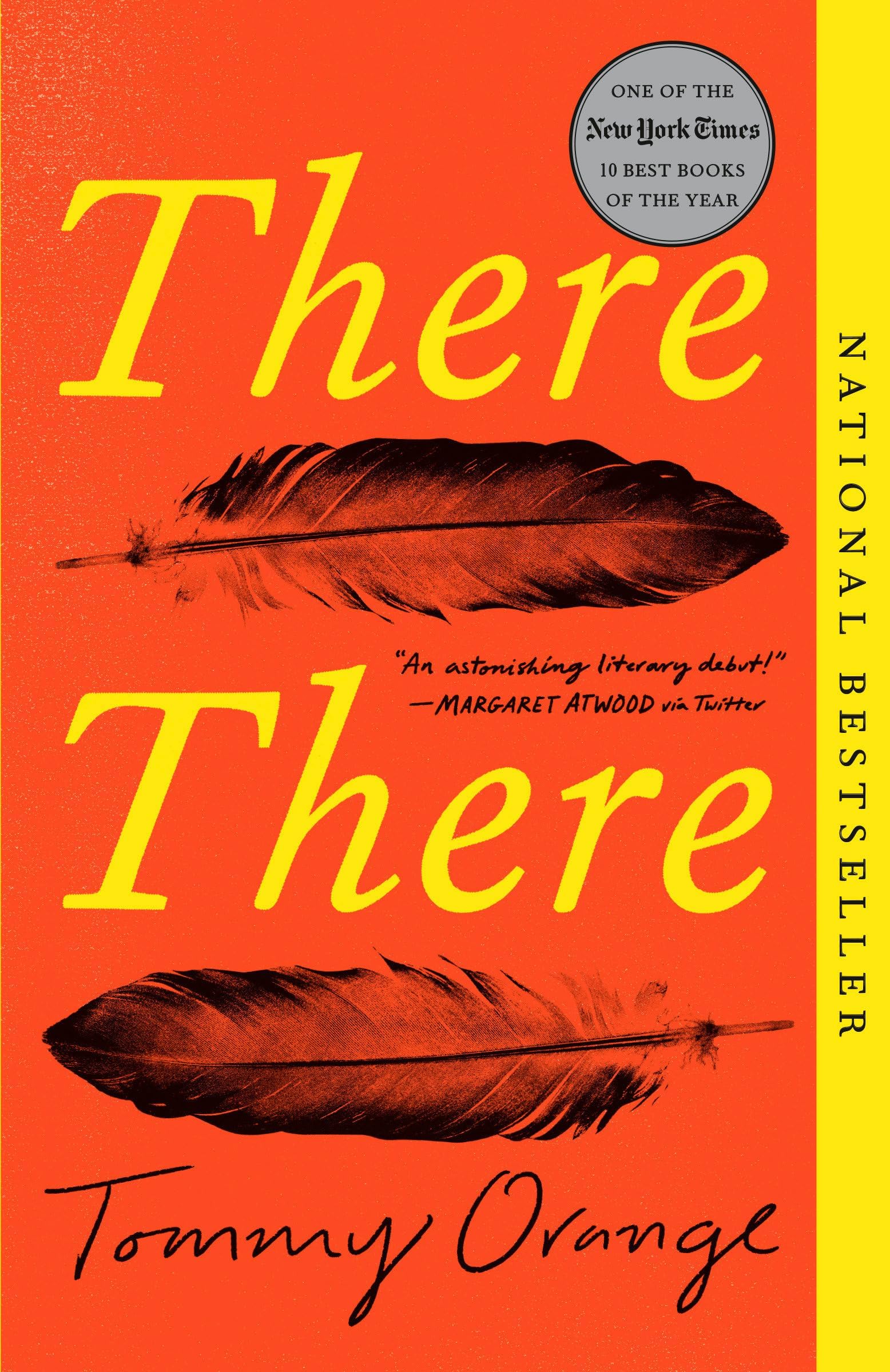

There There: Tommy Orange
Product ID: 298719034
⭐4.0/5 from 16.5K+ reviews
🏆Top 150 in Cultural & Political Fiction
📚905K+ sales rank
📖 Dive into the untold stories that everyone’s talking about — don’t miss the literary event of the year!
There There by Tommy Orange is a critically acclaimed novel ranked in the top 150 for Cultural Heritage and Political Fiction. Featuring a multi-layered narrative from 12 Native American characters converging at the Big Oakland Powwow, it delivers a powerful exploration of identity, trauma, and resilience. With over 16,500 reviews averaging 4 stars, this book is a compelling, socially relevant read that resonates deeply with millennial professionals seeking authentic cultural insights.


| Best Sellers Rank | 124,835 in Books ( See Top 100 in Books ) 153 in Cultural Heritage Fiction 186 in Political Fiction (Books) 2,336 in Literary Fiction (Books) |
| Customer reviews | 4.0 4.0 out of 5 stars (16,693) |
| Dimensions | 13.13 x 1.52 x 20.27 cm |
| Edition | Reprint |
| ISBN-10 | 0525436146 |
| ISBN-13 | 978-0525436140 |
| Item weight | 1.05 kg |
| Language | English |
| Print length | 304 pages |
| Publication date | 8 May 2019 |
| Publisher | Knopf Doubleday Publishing Group |
D**H
Held my full attention
At the Big Oakland Powwow, there’s $50,000 of prize money and a plot to steal it. ‘There There’ tells the story of the robbery and why a handful of the Urban Native American attendees come to the event. Jacquie Red Feather travels from Phoenix with event emcee, Harvey, a man she hasn’t seen since he raped her forty-two years ago. A daughter was conceived during the rape and was given away for adoption when Jacquie was seventeen. The daughter, Blue, is head of the powwow committee. Jacquie had a second daughter, Jamie, a heroin addict who killed herself, leaving three sons. Jacquie’s younger half-sister, Opal Viola Victoria Bear Shield, adopted Jacquie’s grandsons. Orvil (14) likes to dance in traditional Indian regalia. He takes his brothers, Loother (12) and Lony (10), to the powwow where he enters a dance competition. Opal goes to the powwow in secret to watch Orvil dance. Like Jacquie, Harvey is an alcoholic. He unwittingly fathered another child during a wild night with a white woman called Karen. The child, Edwin Black, was raised by Karen. Edwin is tech-savvy and holds a master’s degree in comparative literature. He successfully applies for a paid internship at the Oakland Indian Centre, which requires him to help organise the powwow. Karen’s boyfriend, Bill Davis, works in maintenance at the Oakland Coliseum – location of the Big Oakland Powwow. In her youth, Opal Viola Victoria Bear Shield was in a relationship with Lucas who moved in with his sister, Norma, when he was dying of alcohol induced liver failure. Norma has a mixed-race son, Dene Oxendene, who, at the age of thirteen, inherited a camera from Lucas. Dene gets a $5,000 grant to document urban Indian stories and sets up a tent at the Big Oakland Powwow. Blue used to work with Maggie, sister of Calvin and Charles Johnson. Calvin lives with Maggie and her daughter Sonny. Blue gets Calvin a job finding younger vendors and supporting young Native artists and entrepreneurs at the powwow. Charles, his best friend Carlos and Calvin all sell weed for Octavio Gomez. Calvin is robbed of a consignment of weed he was supposed to sell. Charles and Carlos smoke theirs. All three are now in debt to Octavio. Octavio’s father died in a shooting avenging the theft of weed by Octavio’s brother, Junior, and uncle, Sixto. Octavio’s mother and brother were killed in a car accident when they were passengers in a drunk Sixto’s car. Octavio moved in with his grandmother, Josefina. Manny and Daniel Gonzales were cousins of Octavio. Their father was thrown out of the house following an attack on their mother, Sylvia. Manny was killed in a revenge shooting, leaving a young Daniel to support his mother. Daniel makes guns on a 3D printer. Octavio buys six guns for $5,000. Daniel gives $3,000 to Sylvia and spends the balance on a drone and VR glasses. Tony Loneman has foetal alcohol syndrome. His dad doesn’t know he exists and his mother is in jail. He lives with and cares for his grandmother, Maxine. He supports her with the proceeds of selling weed and cocaine for Octavio. Octavio persuades Tony, Calvin, Charles and Carlos to rob the powwow with him, using the 3D guns printed by Daniel. Octavio forbids his cousin Daniel to attend the powwow, but says he can use the drone to watch the robbery. In full Native regalia, Tony smuggles bullets into the powwow. An amazing climax to a gripping tale follows. Tommy Orange is an enrolled member of the Cheyenne and Arapaho Tribes of Oklahoma. Particularly in the epilogue and interlude, he outlines the shameful genocide and displacement of Native people. The story is told with sometimes shocking honesty and a clutch of fascinating, distinct voices. I feel the large cast of characters is handled well and the failure to resolve every issue by the end of the novel is necessary. Despite the clear search for identity and the challenges facing Native people, no solution is offered. Life rarely serves up a neat, happy ending. I enjoyed the dark humour: ‘He’s always feared he’ll find out that he’s smelled like piss and shit his whole life without knowing it, that everyone’s been afraid to tell him, like Kevin Farley from the fifth grade who ended up killing himself the summer of their junior year in high school when he found out.’ When you begin to wonder whether every Native person abuses alcohol, Harvey says: ‘There’s not some special relationship between Indians and alcohol. It’s just what’s cheap, available, legal. It’s what we have to go to when it seems like we have nothing else left.’ And probably my favourite quote from the book: ‘We don’t have time, Nephew, time has us. It holds us in its mouth like an owl holds a field mouse. We shiver. We struggle for release, and then it pecks out our eyes and intestines for sustenance and we die the death of field mice.’
M**T
building tension
A well written story about the complexities of relationships, in and alongside families. I learnt a lot about the history and current perspective of Native Americans and the struggle to be recognised and heard. I became involved
K**R
... it - however I did not find it a great read and not up to what I was expecting
I heard a review of this book on the radio wit the author reading from it which got me buying it - however I did not find it a great read and not up to what I was expecting.
C**R
One of the best books I’ve read this year
I will read everything Tommy Orange ever writes. I actually read Wandering Stars first as it’s the prequel and sequel to what happens in this book but it’s so beautifully written and captures an exact era and culture you’re completely immersed as a reader.
R**R
Very impressive
This is a very impressive first novel. Tommy Orange has about a dozen narrators for his story which culminates at a pow wow in Oakland. It is not an easy read but there are great passages like the two non fictional essays in the beginning and in the middle and some of the narratives of American first nations people. We see Indians often as people connected to nature, but the people in Orange's book are city people and they struggle with their ancestry and they struggle with their present and their often damaged family relationships with stories of alcohol, drugs and abuse. Soon, Mr Orange will come to my town and I am looking forward to see him in person.
R**E
Great book, highly recommended
This was a great novel; it was engaging, the story flowed and was well written. There is a lot going on with multiple characters and multiple themes. This book was a pleasure to read. The lives and stories of multiple characters are told through the various chapters. Despite the short “time” each character had to tell their story, I felt there was enough to get you interested in them and care about where life took them. The characters were largely interlinked, all culminating at a Powwow that two of the characters, Tony and Octavio, intend to rob to pay a drug debt. There are flashes of humour along with some very dark themes, domestic abuse, rape, drug and alcohol dependency. There are also interludes where the author lays out the brutal historical background and the impact these events still have today. I liked the characters Opal, Orvile (and his younger brothers), and Edwin in particular. Edwin was a bit of a whinger, but I could also sympathise with him and the rut he was stuck in. The ending came swiftly and senselessly, just as the characters really started to get going and their stories began to merge; I don’t know if this was metaphorical but I thought the way the novel came crashing to an abrupt end fitted well within the story.
D**K
Native American or Indian
This is a novel dealing with the problems facing a group of Native Americans in an urban setting. While the ending is somewhat predictable, that is offset by drawing attention to the addiction (both alcohol and drugs), lack of education and petty crime associated with the set of people in Oakland, California. I wonder if the group may be regarded as representative of what is certainly a very disadvantaged race of people.
K**N
Enjoyed
Most unusual book, enjoyed the read very much.
C**A
La descripción de los indios americanos, sus problemas, su vida, su situación, maravillosa La presentación de los personajes, genial una buena forma de mostrar los puntos indicados. Pero el final, el desenlace, el pow wow, aburre, no resulta creíble y le sobra truculencia, una pena con un inicio tan genial
C**E
Looking forward to more of Orange’s books
G**N
Tommy Orange „There There“ („Dort Dort”) New York 2018, deutsche Ausgabe München 2019 Indianische Autoren schreiben anders. Das Erzählen von Geschichten gehört von jeher zu den kulturellen Fähigkeiten der indianischen Nationen, bevor sie von Kolumbus „entdeckt“ wurden. Aber ihr im Gegensatz zu weißen Erzählern "unterentwickeltes" hierarchisches Denken führt dazu, dass man es als weißer Leser nicht immer leicht hat mit der Lektüre. Wer es gewöhnt ist, dass sich Dramen um eine, zwei oder höchstens drei Hauptpersonen ranken und dass man die anderen immer mal vergessen kann – der verliert bei Indianern schnell den Überblick. Denn hier ist jede einzelne Figur wichtig. Wie im Kreis, der indianisches Denken bis heute prägt, sind alle in einem Verbund, und jeder einzelne hat seine mit den anderen verflochtene Geschichte. Wenn es sich in Tommy Oranges Roman „There There“ um zwölf Leute handelt - mit denen weitere zusammenhängen – dann hat man sie spätestens nach 100 Seiten durcheinander geworfen, weil es den ungeübten weißen Kopf überfordert. Es ist hilfreich, sich von Beginn an Notizen zu machen, was auch die Erzählstruktur selbst bis in ihre Verästelungen besser erkennen lässt. Das große Thema von Orange sind, wie könnte es anders sein, die katastrophalen Auswirkungen der Kolonisierung durch die weißen Siedler. Der Titel „There There“ („Dort Dort“) entstammt einem Song der britischen Rockband Radiohead, den eine der Romanfiguren auf dem Handy hört. Das klingt harmlos nur auf der Oberfläche – der Songtext deutet vielmehr an, dass es keinen Ort mehr gibt. Der Ort, die konkrete geographische Mitte eines Geschehens, unverzichtbar für indianisches In-der-Welt-Sein und für die Verbundenheit mit dem Planeten Erde, wurde den Menschen entrissen: „Aber für die Ureinwohner dieses Landes, des ganzen amerikanischen Doppelkontinents, ist das alles neu bebautes, vergrabenes Ahnenland, Glas und Beton und Draht und Stahl, unwiederbringliche, bedeckte Erinnerung. Es gibt dort kein Dort,“ heißt es an einer Stelle. Im Gegensatz zu seiner Kollegin Louise Erdrich, die teilweise deutsche Wurzeln hat und sich die komplizierten Verbindungen und Zerstörungen weißer und indianischer Lebensgeschichten zum Thema gemacht hat, richtet der Cheyenne-Autor Orange den Fokus allein auf die indianische Seite – auf die Unmöglichkeit, sich als Indianer zwischen Weißen einen eigenen Platz zurück zu kämpfen. Die Lebensgeschichten der zwölf Menschen sind eigentlich Geschichten des Nichtlebenkönnens, des permanenten Unglücks, der Suche nach einem noch so bescheidenen Zuhause, es sind Geschichten von zerfallenden Beziehungen, von linderndem Alkoholismus, von Drogendealern und Autodieben, die ihren Lebensunterhalt nicht anders bestreiten können. Und es sind Geschichten, in denen die Menschen immer mal versuchen, wieder den Kopf zu heben, in einem neu gegründeten sozialen Zentrum sich und anderen die Möglichkeit zu geben, wieder Wurzeln zu treiben. Orange hat als Schauplatz der vielen auseinander driftenden und doch ineinander greifenden Leben einen konkreten Standort etabliert, an dem er selbst geboren wurde und aufgewachsen ist: die 1852 gegründete Stadt Oakland in Kalifornien, am Ufer der Bucht von San Francisco. Und hier kommt auch alles wie unter einem Brennglas zusammen. Es soll ein Powwow veranstaltet werden, ein Treffen, bei dem Indianer von nah und fern sich temporär wieder als sie selber fühlen können, eine Erneuerung ihrer Identität. Tänzer, eine Trommlergruppe werden erwartet, ein Wettbewerb soll die Besten auszeichnen, ein Safe mit Geldkarten ist unterwegs. Zarte Hoffnungen keimen, eine Jahrzehnte zurückliegende Geschichte zwischen Jacquie Red Feather und Harvey, der sie damals missbraucht hat, scheint ein unerwartetes, harmonisches Ende zu nehmen. Harvey, damals unterdrückt von einem brutalen Vater, erweist sich als einsichtiger, empathischer Erwachsener. Die damals gezeugte Tochter Blue, die Jacquie zur Adoption freigegeben hatte und die beide Eltern nie gesehen hat, findet aus der Distanz einen Weg zu ihnen… Doch: „Die Wunde, die gerissen wurde, als die Weißen kamen und sich nahmen, was sie nahmen, ist nie verheilt. Eine unversorgte Wunde entzündet sich. Wird zu einer anderen Art von Wunde…“ heißt es im Text, und die komplizierte Verflechtung der Personen endet in einem Desaster. Drogendealer Octavio, Indianer, Mitglied einer von Gewalt zerstörten und mühsam von Großmutter Fina zusammengehaltenen Familie, löst ein Blutbad aus bei dem Versuch, sich beim Powwow der Geldkarten aus dem Safe zu bemächtigen. Er und seine Mitstreiter erschießen sich praktisch gegenseitig, wobei viele andere sterben. Der Roman endet in kleinen einzelnen Kapiteln – in den jeweils individuellen Empfindungen und Bewusstseinsschichten der einzelnen Sterbenden. Diese Passagen gehören zu den intensivsten und – man zögert bei dem Wort – zu den poetischsten des Romans. Es ist, als bringe der Moment des Todes ihnen die indianische Identität zurück. Hier werden keine Schuldfragen aufgeworfen oder gar beantwortet. Es gibt keine Schuld der Akteure, die Schuld, die es gab, liegt Jahrzehnte und Jahrhunderte zurück und wurde nie gesühnt, sie wurde und wird von den Schuldigen nie auch nur erkannt. Es gibt stattdessen die Wirklichkeit und ihre zerstörten Orte. Und Hoffnung? Immerhin weiß ja Großmutter Fina noch, wie man, wenn auch vergeblich, auf indianische Weise gegen einen Fluch angeht. Die Powwows, die gibt es noch. Es gibt die Trommler, denen das Trommeln ein Gebet ist. Es gibt den jungen Filmemacher Dene Oxendene, der Indianer-Interviews als Dokumentation aufzeichnen will. Und es gibt diesen Erzähler, der das alles sagt.
I**E
Ce livre est difficile à comprendre pour quelqu'un qui ne connais pas bien l'histoire de l'Amérique mais je le trouve très intéressant : il explique bien certains problèmes dont on ne parle pas beaucoup ici en Europe.
V**A
There’s so much happening in There There, but not once did it feel overwhelming or confusing. I could understand each character, their motivations, and the plot as well, right till the end when it all unravels. Actually., it starts unravelling quite early on. As early on as the third chapter or so. There There (title referring to a quote by Gertrude Stein, which is out of context, but works here) by Tommy Orange is not only important because of the socio-political issues it raises or the ones that are deep-rooted in the novel. It is also important because it is written so well and needs to be read widely. There are 12 characters whose lives are interwoven. They are all Native Americans, living or have lived in Oakland, California. They are all dealing with identity issues, and want to make more sense of their lives, and do better at living. And all their stories and lives converge and meet at the Big Oakland Powwow. It is a Canterbury Tales like novel, with each narrative unfolding, and un-layering till we get to the end. At the heart of it though it is about Native Americans and their lives – their stories, the injustices, the motivations, the histories deep buried and sometimes unacknowledged, the need to fit in so strongly because that’s what’s been drummed into your head, and about the marginalized and the invisible lives they lead. Each chapter is of course focused on one character, and yet it never feels disjointed or separate. It all magnificently comes together in the manner of how families are formed – sometimes by birth, and sometimes just. Dene Oxedene’s track in the book is pretty much what the book is about – he is making a documentary on the lives of Native Americans, as they speak about their experiences of living in Oakland. Tommy Orange’s writing is direct and cuts to the bone. He shows and tells. He does it all. He is a traditional storyteller, and also breaks form multiple times in the course of the book. Yes, sometimes it can get overwhelming to follow lives of 12 people, but it is a ride you want to be on gladly, and understand, comprehend, and make sense of the world we live in. “The messy, dangling strands of our lives got pulled into a braid—tied to the back of everything we’ve been doing all along to get us here…we’ve been coming for years, generations, lifetimes, layered in prayer and hand-woven regalia, beaded and sewn together, feathered, braided, blessed, and cursed.” Do you need to say anything more with this imagery on paper? All I can say is that read this book. Read it with an open mind and heart. I am eagerly looking forward to Tommy Orange’s next.
Trustpilot
1 week ago
3 days ago