![The Thin Red Line (The Criterion Collection) [Blu-ray]](https://m.media-amazon.com/images/I/41i2q0yG0NL.jpg)

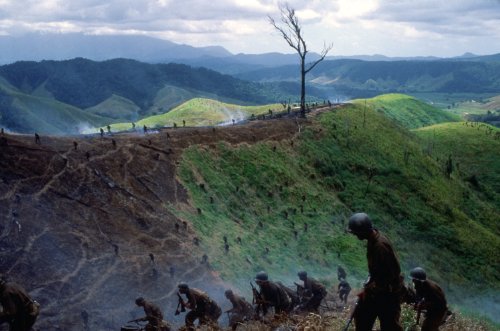
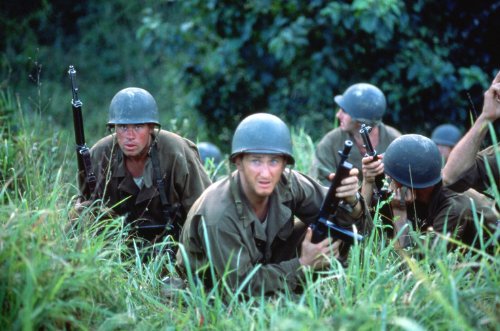


After directing two of the most extraordinary movies of the 1970s, Badlands and Days of Heaven, American artist Terrence Malick disappeared from the film world for twenty years, only to resurface in 1998 with this visionary adaptation of James Jones’s 1962 novel about the World War II battle for Guadalcanal. A big-budget, spectacularly mounted epic, The Thin Red Line is also one of the most deeply philosophical films ever released by a major Hollywood studio, a thought-provoking meditation on man, nature, and violence. Featuring a cast of contemporary cinema’s finest actors—Sean Penn (Dead Man Walking, Milk), Nick Nolte (The Prince of Tides, Affliction), Elias Koteas (Zodiac, The Curious Case of Benjamin Button), and Woody Harrelson (Natural Born Killers, The People vs. Larry Flynt) among them—The Thin Red Line is a kaleidoscopic evocation of the experience of combat that ranks as one of cinema’s greatest war films. Review: A Stunning Visual Masterpiece! - This film had the unfortunate luck to be released conterminous with Saving Private Ryan. Like Wyatt Earp and Tombstone in 1993, both films have their followers and detractors. Yet I liked both Saving Private Ryan and The Thin Red Line. I'll never forget how The Thin Red Line affected me when I saw it in 1999. I rated it a 9.0 out of 10 and this Criterion collection only reinforced how I felt after finally seeing the film for the first time in a decade and a half. The film is visually stunning and truly grabs the viewer's attention. It showed how the interpersonal relationships that each character has with himself, nature and his comrades in arms. Malick held back on the gore. He very well could have shown more blood and guts had he chosen to do so. The film was rated R, after all. In a sense he sold the film short because the violence showcased could have been shown on network television. Only the language would have had to be culled. There was no sex and the violence was nowhere near gratuitous. In order to review this movie I decided to reread Michel Chion's BFI Classics book The Thin Red Line and I saw on Youtube Siskel & Ebert's discussion and I read Roger Ebert's written review from 1998. Gene Siskel felt this was the best contemporary war movie he ever saw. Ebert, while enamored with the movie did not go that far. I too would agree with Ebert. I consider this movie to be the equal of Saving Private Ryan but at the same time I highly enjoyed The Thin red Line despite its minor flaws. Jeff Owenby in his Youtube response said: "There were far too many actors[Characters], and the constant switching of big names without enough storylines to accommodate them hurt the movie." This sums up the main problem with the movie. Even Roger Ebert said this. "The soldiers are not well-developed as individual characters. Covered in grime and blood they look much alike and we strain to hear their names barked out mostly in one syllable (Welsh, Fife, Tall, Witt Gaff, Bosche, Bell Keck, Staros)." As a result of this we the viewer have problems seeing who is who. This creates a detachment from the characters and (Unlike In saving Private Ryan) prevents us from empathizing with the characters (Save For Witt). This is the reason why so many people have not given this movie its just due. Another problem as Roger Ebert mused (I Agree) saw it was that all of the characters seemed to mull and ponder their fates in the same voice. The voice of a much older person. In a nutshell, they were 20-year old kids acting 20-years older than they were. With the exception of Lt. Colonel Tall and Sgt. Welsh, the characters are too young to even be contemplating anything more than trying to survive their tour on Guadalcanal. I also had questions. What happened to Sgt. McCron, the man who comes unhinged at the loss of his squad? Did he survive? was he given a Section 8? Did Dale regain his humanity after crying in the rain? Did Doll return the .45 pistol he stole? Did Lt. Tall get his promotion? He certainly deserved it. A man his age should at least have been a full Colonel, if not a Brigadier General (Like Travolta's Character Was). The movie refrains from giving us any details as to the fates of the men after they depart the island. Michel Chion writes about this eloquently in his book. He goes into great details of each character's "inner voice." Yet he, unlike Ebert, does not seem to realize that the musings of the men sound like that of the director, an older man. But their musings do not tell us their eventual fate nor do they foreshadow what would become of them in the future. Roger Ebert also said on his show how the narration sounded a bit too much like the Days of Heaven narration, which distracted him when he saw The Thin Red Line. Simply put, the movies seem to have the same voice which is unrealistic. It seemed like he took the tone of the narration and moved it from the Texas wheat fields to this island in the Pacific and yet he's asking the same questions. As I mentioned earlier, this same "voice" does not give the characters any individuality. It only serves to make them what seem to be clones. This was not the case with the book by James Jones. Each character was delineated precisely and Ebert even says that had Spielberg done this movie it might have looked much more like Saving Private Ryan. The battle scenes were nothing but superb! Taking Hill 210 must have been like taking Hamburger Hill, a pure hell for anyone attempting to ascend it's hellish terrain. This is where the movie grabbed and held me. The vivid scenery, the musings of the soldiers as well as the individual shots of wounded and angry wildlife. A captured crocodile, a wounded bird and a maddened snake (According To Wikipedia there Are Few Venomous Snakes On Guadalcanal). I highly recommend this movie and I'm proud to have been the 535th person to rate it Five Stars and the 1067th overall. I also recommend you purchase Michel Chion's book. He was able to translate the words of the Japanese soldiers that surrounded Witt at the end of the movie! I'd always wondered what they were saying to him. I was fascinated when I read what they were saying. I'm still glad that Malick chose not to subtitle those words because it kept us in Witt's point of view and kept us from identifying too much with the "enemy" as shown in this movie. Chion's book is the perfect companion piece to this movie. See also the Siskel & Ebert segment for this film (And Any Others From Their Time Period Together). I also recommend reading Roger Ebert's original January 8, 1999 review of the movie. All of his reviews are timeless. He and Gene Siskel will always be missed. A. Nathaniel Wallace, Jr. A. Nathaniel Wallace, Jr. Review: 3 Hours That Go By Very Fast - This is one awesome WWII film, focusing on the Guadalcanal mission in the Pacific. At 3 hours, it may seem long, but between the film's physical action and philosophical reflections, those hours fly by—I was sorry when it was all over. There is a roster of known Hollywood actors in here: Nick Nolte, Sean Penn, Jim Caviezel, John Cusack, Adrien Brody, Ben Chaplin, Elias Koteas, Woody Harrelson, Jared Leto, John Savage, John C. Reilly, Tim Blake Nelson, John Travolta, George Clooney and even more. Some have main roles, such as Nolte, Penn, Caveizel, Koteas, Chaplin; others are more like cameos, such as Travolta, Nelson, Reilly, Clooney. Outstanding to me was Jim Caviezel, who played Jesus Christ in Mel Gibson's "Passion of the Christ." (Which reminds me: Gibson also has a cameo in Mallick's film.) His character, Private Witt, sets the philosophical tone of the film from the very start. He has gone AWOL with a comrade, hiding on a Pacific island whose tribal people may encounter natural dangers like crocodiles and monsoons, but nonetheless appear happy with their lives and at peace with the world: they don't have much to be fearful of losing, except one another. Witt's contemplations about this reality, death, immortality, and the human condition are soon interrupted by a military troop ship, ready to apprehend the runaways. Private Witt is forced to leave—and as punishment, assigned to a stretcher bearer's job in a dangerous campaign—but his musings go with him, informed not only by what he has learned in observing the island people, but by memories of his past. This philosophical dimension is sustained not only by Witt but other characters too, and is integral to the experience of The Thin Red Line without ever interrupting the film's tense, frightful drama. The U.S. military seeks to wrest command of Guadalcanal (a Solomon island) from the Japanese, in the army's first major amphibious assault in the Pacific Theater. (It would end up a 6-month hellish campaign.) Essential to the army's advancement was a high ridge that allowed a powerful vantage-point of the terrain. Once it is discovered, the monumental mission for a select few in Witt's new unit is to take the ridge from the Japanese, who are dug in and well supplied to defend their holding. Every bit of action leading to the discovery of the ridge and then involving the battle for the ridge is hair-raising. I don't think I've ever tensed up so much and been so chilled by a war movie's action scenes before, and I've seen a lot of war movies. There is much to experience in The Thin Red Line, and much to contemplate. Along with those heights and depths, there is also the sheer beauty of the film's cinematography. If you've seen any of Mallick's movies before, such as Days of Heaven or The New World, you know that beauty can be outstanding, and I doubt you'll be disappointed in the cinematography here. It is powerful, and makes the film especially memorable.


| ASIN | B003KGBIRA |
| Actors | James Caviezel, Kirk Acevedo, Nick Nolte, Penelope Allen, Sean Penn |
| Aspect Ratio | 2.35:1 |
| Best Sellers Rank | #568 in Movies & TV ( See Top 100 in Movies & TV ) #119 in Drama Blu-ray Discs |
| Customer Reviews | 4.8 4.8 out of 5 stars (556) |
| Is Discontinued By Manufacturer | No |
| Item model number | CRRN1933BR |
| MPAA rating | R (Restricted) |
| Media Format | Blu-ray, DTS Surround Sound, NTSC, Special Edition, Widescreen |
| Number of discs | 1 |
| Product Dimensions | 0.7 x 7.5 x 5.4 inches; 4 ounces |
| Release date | September 28, 2010 |
| Run time | 2 hours and 50 minutes |
| Studio | Criterion Collection |
N**O
A Stunning Visual Masterpiece!
This film had the unfortunate luck to be released conterminous with Saving Private Ryan. Like Wyatt Earp and Tombstone in 1993, both films have their followers and detractors. Yet I liked both Saving Private Ryan and The Thin Red Line. I'll never forget how The Thin Red Line affected me when I saw it in 1999. I rated it a 9.0 out of 10 and this Criterion collection only reinforced how I felt after finally seeing the film for the first time in a decade and a half. The film is visually stunning and truly grabs the viewer's attention. It showed how the interpersonal relationships that each character has with himself, nature and his comrades in arms. Malick held back on the gore. He very well could have shown more blood and guts had he chosen to do so. The film was rated R, after all. In a sense he sold the film short because the violence showcased could have been shown on network television. Only the language would have had to be culled. There was no sex and the violence was nowhere near gratuitous. In order to review this movie I decided to reread Michel Chion's BFI Classics book The Thin Red Line and I saw on Youtube Siskel & Ebert's discussion and I read Roger Ebert's written review from 1998. Gene Siskel felt this was the best contemporary war movie he ever saw. Ebert, while enamored with the movie did not go that far. I too would agree with Ebert. I consider this movie to be the equal of Saving Private Ryan but at the same time I highly enjoyed The Thin red Line despite its minor flaws. Jeff Owenby in his Youtube response said: "There were far too many actors[Characters], and the constant switching of big names without enough storylines to accommodate them hurt the movie." This sums up the main problem with the movie. Even Roger Ebert said this. "The soldiers are not well-developed as individual characters. Covered in grime and blood they look much alike and we strain to hear their names barked out mostly in one syllable (Welsh, Fife, Tall, Witt Gaff, Bosche, Bell Keck, Staros)." As a result of this we the viewer have problems seeing who is who. This creates a detachment from the characters and (Unlike In saving Private Ryan) prevents us from empathizing with the characters (Save For Witt). This is the reason why so many people have not given this movie its just due. Another problem as Roger Ebert mused (I Agree) saw it was that all of the characters seemed to mull and ponder their fates in the same voice. The voice of a much older person. In a nutshell, they were 20-year old kids acting 20-years older than they were. With the exception of Lt. Colonel Tall and Sgt. Welsh, the characters are too young to even be contemplating anything more than trying to survive their tour on Guadalcanal. I also had questions. What happened to Sgt. McCron, the man who comes unhinged at the loss of his squad? Did he survive? was he given a Section 8? Did Dale regain his humanity after crying in the rain? Did Doll return the .45 pistol he stole? Did Lt. Tall get his promotion? He certainly deserved it. A man his age should at least have been a full Colonel, if not a Brigadier General (Like Travolta's Character Was). The movie refrains from giving us any details as to the fates of the men after they depart the island. Michel Chion writes about this eloquently in his book. He goes into great details of each character's "inner voice." Yet he, unlike Ebert, does not seem to realize that the musings of the men sound like that of the director, an older man. But their musings do not tell us their eventual fate nor do they foreshadow what would become of them in the future. Roger Ebert also said on his show how the narration sounded a bit too much like the Days of Heaven narration, which distracted him when he saw The Thin Red Line. Simply put, the movies seem to have the same voice which is unrealistic. It seemed like he took the tone of the narration and moved it from the Texas wheat fields to this island in the Pacific and yet he's asking the same questions. As I mentioned earlier, this same "voice" does not give the characters any individuality. It only serves to make them what seem to be clones. This was not the case with the book by James Jones. Each character was delineated precisely and Ebert even says that had Spielberg done this movie it might have looked much more like Saving Private Ryan. The battle scenes were nothing but superb! Taking Hill 210 must have been like taking Hamburger Hill, a pure hell for anyone attempting to ascend it's hellish terrain. This is where the movie grabbed and held me. The vivid scenery, the musings of the soldiers as well as the individual shots of wounded and angry wildlife. A captured crocodile, a wounded bird and a maddened snake (According To Wikipedia there Are Few Venomous Snakes On Guadalcanal). I highly recommend this movie and I'm proud to have been the 535th person to rate it Five Stars and the 1067th overall. I also recommend you purchase Michel Chion's book. He was able to translate the words of the Japanese soldiers that surrounded Witt at the end of the movie! I'd always wondered what they were saying to him. I was fascinated when I read what they were saying. I'm still glad that Malick chose not to subtitle those words because it kept us in Witt's point of view and kept us from identifying too much with the "enemy" as shown in this movie. Chion's book is the perfect companion piece to this movie. See also the Siskel & Ebert segment for this film (And Any Others From Their Time Period Together). I also recommend reading Roger Ebert's original January 8, 1999 review of the movie. All of his reviews are timeless. He and Gene Siskel will always be missed. A. Nathaniel Wallace, Jr. A. Nathaniel Wallace, Jr.
M**N
3 Hours That Go By Very Fast
This is one awesome WWII film, focusing on the Guadalcanal mission in the Pacific. At 3 hours, it may seem long, but between the film's physical action and philosophical reflections, those hours fly by—I was sorry when it was all over. There is a roster of known Hollywood actors in here: Nick Nolte, Sean Penn, Jim Caviezel, John Cusack, Adrien Brody, Ben Chaplin, Elias Koteas, Woody Harrelson, Jared Leto, John Savage, John C. Reilly, Tim Blake Nelson, John Travolta, George Clooney and even more. Some have main roles, such as Nolte, Penn, Caveizel, Koteas, Chaplin; others are more like cameos, such as Travolta, Nelson, Reilly, Clooney. Outstanding to me was Jim Caviezel, who played Jesus Christ in Mel Gibson's "Passion of the Christ." (Which reminds me: Gibson also has a cameo in Mallick's film.) His character, Private Witt, sets the philosophical tone of the film from the very start. He has gone AWOL with a comrade, hiding on a Pacific island whose tribal people may encounter natural dangers like crocodiles and monsoons, but nonetheless appear happy with their lives and at peace with the world: they don't have much to be fearful of losing, except one another. Witt's contemplations about this reality, death, immortality, and the human condition are soon interrupted by a military troop ship, ready to apprehend the runaways. Private Witt is forced to leave—and as punishment, assigned to a stretcher bearer's job in a dangerous campaign—but his musings go with him, informed not only by what he has learned in observing the island people, but by memories of his past. This philosophical dimension is sustained not only by Witt but other characters too, and is integral to the experience of The Thin Red Line without ever interrupting the film's tense, frightful drama. The U.S. military seeks to wrest command of Guadalcanal (a Solomon island) from the Japanese, in the army's first major amphibious assault in the Pacific Theater. (It would end up a 6-month hellish campaign.) Essential to the army's advancement was a high ridge that allowed a powerful vantage-point of the terrain. Once it is discovered, the monumental mission for a select few in Witt's new unit is to take the ridge from the Japanese, who are dug in and well supplied to defend their holding. Every bit of action leading to the discovery of the ridge and then involving the battle for the ridge is hair-raising. I don't think I've ever tensed up so much and been so chilled by a war movie's action scenes before, and I've seen a lot of war movies. There is much to experience in The Thin Red Line, and much to contemplate. Along with those heights and depths, there is also the sheer beauty of the film's cinematography. If you've seen any of Mallick's movies before, such as Days of Heaven or The New World, you know that beauty can be outstanding, and I doubt you'll be disappointed in the cinematography here. It is powerful, and makes the film especially memorable.
P**B
This is a truly fantastic film. More of a search into the human soul than your typical war film- instead master director Terrence Malick uses the setting of war, man's most destructive device, to explore the nature of mankind. Hugely memorable and moving film, and one of my favourites. The acting is tremendous, the cinematography breathtaking and the score is Hans Zimmer's best to date. If you want a film to make you reflect, I urge you to give this a chance to wow you.
R**O
I watched this movie years ago. When I saw that the movie was part of the Criterion Collection I decided to own it. It is one of the best movies about war. Terence Malick made a very good job in this film as well as the performance of Sean Penn, Nick Nolte and Jim Caviezel. The film goes beyond the horrors of the war and raises about ourselves in similar situations. The interior monologue of the characters helps to understand the feeling that surrounded them .
D**L
Excellent Service. Very Quick. The product itself is amazing. Well worth it.
P**2
I love this film so much the bul-ray it self looks amazing. and the sound is amazing as well. criterion did it again with this one. this is a must buy if you are a fan of this film.
T**T
The best war movie ever made. I do not understand or agree with some of the negative reviews it received. This was war in the Pacific,from island to island. The final battle seen showing the suffering of the soldiers.especially when he cuts to silence, almost brought me to tears. Certainly the most anti-war picture I have ever seen. No glory here. I have closed my eyes and simply listen to it. Outstanding cinematography,editing and sound.
Trustpilot
Hace 1 mes
Hace 3 semanas