We remain fully operational. Our teams are working around the clock to ensure your deliveries continue safely.

Descargar la aplicación


Servicios al cliente
Sobre nosotros
Copyright © 2025 Desertcart Holdings Limited
Descargar la aplicación

🚀 Elevate your WiFi game—connect smarter, faster, everywhere!
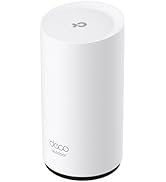
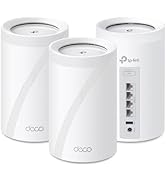
The TP-Link EAP225 is a professional-grade AC1350 dual-band wireless access point designed for business and advanced home networks. Featuring MU-MIMO technology for simultaneous multi-device connectivity, it supports seamless roaming and mesh networking through Omada’s cloud-based SDN platform. Powered via flexible PoE options, it enables easy installation and centralized remote management via the Omada app. With a robust 5-year warranty and extensive compatibility, it delivers reliable, high-speed WiFi coverage tailored for modern, connected environments.











| ASIN | B0781YXFBT |
| Best Sellers Rank | #4 in Computer Networking Wireless Access Points |
| Customer Reviews | 4.3 4.3 out of 5 stars (7,730) |
| Date First Available | December 15, 2017 |
| Is Discontinued By Manufacturer | No |
| Item Weight | 1.1 pounds |
| Item model number | EAP225 |
| Manufacturer | TP-Link |
| Product Dimensions | 8.09 x 7.15 x 1.47 inches |
V**G
Great wifi access point
I bought one of these for the opposite end of my ranch-style house, since my router's wifi was weak at that distance. I like that it's POE, so I only had to run a CAT5e cable to it and hook it to my POE switch (although it comes with its own POE power injector which is a nice bonus). The setup was fairly straight forward using the app to get it set up initially, and later using the built-in web admin page through a browser for additional changes. It puts out a decent signal, but I was a bit disappointed in that it didn't quite make it from its location to my office, which is on the same level, but about 50 feet away with about 3 hollow (stud/drywall) walls between. My office seems to be somewhat of a dead zone in the house due to its layout, so I ended up buying another for near my office, creating a triangle around the perimeter of the house with my router and the two APs. When you're within 20-30 feet of the AP and no walls, it works very well and signal is quite strong. In my tests, it provided full throughput for my internet service, just make sure you connect it to a gigabit router and/or POE switch or it will only operate at the speed of the slowest link. My existing POE switch was only 100 mbps (for security cameras), so the switch was limited to that throughput, so I added a gigabit POE switch and connected the APs to that instead and they now show full throughput on internet speed tests. One feature I really liked was the ability to add additional SSIDs. During initial setup it asks for your 2.4GHz and 5GHz passwords, but I also have a 2.4GHz and 5GHz guest networks on my router. After the initial setup, I went into the browser interface and found a small "add" (+) button near the list of SSIDs and I was able to add the guest network SSIDs for each frequency. I was also able to select them as "Guest" networks in the AP configuration pages. I duplicated the SSIDs from my router and there doesn't seem to be any conflicts. Wirelress devices just seem to pick up their connection from the closest AP or the router depending on where they are in the house, which is how I hoped it would work. For installation, the mounting plate attaches to the ceiling, then you "twist" the device into to three "tabs" until it lock in place. This part was a bit tricky as the tabs seemed tight. Getting it to twist into the tabs is difficult to align as you place the AP over the bracket, and I really had to push the AP up and rotate it hard to get it to snap into the bracket. The "snapping" process on one of them took a lot of force and I thought I broke it when it finally locked in, but it was fine. It has a tab you can insert a paper clip into to release it from the bracket for removal. I think the mounting plate design could use a bit of a rework given my experience, but it's certainly not a reason to pass this by. Another inconvenience was the fact that updating the firmware causes all your settings to be lost. This happened with both devices. I hope future updates don't require a full reconfiguration of the device each time. I'm looking forward to great wifi throughout my house now. So far, the devices that were previously located in a "dead" or "weak" spot (for example, streaming boxes that could only able to get 1-3 mbps) now get 90+ mbps so it definitely solved those issues. Just be aware that depending on the size and layout of your home, you may need more than one. I didn't want this to be visible in the center of my living room ceiling (which is the center of my home), so I had to install them in hallways which are more on the perimeter of the home, thus needing more than one to get full coverage. For the price, this was an excellent choice for our home and I highly recommend it.
A**K
A great and easy way to project WIFI
I was looking for a way to setup Ring solar powered cameras in the woods (forest) which are quite a distance from the barn. This was easy to install and works absolutely great.
M**N
Fast and Easy VLAN capable Multi-Network System, No Need For Controller
I'm a bit of a nerd and I run a home server, so I wanted to split my network up into different subnets using VLANs. My only holdup was wifi devices since I couldn't risk bricking one of my access points using alternate firmware. These are out-of-the-box capable of setting VLANs to separate wifi networks, which is a commodity (aside from using open source firmware). You can look at Ubiquiti, but they are more costly than these. At $60 a pop for the EAP225 this was an easy buy and I have had almost no issues setting it all up. If you have a hardware controller with them, then its even easier. The hardest part was getting the controller software running in a VM, the dependencies took a bit to get right, but after that was up and running. I could have used the phone app to do it all, but I wanted the extra features you only get with the controller. If you have a raspberry pi or NAS you could forego the controller hardware and still get the features, which is a huge plus, usually big names handcuff you to their hardware to make a few extra bucks, but not in this case! The features you get are beam forming (better range and speed) and fast roaming (faster switching between access points in a mesh). These will work just fine without a controller! If you are going cheap you don't have to get it, you can always get it later, just use the phone app to set up the access points. These are all POE devices, so it comes with an injector. I haven't done this, but I read that if you set it up in a mesh, you can actually use the POE LAN side to extend to another wired device or switch. So this works as a wireless bridge as well. The only part that takes some getting used to is that when you lose your DHCP server (usually your router), the wifi networks disappear entirely. I thought that was very odd and something was wrong, but when it comes back they come back with it. That could be an artifact of how I have the mesh set up, but it is still odd. That really doesn't happen often unless you have a hardware failure, it was mostly when I was messing with VLANs and screwing things up. They also have very good range, better than my Asus RT-AC3200 APs that they replaced.
H**G
worked well. 2.4G travels further than 5G.
V**R
I was struggling to find a better access point which would give max speed and best coverage. I now have zero issues with WiFi. It’s as good as wired network. Go for it without doubt.
Y**T
This is easy to set up provided you are comfortable in configuring it (as you would a primary router), for example you need to go into the 'router' settings and manually add a password. Being wired, this gives much better wifi coverage than a wireless connection.
C**N
Nice Product Strength Network Value for money
Y**N
A great access point
Trustpilot
Hace 1 día
Hace 2 semanas