We remain fully operational. Our teams are working around the clock to ensure your deliveries continue safely.

Descargar la aplicación


Servicios al cliente
Sobre nosotros
Copyright © 2025 Desertcart Holdings Limited
Descargar la aplicación

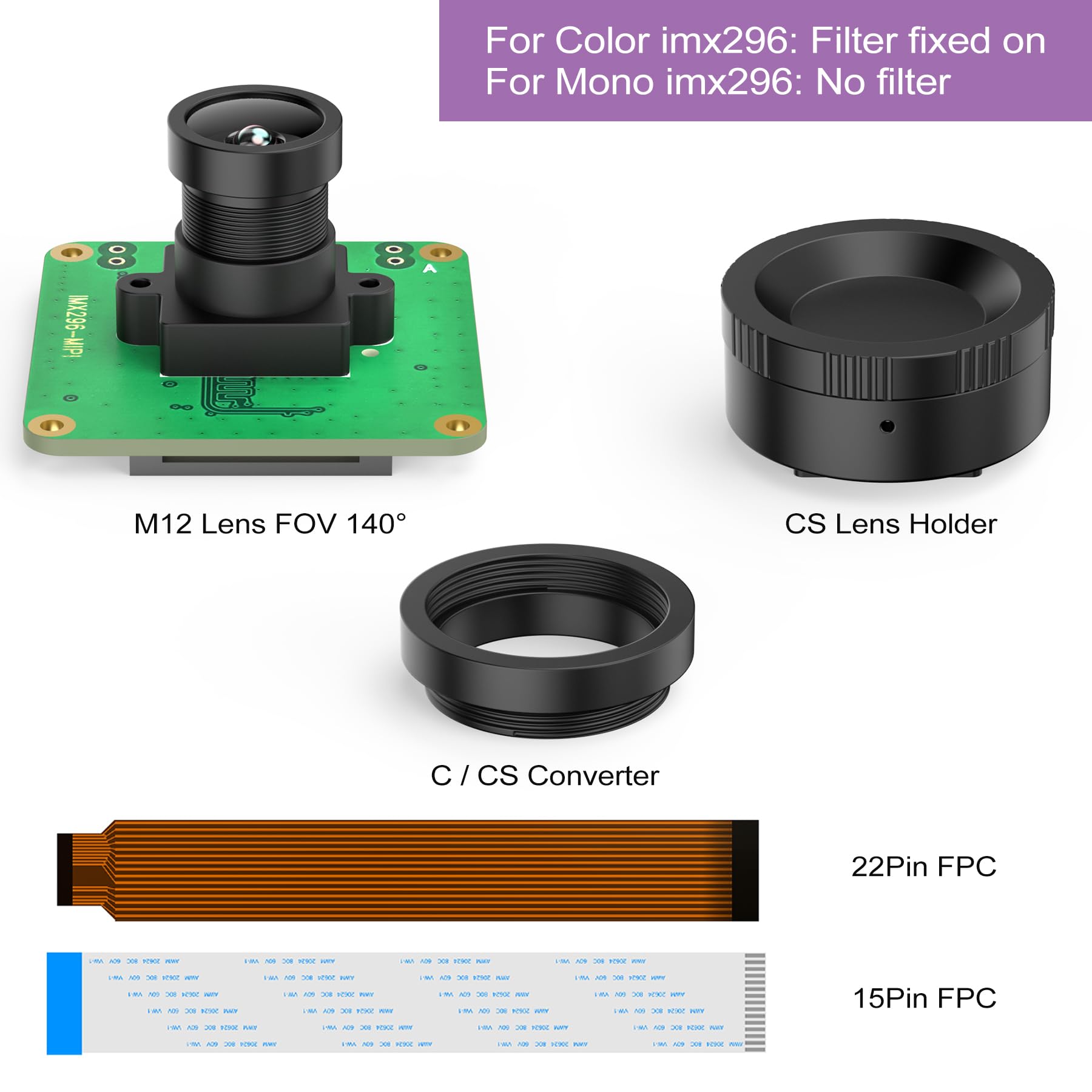




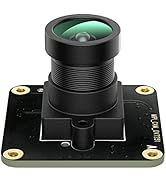
🚀 Capture Every Moment, No Blur, No Delay — The Pi Camera Upgrade You Can't Miss!
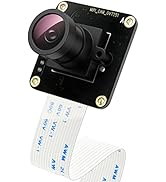
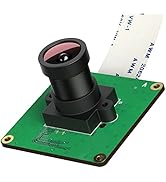
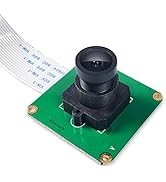
The innomaker GS Camera Module features a 1.58MP IMX296 monochrome global shutter sensor optimized for Raspberry Pi boards. Delivering 60fps at 1456x1088 resolution with ultra-low latency external trigger support, it excels in low-light and high-speed imaging scenarios. Compatible with Raspberry Pi OS libcamera and InnoMaker drivers, this module is ideal for precision machine vision, astronomy, and industrial applications requiring jitter-free, high-contrast captures.




| ASIN | B093BY2TK2 |
| Best Sellers Rank | #375 in Single Board Computers (Computers & Accessories) |
| Brand | innomaker |
| Color | CAM-MIPI296RAW |
| Customer Reviews | 4.2 4.2 out of 5 stars (76) |
| Date First Available | April 23, 2021 |
| Item Weight | 2.11 ounces |
| Item model number | CAM-IMX296RAW |
| Manufacturer | innomaker |
| Max Screen Resolution | Custom |
| Operating System | Raspberry Pi OS |
| Package Dimensions | 4.21 x 2.99 x 1.81 inches |
| Series | CAM-MIPI296RAW |
| Standing screen display size | 4.5 Inches |
J**N
Works great in the dark.
I use this camera with Dale Eason's excellent SkySolve software. That software on a Raspberry Pi camera will tell you very precisely where the camera is pointing in the sky by matching the stars. You can use this to find difficult to find items when you attach the camera to your telescope. The most important feature in a camera for that system is a sensor that does well in low light. This camera is just like the official RPi Global Shutter camera except that it is monochrome. The official camera does great, but each pixel is covered with a filter to allow color captures. In my use case, the color of the stars doesn't matter, only the location of the stars relative to one another matters. So removing the filter in front of the pixels allows more light to hit the sensor. I guess somewhat predictably, I can now take an image in 1/3rd the time it took with the color camera. Additionally in comparison to the RPi HQ camera the pixels are much larger, allowing more light to hit each pixel. So large pixels with less filtering allows excellent performance in the dark and it speeds up the total refresh rate of SkySolve considerably. For machine vision applications many of these same advantages persist. In addtion the global shutter feature is really great for providing jitter free images to the Convolution Neural Network which makes it's accuracy higher than a rolling shutter camera. Overall, for the price this is a very very good camera to be used for utility purposes like telescop pointing and moving object identification. It's terrible at taking selfies, but that's not the point.
T**R
Works great
This is fully supported in Raspbian, came up without any trouble using libcamera. Good choice for a real monochrome camera, way easier than trying to scratch off the bayer mask on a color camera.
G**N
It was late arriving
it does work
E**D
Worked for me
I found the directions easy to follow and it worked fine for me on a raspberry Pi with the new Raspberry Pi OS. With the right overlay set it works fine. Monochrome global shutter cameras are rare and the price is great so I'd really like to give it 6 stars.
M**S
Works Great after Setting up the Drivers
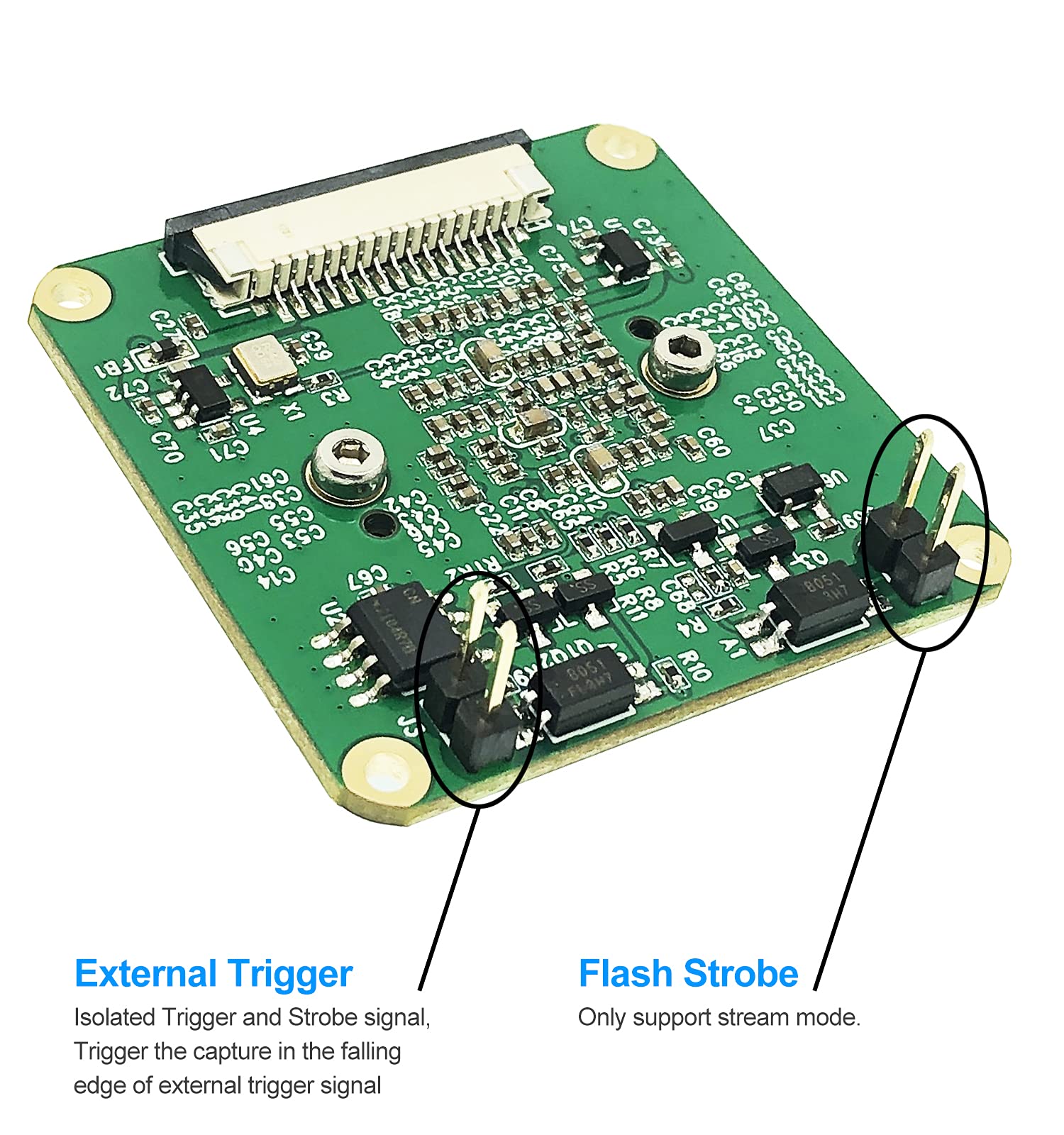
This is a great camera. It's a Global Shutter, which are usually reserved for high end cameras. The camera requires installing drivers to work. It does not work out of the box. The instructions are clear and the install process is simple. The exposed trigger and strobe pins work as advertised. Overall this camera is great for high end use cases, such as machine vision and OpenCV tasks.
O**S
Looks cute.
To be honest. Haven’t had the time to configure raspberry Pi. Pi’s are definitely not plug and play. Pi’s are definitely about the journey. Not the destination.
E**C
Does not work as advertised
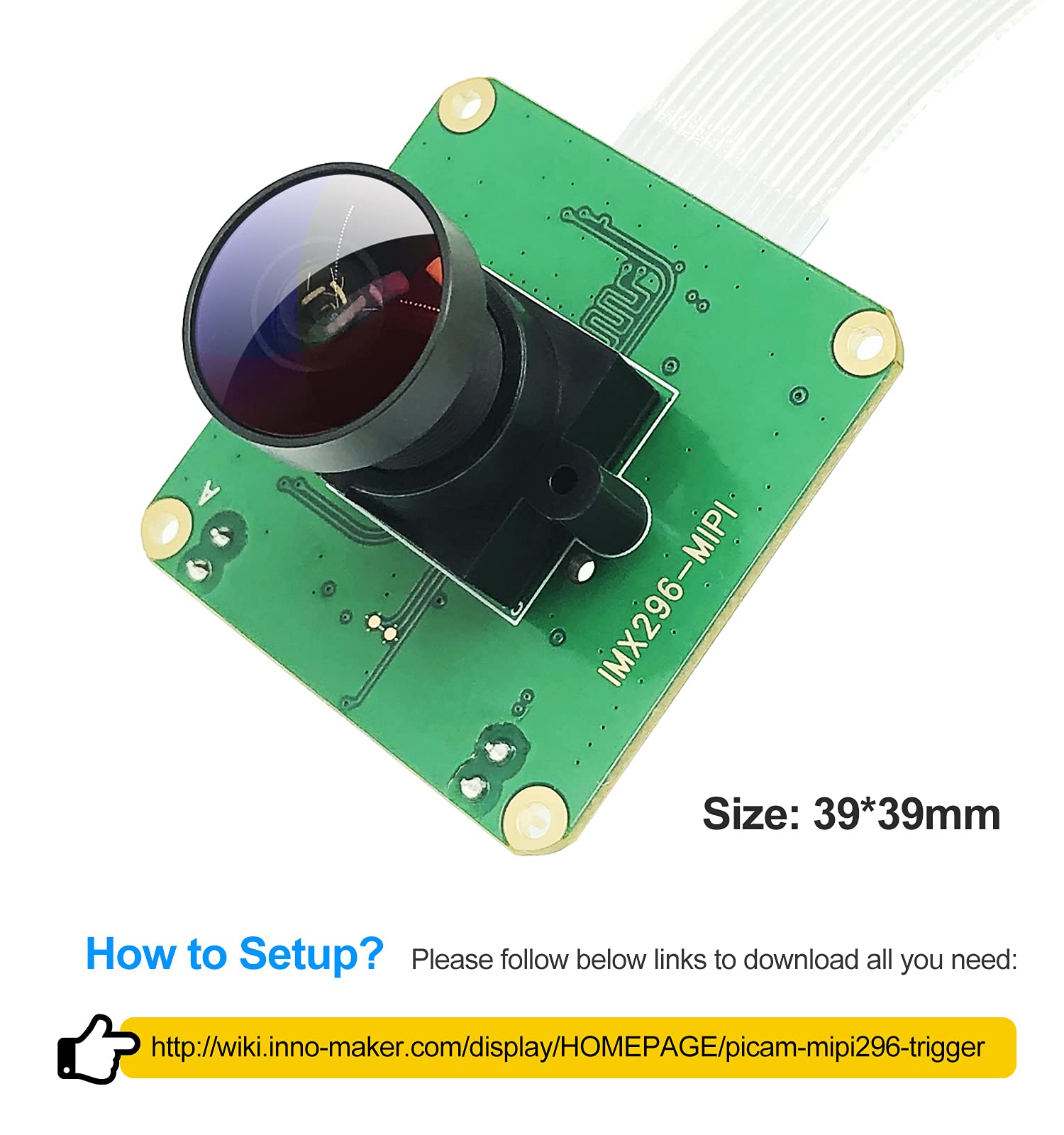
I have formal training as a software developer, but not with raspberry pi and cameras. I definitely followed the directions and tried everything I could find on the internet. The manufacturer's instructions don't work with a pi 4's drivers. If their customer support responds with a solution, then I'll update my review.
F**N
Good image, but not plug'n'play
Has been difficult to get running on a pi-zero. Provided instructions do not work. I got it working with ffmpeg, but I'm not sure if it's outputting at full quality. Visible banding on light washed walls. Focus control is very loose. Images do look pretty good when I seem to get it working, though. Note: You need to get a different camera cable for the pi-zero. Raw video outputs ~900mb/min on my setup, so be prepared for that -- I'm using a low cost ssd to save the video stream. A cheap sd-card won't keep up. I haven't contacted their support yet, and will update this review if needed. I suspect they'll tell me to roll back my kernel so I can use their proprietary driver -- which I'm trying to avoid.
O**K
Działa bardzo szybko, ale ostrzyć trzeba ręcznie. Płytka jest znacznie większa niż na v3.
A**2
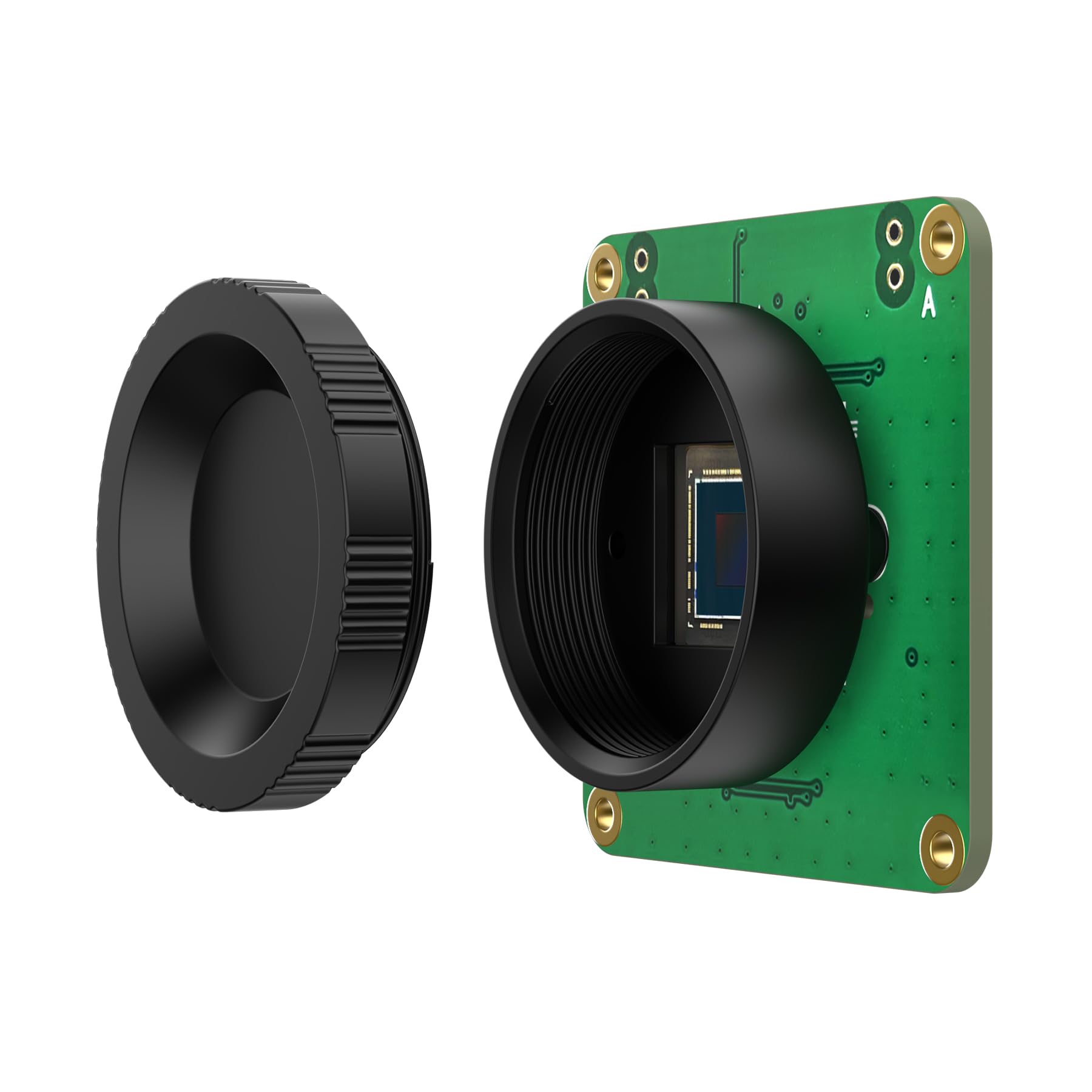
Modulo fotocamera per Raspberry dotato di sensore Sony IMX296 in bianco e nero capace di acquisire in 1456x1088 a 60fps una risoluzione che anche se può sembrare limitata é più che sufficiente per lo sviluppo di applicazioni di analisi immagini in tempo reale con hw di potenza modesta come il RPi 3 ,4 oppure 5... Si interfaccia mediante flat al connettore CSi presente sulle schede Raspberry ed é fornito in due varianti piccola e grande il che ci consente l'installazione anche su versioni hw più vecchie... Vengono forniti anche due supporti adattatori per poter montare obiettivi con attacco C e CS, non male, oltretutto entrambi sono realizzati completamente in metallo. Il modulo é dotato di trigger esterno che, abbinata alla presenza di un sistema di otturazione globale e non a tendina consente l'acquisizione di fotogrammi ad alta velocità senza nessun tipo di deformazione visiva. Il modulo in se scalda molto poco ed alla prova pratica é risultato appena tiepido dopo oltre mezz'ora di utilizzo continuo. La qualità di immagine in bianco e nero é molto buona così come la velocità di compensazione di luci ed ombre e la sensibilità con ridotta illuminazione ambientale. Il produttore non fornisce alcuna documentazione cartacea ma il suo sito web invece é ricco informazioni e documentazione varia oltre che sorgenti ed esempi di utilizzo, l'indirizzo del sito viene fornito all'interno della confezione mediante un etichetta adesiva. Nel complesso é un ottimo prodotto, la qualità Sony in campo video e fotografico non so discute anche con prodotti di fascia hobbistica, le caratteristiche dichiarate sono pienamente rispettate così come la facilità di utilizzo di piattaforma RPi.... Mi ritengo estremamente soddisfatto del prodotto
A**R
Great product...👍
W**S
Coding in Python using LibCamera2 on an Rpi4 Bookworm O/S, this 3rd party camera does not support most features that say the RPi V2, V3 and HQ cameras do. For instance, the ROI (region of interest) via the ScalerCrop is not supported (zoom). It also fails with a timeout message with libcamera2 unless you add a longer timeout in the yaml file, not the easiest web search to figure this one out. It also has hot pixels, but is incredibly sensitive as there is no IR or RGB bayer filters - I'm seeing close to 1000X shorter exposures (when imaging 650nm red laser diode light for speckle patterns), but white light will probably see 10 fold reduction due in part to the larger pixel surface. An interesting sensor in a less than ideal 3rd party realization.
M**S
I bought this camera with not many hopes, as I have previous really bad experiences with other retailers. But surprisingly, the camera works as advertised, and if you follow the instructions you should be able to pull it off. For those not very acquainted with the history of raspberry pi support for other camera sensors, having the ability to connect a monochrome camera based on the OV9281 is a pleasant development. I could have given 5 stars to this, but the problem I keep getting from Chinese retailers offering these type of advanced products is that they seem not to master very well the kind of support that something like this requires. The instructions could benefit from some review and edits from an English specialist. The other issue is that these types of sensors rely on V4l2 to work, and the installation requires a bit of knowledge of how things work in linux. In many parts, the instructions are repetitive, which is probably the result of adding updates without modifying the whole document. The other issue is that the only example available for previewing the image of the camera is by using VLC; the developers could have developed a much more useful opencv example, where users can access a pre-defined pipeline to open the cap in opencv. Another issue is that the sensor captures raw data, and the only option available according to the manual is to view the images using IrfanView 64. They could, again, have added a simple opencv example to demosaic the raw images and transform them into something more useful, such as bmp, tiff or jpg. In terms of hardware, I cannot but praise the developers for creating this product, which for its price, offers real value for money. I hope that successive iterations overcome the issue of limited support and documentation, which is the only nuisance as of now; but hey! is not a light one.
Trustpilot
Hace 1 mes
Hace 3 semanas