Desert Online General Trading LLC
Dubai, United Arab Emirates
Desert Online General Trading LLC
Dubai, United Arab Emirates


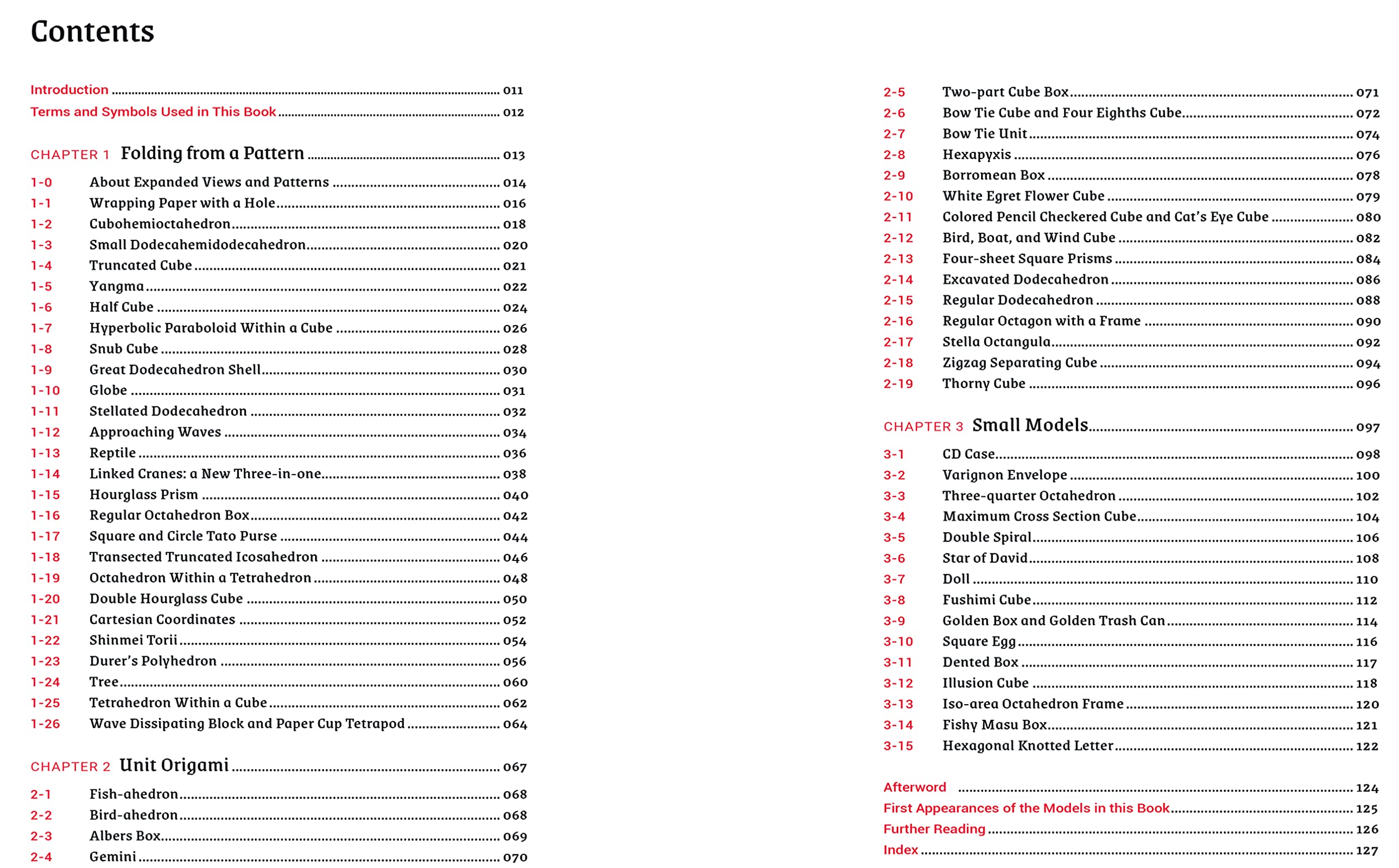


The Art & Science of Geometric Origami: Create Spectacular Paper Polyhedra, Waves, Spirals, Fractals and More! (More than 60 Models!)


D**E
Love it
I would recommend it to anybody that likes to do geometrics origami
J**E
Excelente
The media could not be loaded. Libro de muy buena calidad y educativo
J**
Great book
Delivered fast n was a gift they enjoyed
P**C
Lots of pages printed over other pages.
Many of the pages in this book had two different pages printed over one another. So 10-14 pages in the book were not legible.
C**A
Impossible
I bought this book for my 13-year-old nephew and it is so difficult. I am 44 year-old female and have been doing origami for a long time. This book is impossible to follow. I would definitely not recommend maybe your scientific I don’t know, but I could not figure any of these out.
T**R
Good models bad assembly directions
I was able to easily fold all of the pieces but the assembly instructions are very poor so there were many models I couldn't figure out how to assemble. I'm not a newby to modular origami and have made 100's of pieces so I wouldn't recommend this book for anyone new to modular origami.
A**E
EXPERTS ONLY, unclear instructions, not robust models
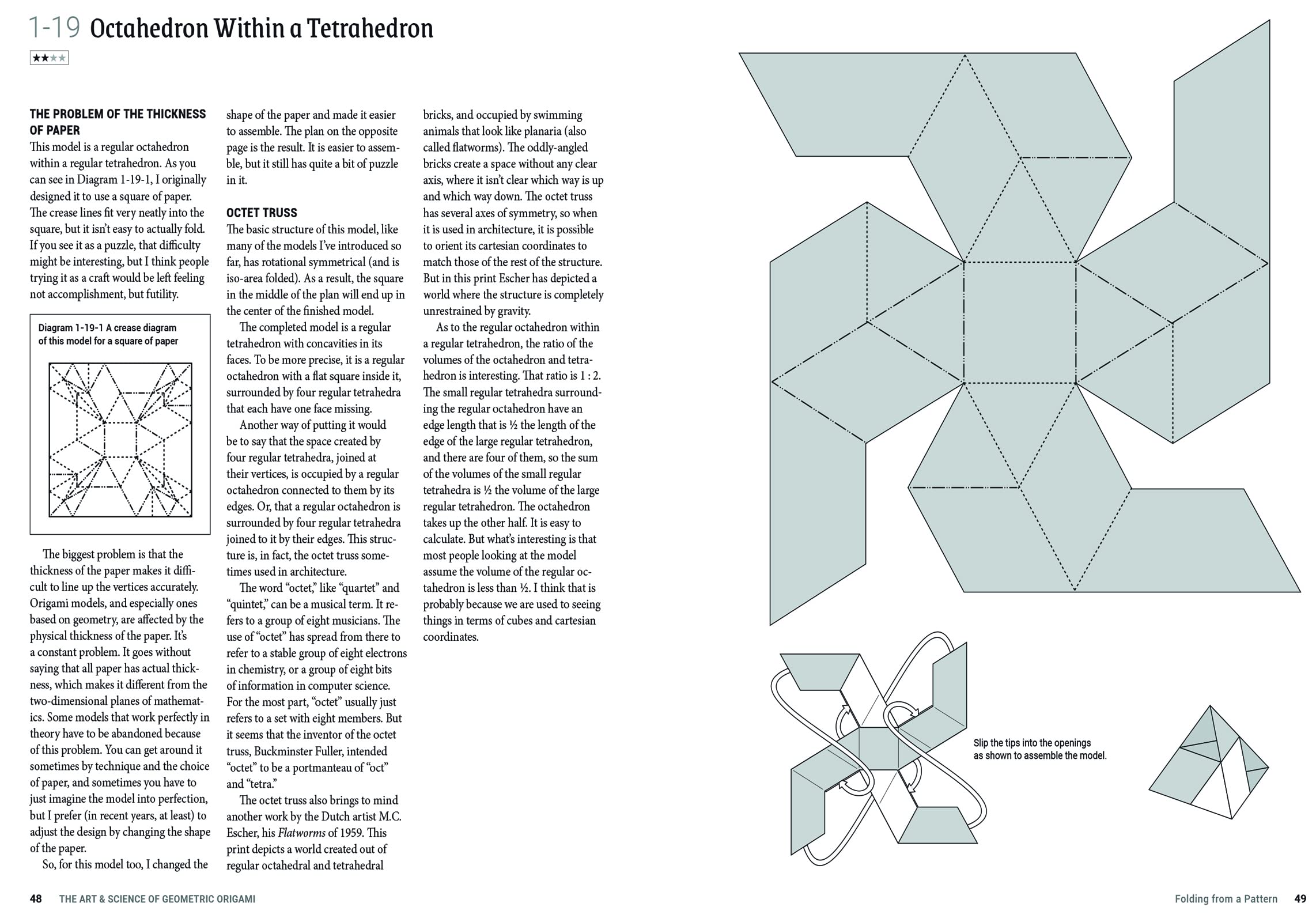
If you are very experienced in origami you might have more success than I have. I consider myself an advanced beginner/intermediate, but I haven't really liked any of the models I've attempted. For one, even the simplest ones you require good stiff paper and folding tools (a scoring tool is _essential_ to get some of the creases right).Update: I came back to this after much more origami experience, and I still hate this book, so I knocked off another star. Everything in here only causes frustration.I've also found the models to not be very robust. Even the ones where I'm confident I've made the units the best I can, often the "pouches" are nothing more than a stiff fold or are flimsy one side, so even though theoretically they should hold together on their own, you really need glue or the whole thing falls apart. Using smaller than 15 cm paper sometimes helps, but that also makes keeping the plethora of complicated creases straight very difficult. And the unit assembly is often not clear, which has led me to destroy a few units trying to figure out how they go together.I also am not super keen on the entire chapter that has models made of complicated paper shapes that would require you to print out the template.I actually really like math, and the background explanations are kinda cool, but overall I've been quite disappointed in this book.
Trustpilot
Hace 1 mes
Hace 2 meses
Hace 4 días
Hace 2 días