We remain fully operational. Our teams are working around the clock to ensure your deliveries continue safely.
Descargar la aplicación


Servicios al cliente
Sobre nosotros
Copyright © 2025 Desertcart Holdings Limited
Descargar la aplicación
Buy anything from 5,000+ international stores. One checkout price. No surprise fees. Join 2M+ shoppers on Desertcart.
Desertcart purchases this item on your behalf and handles shipping, customs, and support to Argentina.
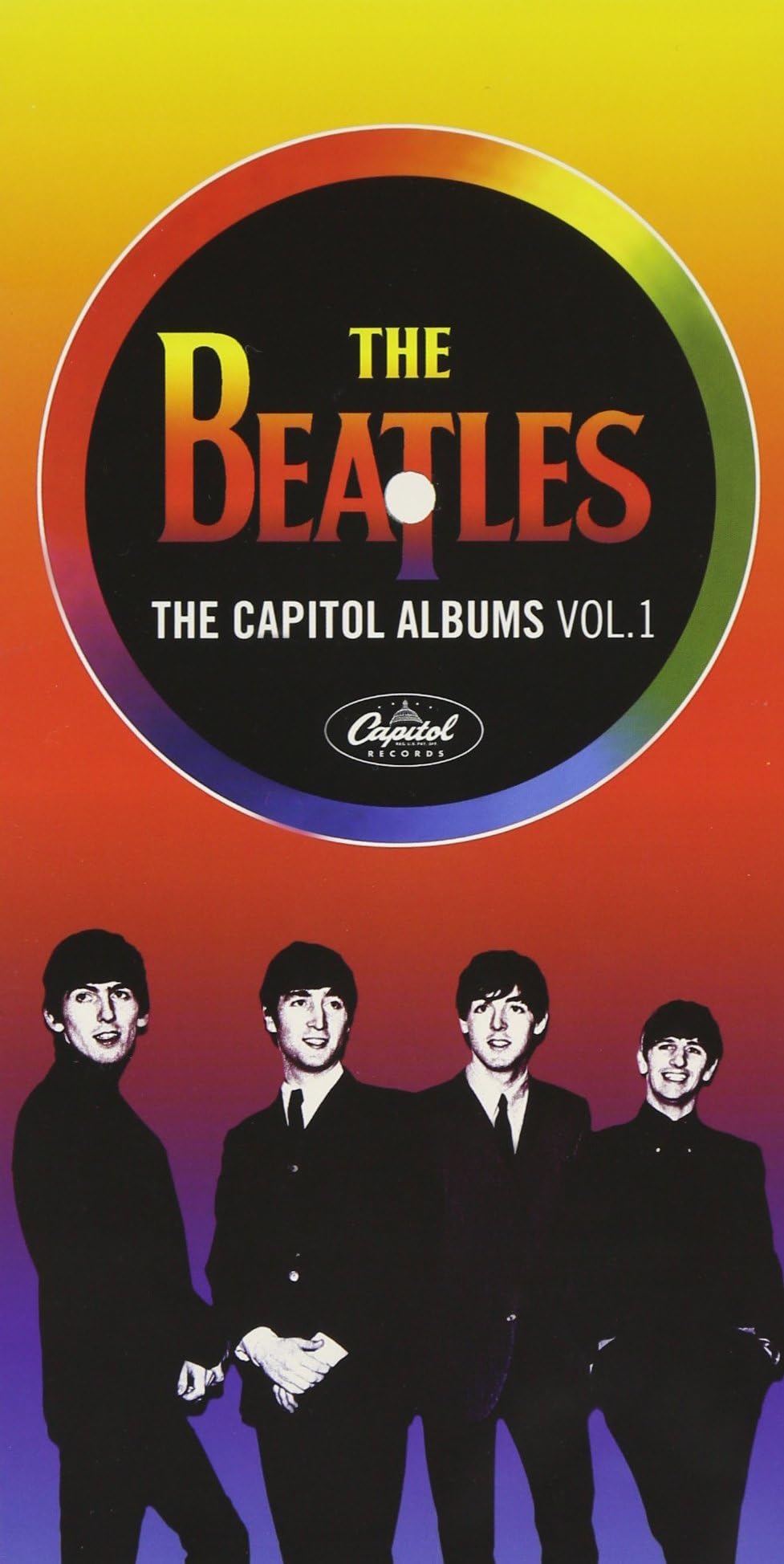
Product Description *First Time Ever on CD...Meet The Beatles, The Beatles Second Album, Something New and Beatles 65....presented in both Stereo and Mono *Compiled from the original U.S. master tapes *Special packaging including original album cover artwork and 48 page collectors booklet desertcart.com When the Beatles catalog was first issued on CD in the '80s, an attempt was made to standardize the releases (which often varied wildly in content internationally) by using their original British format. But this confounded many Fabs fans in the U.S. who now found CDs with track listings that often differed dramatically from their original American LPs. More maddening, the initial four releases were only available in not-so-glorious mono mixes. This four-CD collection of the band's 1964 American album releases finally addresses those concerns, and then some. Meet the Beatles, The Beatles Second Album, Something New, and Beatles '65 have been digitally prepared from Capitol's vintage album masters and presented in both the original stereo and mono mixes released back in '64. This set gives younger fans a chance to finally hear the band's epochal early music in stereo--and should please an older generation by returning massive hit singles like "I Want to Hold Your Hand," "She Loves You," "She's a Woman," and "I Feel Fine" to their original American album contexts. The booklet contains a wealth of rare photos and concise notes by noted Beatles historian Mark Lewisohn. --Jerry McCulley P.when('A').execute(function(A) { A.on('a:expander:toggle_description:toggle:collapse', function(data) { window.scroll(0, data.expander.$expander[0].offsetTop-100); }); }); From the Artist *First Time Ever on CD...Meet The Beatles, The Beatles Second Album, Something New and Beatles 65....presented in both Stereo and Mono *Compiled from the original U.S. master tapes *Special packaging including original album cover artwork and 48 page collectors booklet THE FAB FOUR FROM 64 -- MEET THE BEATLES! THE WAY AMERICA FIRST DID The set brings together for the first time on CD the album that began it all - Meet The Beatles and the three other Capitol albums that were released in 1964 - The Beatles Second Album, Something New and Beatles '65. Each of the discs will include two versions of each song - one in stereo (or duophonic in some cases) - then the selections are repeated in mono. The duophonic sound was carefully created by Capitol, using 2 channels of mono which were equalized, compressed and then reverb was added. The Capitol Albums Volume 1 have been carefully mastered from the original masters, taken from the vaults at Capitol Records, to ensure that they sound as they did when first released. With the release of The Beatles catalog on CD in 1987, releases were standardized on a worldwide basis and eventually the U.S. albums, which had last appeared on vinyl and cassette, were deleted. Since that time there has been increasing demand for these original U.S. albums to make their CD debut which they now do as part of this specially priced and uniquely packaged 4 CD boxed set. The Capitol Albums Volume 1 includes all four of the group's (Capitol) 1964 album releases, and each of the discs is housed in a MINIATURE REPLICA OF THE ORGINAL ALBUM COVER. It will also feature a 48 PAGE BOOKLET, along with a scrap book effect of photos and clippings from that amazing year. The Capitol Albums Volume 1 is a special release, commemorating the close of the 40th Anniversary of when America first met The Beatles. About the Artist First Time Ever on CD...Meet The Beatles, The Beatles Second Album, Something New and Beatles 65....presented in both Stereo and Mono Compiled from the original U.S. master tapes Special packaging including original album cover artwork and 48 page collectors booklet THE FAB FOUR FROM 64 -- MEET THE BEATLES! THE WAY AMERICA FIRST DID The set brings together for the first time on CD the album that began it all - Meet The Beatles and the three other Capitol albums that were released in 1964 - The Beatles Second Album, Something New and Beatles '65. Each of the discs will include two versions of each song - one in stereo (or duophonic in some cases) - then the selections are repeated in mono. The duophonic sound was carefully created by Capitol, using 2 channels of mono which were equalized, compressed and then reverb was added. The Capitol Albums Volume 1 have been carefully mastered from the original masters, taken from the vaults at Capitol Records, to ensure that they sound as they did when first released. With the release of The Beatles catalog on CD in 1987, releases were standardized on a worldwide basis and eventually the U.S. albums, which had last appeared on vinyl and cassette, were deleted. Since that time there has been increasing demand for these original U.S. albums to make their CD debut which they now do as part of this specially priced and uniquely packaged 4 CD boxed set. The Capitol Albums Volume 1 includes all four of the group's (Capitol) 1964 album releases, and each of the discs is housed in a MINIATURE REPLICA OF THE ORGINAL ALBUM COVER. It will also feature a 48 PAGE BOOKLET, along with a scrap book effect of photos and clippings from that amazing year. The Capitol Albums Volume 1 is a special release, commemorating the close of the 40th Anniversary of when America first met The Beatles. See more Review: AT LAST, THE REAL ALBUMS - In 1987, the decision to release the Beatles work on CD was made by EMI (not Apple, as some think). Unfortunately, instead of getting the albums we Americans (who put most of the money in the Beatles pockets) were familiar with, all we got were foreign compilations. And to add insult to injury, some were only available in flat mono. The British albums numbered only 13, so to fill up the gaps they added MAGICAL MYSTERY TOUR (one of those "butchered" American compilations created by Voyle Gilmore in Hollywood, although so-called "purists" seem to overlook this fact) and the two PAST MASTERS volumes (two more compilations, these cooked up by Mark Lewisohn). However, as Lewisohn pointed out in the liner notes for PAST MASTERS, if you bought all these CDs, you had everything the Beatles commercially recorded between 1962 and 1970. Although the mixes could be better, I could live with that. All the Beatles work on 15 CDs. But after Apple gained control of the catalog in the 1990s, that neat little batch of 15 CDs containing the complete Beatles corpus changed. First they reissued 1962-1966 and 1967-1970, two compilations made by Allen Klein in the 1970s. These were unneccessary since everything was already available. What's that? Some of the tracks were stereo? Well, they should have been in the first place. Then came LIVE AT THE BBC and the ANTHOLOGY series, previously bootlegged scraps that only served to cheapen the Beatles' recording legacy. There's a reason all of that junk was unreleased in the sixties. It was supposed to be! These were followed by YELLOW SUBMARINE SONGTRACK and LET IT BE NAKED, revisionist perversions of classic albums. (What's next? A new and improved "White Album"? "Sgt. Pepper Revisited"?) What's that again? The sound is great? Why couldn't the originals have been released with good sound? And finally, the ultimate rip-off, BEATLES 1, which gave us nothing new and far too few hits, in spite of all the hype. Now the four of the original albums are back. Each disc is presented in its original form, both stereo and mono. These are the original AMERICAN Beatles albums, the ones that I knew when I first exposed to the Beatles. The ones that appeared in that little handout you got with THE BEATLES/1962-1966 (and 1967/1970) titled "FOR YOUR INFORMATION." I know that these records were only released in America, but I'm an American. I don't care about how the Beales' product was peddled in Britain, or Germany, or Japan. I want the U.S. albums. MEET THE BEATLES is arguably the most important Beatles album. It is the one that introduced most Americans to the group. Promoted by the single "I Want to Hold Your Hand," it brought Beatlemania to the U.S. and was responsible for all that followed. In that sense, its effect is still felt today. It is, of course, roughly the U.S. version of the group's second British album WITH THE BEATLES, but it's a stronger work. By including all of the original compositions from the British album and eliminating all but one of the cover songs, it showcases the group's songwriting abilities. The single "I Want to Hold Your Hand" is included, along with both its American ("I Saw Her Standing There") and British ("This Boy") flipsides. These tracks, all originals, add additional weight to the group's songwriting reputation. The only cover version is "Till There Was You," a Broadway tune from THE MUSIC MAN, and shows the group as masters of mainstream pop as well as rock and roll. THE BEATLES' SECOND ALBUM, a compilation cooked up at the Capitol Tower in Hollywood, was rushed out in the wake of the Beatles' tremendous American success. Just like "She Loves You" was that OTHER single, this was that OTHER album. Although good, the SECOND ALBUM doesn't quite measure up to MEET THE BEATLES. It's a patchwork album, made up of the 5 tracks cut from WITH THE BEATLES (all cover songs, most of them Motown), various single sides, and 2 brand- new tracks, "Long Tall Sally" and "I Call Your Name." SOMETHING NEW was Capitol's attempt to release the band's third British album A HARD DAY'S NIGHT. The British album contained the songs from the film A HARD DAY'S NIGHT on one side and various filler tracks on the other. The film company (United Artists) released the soundtrack album in the U.S. and it became a multi-million seller. Beaten out by UA, Capitol compiled SOMETHING NEW, containing 8 songs from the British album (4 from each side), plus 3 additional filler tracks. They heavily promoted this album, and released 3 singles from it, but it never could match the success of the United Artists album. Which is a shame. Despite its patchwork origins, SOMETHING NEW is a great album. It was the first album released completely in stereo, and there are many differences between the mono and stereo versions. BEATLES '65 is the American version of the group's fourth British album, BEATLES FOR SALE. The first side is nearly identical to the British album (minus one song), while the second side contains two songs from the album, a song leftover from the British A HARD DAY's NIGHT and the current single "I Feel Fine" with its flipside "She's A Woman." There are many myths about these albums: 1. They're not in true stereo, and have echo added to them. The fact is, only seven tracks ("I Want to Hold Your Hand," "She Loves You," "You Can't Do That," "I'll Get You," "She Loves You," "She's a Woman," and "I Feel Fine") are not in true stereo. Only the stereo version of THE BEATLES' SECOND ALBUM has added echo. 2. They were released against the wishes of George Martin. The fact is George Martin knew and approved of these albums. He even scheduled special mixing sessions for them (See Lewisohn 1992). 3. They were not what the Beatles intended. As far as merchandise was concerned, in 1964, the Beatles had no intentions. The record company, not the group, decided what product was released. So, to those in the dark, get your facts straight and enjoy the Beatles as they were presented to Americans. This is the most important compact disc release in 20 years, so enjoy it. Review: This is What I Grew Up With - For my eighth birthday, my mother bought me Meet the Beatles, at my official request. I had recently heard the band on WLS AM in Chicago doing "Ticket to Ride." I'd been gifted with that single (which was backed with the beautiful, sad "Yes It Is") along with "We Can Work it Out" b/w "Day Tripper" by the brother of one of my mom's friends. I listened to those singles incessantly, knowing nothing of the cultural impact for which The Beatles had been responsible. I just loved those songs. As "Ticket" played on, I thought to myself, "Gee, these guys are on the radio, so they must be pretty good! From now on, they're my favorite band." Anyway, back to that eighth birthday present, when "I Want to Hold Your Hand" came blaring out of my little phonograph, it felt like the skies were opening up. Little did I know that it was a duophonic, or "fake stereo" version to which I was listening. Of course, then, I couldn't have cared less about any kind of technical nonsense. I was much too into the actual songs. Well, the skies have remained open to this day, thirty-six years later, and one of the things I absolutely love to do these days is compare the mono and stereo versions of these wonderful songs, because sonically, they're VERY different from each other, and that "technical nonsense" to which I just referred is treated by me now in a slightly more open-minded fashion than before. When Capitol released these US LP's on CD (in stereo AND mono, no less), I couldn't have been more happy or excited. I could listen to, in pristine form, what I remember these incredible songs sounding like, and compare the mono versions to the stereo versions, which I hadn't been able to do back in those heady days of the early '70's. Meet the Beatles was the first US LP and, of course, the first CD I put into my player, the which is connected to a sound system that betters my childhood phonograph just a bit (OK, maybe a LITTLE more than that). It didn't disappoint at all. The clarity of the sound is a testament to the care that the Capitol people put into this set overall. It was a little jarring to hear "I Saw Her Standing There" come in in full, unadulterated stereo, but a distinct pleasure, nonetheless. We're back to duophonic for "This Boy," then real stereo again for "It Won't Be Long." Interesting listening, to say the least. On the following CD, entitled simply The Beatles' Second Album, "Roll Over Beethoven" leads off with that layer of reverb to the fore, which the US engineers back in '64 slathered on, and which has been endlessly criticized by professional and amateur listener alike. Personally, I love it. I think it's just the personal memory factor. It just sounds so BIG, like it did back "in the day!" I remember hearing the UK versions of The Beatles' output for the first time years ago (with which the '87 release of the band's material was standardized throughout the world and remains so for the current remasters) when my best friend shelled out the extra money for the imported stereo UK versions, and being slightly put off by the "reigning in," at least as I heard it, of the overall sound of the songs. Anyway, back in the US, this "Second Album" also has more "fake stereo" cuts on it than its brother recordings in this particular set. Both "I'll Get You" and "She Loves You" are treated with duophonic, and again, it sounds funny to today's more sophisticated ears, but I still get a great kick out of them. The low frequencies in one channel and the highs in the other -- now that's technology! Notice the significant variations between the stereo versions of "Long Tall Sally" and "I Call Your Name" and their mono renderings, particularly in the latter's lead guitar work. Ready for Something New, the third US release? Notice how "I'll Cry Instead" in stereo is shorter than its mono counterpart (the latter containing a repeated first verse). Notice again the differences between "Slow Down" and "Matchbox" from stereo to mono, again, particularly in terms of the guitar solos, this time in both songs. Overall, bits are added and taken out, and consequently make for fascinating listening. Beatles '65, the final installment in Vol. 1, is relatively consistent until one gets to "She's a Woman" and "I Feel Fine." I remember being bewildered at the "mushy" quality of these two songs, even back when I first heard the album. I can't help but wonder today who saw these versions as radio-worthy. The mono versions are an ever-so-slight improvements over the terrible stereo versions, but I must say that it's a relief to hear the "normal" sounding "Everybody's Trying to be My Baby" after suffering through the mistreatment of two fine, fine songs. Even today, when I hear the "reigned in" UK versions of these two classics, it's always surprising and refreshing. I don't really prefer the mono versions to the stereo or vice-versa. I love them both for different reasons. I still listen to this set often, even though the UK versions are sonically superior, especially the recently released remasters -- they're truly amazing! However, the work done on these US versions is also quite impressive, and represent the deserved care that the folks at Capitol are putting into these immortals. I'd like to thank them for issuing this box set. It was overdue, but better late than never, which I thought was going to be the case at one point. My hat's off to you, you Capitol people!
| ASIN | B00065XJ48 |
| Best Sellers Rank | #32,100 in CDs & Vinyl ( See Top 100 in CDs & Vinyl ) #94 in Classic Rock Supergroups #219 in British Invasion Rock #15,881 in Rock (CDs & Vinyl) |
| Customer Reviews | 4.6 4.6 out of 5 stars (532) |
| Date First Available | January 29, 2007 |
| Is Discontinued By Manufacturer | No |
| Item model number | CAP66878 |
| Label | Capitol |
| Language | English |
| Manufacturer | Capitol |
| Number of discs | 4 |
| Original Release Date | 2004 |
| Product Dimensions | 9.88 x 5.08 x 0.87 inches; 9.17 ounces |
T**S
AT LAST, THE REAL ALBUMS
In 1987, the decision to release the Beatles work on CD was made by EMI (not Apple, as some think). Unfortunately, instead of getting the albums we Americans (who put most of the money in the Beatles pockets) were familiar with, all we got were foreign compilations. And to add insult to injury, some were only available in flat mono. The British albums numbered only 13, so to fill up the gaps they added MAGICAL MYSTERY TOUR (one of those "butchered" American compilations created by Voyle Gilmore in Hollywood, although so-called "purists" seem to overlook this fact) and the two PAST MASTERS volumes (two more compilations, these cooked up by Mark Lewisohn). However, as Lewisohn pointed out in the liner notes for PAST MASTERS, if you bought all these CDs, you had everything the Beatles commercially recorded between 1962 and 1970. Although the mixes could be better, I could live with that. All the Beatles work on 15 CDs. But after Apple gained control of the catalog in the 1990s, that neat little batch of 15 CDs containing the complete Beatles corpus changed. First they reissued 1962-1966 and 1967-1970, two compilations made by Allen Klein in the 1970s. These were unneccessary since everything was already available. What's that? Some of the tracks were stereo? Well, they should have been in the first place. Then came LIVE AT THE BBC and the ANTHOLOGY series, previously bootlegged scraps that only served to cheapen the Beatles' recording legacy. There's a reason all of that junk was unreleased in the sixties. It was supposed to be! These were followed by YELLOW SUBMARINE SONGTRACK and LET IT BE NAKED, revisionist perversions of classic albums. (What's next? A new and improved "White Album"? "Sgt. Pepper Revisited"?) What's that again? The sound is great? Why couldn't the originals have been released with good sound? And finally, the ultimate rip-off, BEATLES 1, which gave us nothing new and far too few hits, in spite of all the hype. Now the four of the original albums are back. Each disc is presented in its original form, both stereo and mono. These are the original AMERICAN Beatles albums, the ones that I knew when I first exposed to the Beatles. The ones that appeared in that little handout you got with THE BEATLES/1962-1966 (and 1967/1970) titled "FOR YOUR INFORMATION." I know that these records were only released in America, but I'm an American. I don't care about how the Beales' product was peddled in Britain, or Germany, or Japan. I want the U.S. albums. MEET THE BEATLES is arguably the most important Beatles album. It is the one that introduced most Americans to the group. Promoted by the single "I Want to Hold Your Hand," it brought Beatlemania to the U.S. and was responsible for all that followed. In that sense, its effect is still felt today. It is, of course, roughly the U.S. version of the group's second British album WITH THE BEATLES, but it's a stronger work. By including all of the original compositions from the British album and eliminating all but one of the cover songs, it showcases the group's songwriting abilities. The single "I Want to Hold Your Hand" is included, along with both its American ("I Saw Her Standing There") and British ("This Boy") flipsides. These tracks, all originals, add additional weight to the group's songwriting reputation. The only cover version is "Till There Was You," a Broadway tune from THE MUSIC MAN, and shows the group as masters of mainstream pop as well as rock and roll. THE BEATLES' SECOND ALBUM, a compilation cooked up at the Capitol Tower in Hollywood, was rushed out in the wake of the Beatles' tremendous American success. Just like "She Loves You" was that OTHER single, this was that OTHER album. Although good, the SECOND ALBUM doesn't quite measure up to MEET THE BEATLES. It's a patchwork album, made up of the 5 tracks cut from WITH THE BEATLES (all cover songs, most of them Motown), various single sides, and 2 brand- new tracks, "Long Tall Sally" and "I Call Your Name." SOMETHING NEW was Capitol's attempt to release the band's third British album A HARD DAY'S NIGHT. The British album contained the songs from the film A HARD DAY'S NIGHT on one side and various filler tracks on the other. The film company (United Artists) released the soundtrack album in the U.S. and it became a multi-million seller. Beaten out by UA, Capitol compiled SOMETHING NEW, containing 8 songs from the British album (4 from each side), plus 3 additional filler tracks. They heavily promoted this album, and released 3 singles from it, but it never could match the success of the United Artists album. Which is a shame. Despite its patchwork origins, SOMETHING NEW is a great album. It was the first album released completely in stereo, and there are many differences between the mono and stereo versions. BEATLES '65 is the American version of the group's fourth British album, BEATLES FOR SALE. The first side is nearly identical to the British album (minus one song), while the second side contains two songs from the album, a song leftover from the British A HARD DAY's NIGHT and the current single "I Feel Fine" with its flipside "She's A Woman." There are many myths about these albums: 1. They're not in true stereo, and have echo added to them. The fact is, only seven tracks ("I Want to Hold Your Hand," "She Loves You," "You Can't Do That," "I'll Get You," "She Loves You," "She's a Woman," and "I Feel Fine") are not in true stereo. Only the stereo version of THE BEATLES' SECOND ALBUM has added echo. 2. They were released against the wishes of George Martin. The fact is George Martin knew and approved of these albums. He even scheduled special mixing sessions for them (See Lewisohn 1992). 3. They were not what the Beatles intended. As far as merchandise was concerned, in 1964, the Beatles had no intentions. The record company, not the group, decided what product was released. So, to those in the dark, get your facts straight and enjoy the Beatles as they were presented to Americans. This is the most important compact disc release in 20 years, so enjoy it.
B**S
This is What I Grew Up With
For my eighth birthday, my mother bought me Meet the Beatles, at my official request. I had recently heard the band on WLS AM in Chicago doing "Ticket to Ride." I'd been gifted with that single (which was backed with the beautiful, sad "Yes It Is") along with "We Can Work it Out" b/w "Day Tripper" by the brother of one of my mom's friends. I listened to those singles incessantly, knowing nothing of the cultural impact for which The Beatles had been responsible. I just loved those songs. As "Ticket" played on, I thought to myself, "Gee, these guys are on the radio, so they must be pretty good! From now on, they're my favorite band." Anyway, back to that eighth birthday present, when "I Want to Hold Your Hand" came blaring out of my little phonograph, it felt like the skies were opening up. Little did I know that it was a duophonic, or "fake stereo" version to which I was listening. Of course, then, I couldn't have cared less about any kind of technical nonsense. I was much too into the actual songs. Well, the skies have remained open to this day, thirty-six years later, and one of the things I absolutely love to do these days is compare the mono and stereo versions of these wonderful songs, because sonically, they're VERY different from each other, and that "technical nonsense" to which I just referred is treated by me now in a slightly more open-minded fashion than before. When Capitol released these US LP's on CD (in stereo AND mono, no less), I couldn't have been more happy or excited. I could listen to, in pristine form, what I remember these incredible songs sounding like, and compare the mono versions to the stereo versions, which I hadn't been able to do back in those heady days of the early '70's. Meet the Beatles was the first US LP and, of course, the first CD I put into my player, the which is connected to a sound system that betters my childhood phonograph just a bit (OK, maybe a LITTLE more than that). It didn't disappoint at all. The clarity of the sound is a testament to the care that the Capitol people put into this set overall. It was a little jarring to hear "I Saw Her Standing There" come in in full, unadulterated stereo, but a distinct pleasure, nonetheless. We're back to duophonic for "This Boy," then real stereo again for "It Won't Be Long." Interesting listening, to say the least. On the following CD, entitled simply The Beatles' Second Album, "Roll Over Beethoven" leads off with that layer of reverb to the fore, which the US engineers back in '64 slathered on, and which has been endlessly criticized by professional and amateur listener alike. Personally, I love it. I think it's just the personal memory factor. It just sounds so BIG, like it did back "in the day!" I remember hearing the UK versions of The Beatles' output for the first time years ago (with which the '87 release of the band's material was standardized throughout the world and remains so for the current remasters) when my best friend shelled out the extra money for the imported stereo UK versions, and being slightly put off by the "reigning in," at least as I heard it, of the overall sound of the songs. Anyway, back in the US, this "Second Album" also has more "fake stereo" cuts on it than its brother recordings in this particular set. Both "I'll Get You" and "She Loves You" are treated with duophonic, and again, it sounds funny to today's more sophisticated ears, but I still get a great kick out of them. The low frequencies in one channel and the highs in the other -- now that's technology! Notice the significant variations between the stereo versions of "Long Tall Sally" and "I Call Your Name" and their mono renderings, particularly in the latter's lead guitar work. Ready for Something New, the third US release? Notice how "I'll Cry Instead" in stereo is shorter than its mono counterpart (the latter containing a repeated first verse). Notice again the differences between "Slow Down" and "Matchbox" from stereo to mono, again, particularly in terms of the guitar solos, this time in both songs. Overall, bits are added and taken out, and consequently make for fascinating listening. Beatles '65, the final installment in Vol. 1, is relatively consistent until one gets to "She's a Woman" and "I Feel Fine." I remember being bewildered at the "mushy" quality of these two songs, even back when I first heard the album. I can't help but wonder today who saw these versions as radio-worthy. The mono versions are an ever-so-slight improvements over the terrible stereo versions, but I must say that it's a relief to hear the "normal" sounding "Everybody's Trying to be My Baby" after suffering through the mistreatment of two fine, fine songs. Even today, when I hear the "reigned in" UK versions of these two classics, it's always surprising and refreshing. I don't really prefer the mono versions to the stereo or vice-versa. I love them both for different reasons. I still listen to this set often, even though the UK versions are sonically superior, especially the recently released remasters -- they're truly amazing! However, the work done on these US versions is also quite impressive, and represent the deserved care that the folks at Capitol are putting into these immortals. I'd like to thank them for issuing this box set. It was overdue, but better late than never, which I thought was going to be the case at one point. My hat's off to you, you Capitol people!
D**L
Me gusto el audio original directo de las cintas remasterizadas
R**S
Cette édition est excellente tant par la qualité du pressage, du contenu (livret, photos) Les pochettes sont reproduites avec un souci du détail de l'époque. Rien a redire, sinon que le rapport qualité, prix est imbattable
A**R
As most of us know, Capitol in the US made some odd marketing decisions in the early Beatle days. Incredibly they managed to release 4 whole albums there using only a few tracks from Please Please Me, the very first LP (more of which which comes under Vol 2 of the Capitol Albums). That said, Beatlemania there was even greater in the US than here as a result of the unique way in which The Beatles were marketed there ("The Beatles are coming!") Purists won't like the way in which EP and singles are mixed with the official 2nd and 3rd British LPs but as always, The Beatles just sound so fresh and exciting even now and it's great to see how they were presented to the American public in those days. Vol 1 if you shop around on the net is amazing value for a box set. Uniquely as well, all the tracks are also presented in mono for the benefit of those who have always complained about how odd some tracks sound in the so-called stereo of that time.
J**E
Die ersten bei Capitol in den USA erschienen Platten auf CD. Die Aufnahmen liegen hier in Mono und in Stereo vor. In den USA wurden die Platten der Beatles anders zusamengestellt und manchmal auch anders abgemischt, manches hört sich ungewohnt an. Enthalten sind die US-Alben Meet the Beatles!, The Beatles' Second Album, Something New und Beatles '65.
R**O
Box che non deve mancare in una collezione dei Beatles. Ottima rimasterizzazione dai nastri originali U.S.A. della Capitol record sia in versione mono che stereo. Ottimo il servizio Amazon e l'imballo.
Trustpilot
Hace 1 mes
Hace 3 semanas