
Descargar la aplicación


Servicios al cliente
Sobre nosotros
Copyright © 2025 Desertcart Holdings Limited
Descargar la aplicación

desertcart.com: To The Lighthouse: The Virginia Woolf Library Authorized Edition: Virginia Woolf, Eudora Welty: Books Review: A truly great book! - To The Lighthouse is one of the greatest novels produced in the 20th century. I have read it several times and get more out of it each time I read it. It is is divided into three parts. The first takes place before WWI and reveals the great influence Mrs. Ramsay has on her family. The second part takes place during the war and covers the death of Mrs. Ramsay and one son who was killed in battle, and the third part is about how the remaining members of the family adjust to their losses and carry on. Even though she is dead, Mrs. Ramsay's actions, beliefs, and attitude continue to have great influence on the family. The book only has 209 pages, but it reveals more about life than many books double or even triple its length. I would also recommend Mrs. Dalloway and Waves by Virginia Woolf as well. They are also supreme masterpieces. Review: One of these days you must go to the Lighthouse - --"The subject of this brilliant novel is the daily life of an English family in the Hebrides." That's the copy description on the back cover of my edition of "To the Lighthouse." I found it hilarious. I laughed for five minutes. --So it's an inadequate description of the novel? --Inadequate is an inadequate word to describe just how inadequate it is. --So what is "To the Lighthouse" about? --Well that's just the thing. To say it's about a family vacationing by the shore, about the delicate relationships between them and their friends, about how time changes them and their relationships between each other...is to miss the point entirely even if it is perfectly accurate. --As I understand it, this is a novel in which ten years passes in about fifteen pages, while the rest of the novel meticulously describes two days. --Yes, exactly. Like Proust, Woolf begins with a childhood incident that will echo down through the years. Like Joyce, she concentrates on the epiphanic moment. Reading "To the Lighthouse" is a bit like viewing a painting in which the characters move...but very slowly. Woolf passes from character to character, inhabiting each of their minds in turn, seeing the world through their eyes. Mr. and Mrs. Ramsay and their flawed but enduring marriage are the central bodies around which the rest orbit and Lily Briscoe, a spinsterish amateur painter, ostensibly stands in for Woolf herself, but it is hard to say that any of the characters are less or more important than any of the others--this is essentially the genius of Woolf's handling of psychological perspective. Everyone has a point of view and each point of view is essential to attain a vision of the whole. --But it is a novel essentially about family relationships? --And relationships between men and women, men and society, women and society, human beings and the inescapable fact of their mortality. Again and again, Woolf asks the question, "What does life mean? What is it for?" --Does she have an answer? --Yes. And no. --It's ambiguous. --It's provisional. But it's enough to help Lily make it through the dark storm of life to use a perfectly horrible metaphor. It's her lighthouse. --Woolf has a reputation as a difficult author to read. --And it's well-deserved. She is a difficult read for the majority of readers, who, let's face it, are awaiting Dan Brown's new novel as if it were a major event in world literary history. What happens in "To the Lighthouse," when anything happens at all, isn't as important as how it affects each character internally. That is to say, Woolf's focus is on the fleeting but all-important impressions that the world leaves on us and that ultimately make us who we are. Her greatest gift is to capture these gossamer-thin states in a language of exquisite accuracy--capturing in words the flavor of fleeting emotions seldom if ever described before, even as they evaporate on the tongue. --You would have to love language, then, to fully appreciate her work. --Indeed. Her sentences don't move the story forward; they move the story deeper. She writes a poetic prose that many contemporary readers might mistake for unnecessarily flowery and overwrought--when, in fact, it is sharp as a surgeon's scalpel and cuts to the heart. And yet for all its surgical accuracy, it is the sensuous prose of a writer for whom language is like a box of brilliant colors is to a painter, for whom sentences are like caresses to a lover, except that in this case what is touched are the most potently orgasmic areas of our brains--needles to say, the ones most difficult areas to reach. --But Virginia Woolf reaches them? --You might say she's a master masseuse. --Ha ha. Does she provide a happy ending? --No, not exactly. But it's a deeply satisfying experience all the same.





R**N
A truly great book!
To The Lighthouse is one of the greatest novels produced in the 20th century. I have read it several times and get more out of it each time I read it. It is is divided into three parts. The first takes place before WWI and reveals the great influence Mrs. Ramsay has on her family. The second part takes place during the war and covers the death of Mrs. Ramsay and one son who was killed in battle, and the third part is about how the remaining members of the family adjust to their losses and carry on. Even though she is dead, Mrs. Ramsay's actions, beliefs, and attitude continue to have great influence on the family. The book only has 209 pages, but it reveals more about life than many books double or even triple its length. I would also recommend Mrs. Dalloway and Waves by Virginia Woolf as well. They are also supreme masterpieces.
M**A
One of these days you must go to the Lighthouse
--"The subject of this brilliant novel is the daily life of an English family in the Hebrides." That's the copy description on the back cover of my edition of "To the Lighthouse." I found it hilarious. I laughed for five minutes. --So it's an inadequate description of the novel? --Inadequate is an inadequate word to describe just how inadequate it is. --So what is "To the Lighthouse" about? --Well that's just the thing. To say it's about a family vacationing by the shore, about the delicate relationships between them and their friends, about how time changes them and their relationships between each other...is to miss the point entirely even if it is perfectly accurate. --As I understand it, this is a novel in which ten years passes in about fifteen pages, while the rest of the novel meticulously describes two days. --Yes, exactly. Like Proust, Woolf begins with a childhood incident that will echo down through the years. Like Joyce, she concentrates on the epiphanic moment. Reading "To the Lighthouse" is a bit like viewing a painting in which the characters move...but very slowly. Woolf passes from character to character, inhabiting each of their minds in turn, seeing the world through their eyes. Mr. and Mrs. Ramsay and their flawed but enduring marriage are the central bodies around which the rest orbit and Lily Briscoe, a spinsterish amateur painter, ostensibly stands in for Woolf herself, but it is hard to say that any of the characters are less or more important than any of the others--this is essentially the genius of Woolf's handling of psychological perspective. Everyone has a point of view and each point of view is essential to attain a vision of the whole. --But it is a novel essentially about family relationships? --And relationships between men and women, men and society, women and society, human beings and the inescapable fact of their mortality. Again and again, Woolf asks the question, "What does life mean? What is it for?" --Does she have an answer? --Yes. And no. --It's ambiguous. --It's provisional. But it's enough to help Lily make it through the dark storm of life to use a perfectly horrible metaphor. It's her lighthouse. --Woolf has a reputation as a difficult author to read. --And it's well-deserved. She is a difficult read for the majority of readers, who, let's face it, are awaiting Dan Brown's new novel as if it were a major event in world literary history. What happens in "To the Lighthouse," when anything happens at all, isn't as important as how it affects each character internally. That is to say, Woolf's focus is on the fleeting but all-important impressions that the world leaves on us and that ultimately make us who we are. Her greatest gift is to capture these gossamer-thin states in a language of exquisite accuracy--capturing in words the flavor of fleeting emotions seldom if ever described before, even as they evaporate on the tongue. --You would have to love language, then, to fully appreciate her work. --Indeed. Her sentences don't move the story forward; they move the story deeper. She writes a poetic prose that many contemporary readers might mistake for unnecessarily flowery and overwrought--when, in fact, it is sharp as a surgeon's scalpel and cuts to the heart. And yet for all its surgical accuracy, it is the sensuous prose of a writer for whom language is like a box of brilliant colors is to a painter, for whom sentences are like caresses to a lover, except that in this case what is touched are the most potently orgasmic areas of our brains--needles to say, the ones most difficult areas to reach. --But Virginia Woolf reaches them? --You might say she's a master masseuse. --Ha ha. Does she provide a happy ending? --No, not exactly. But it's a deeply satisfying experience all the same.
D**N
The incredible verbosity of introspection
As is the case for every novel, there are characters that one can admire and those that one can detest. This can be by design by the author or by accidental imputation by the reader. This novel does not leave the reader neutral, and in fact does not require neutrality. In this work there is no gallivanting from one chapter to the next, but deterministic linearity between them is absent also. Readers will find no restful equilibrium. Only movement and instability are possible. The personalities of the characters are their thoughts, and if words are absent this is by intent, as a kind of deliberate debasement with no redemption possible. There is the intriguing Lily Briscoe, who stays within the boundaries of the canvas, but is comfortable with changing its surface into oil-ordained permanence. But her personal surface, that which she painted in the presence of Mr. Ramsey, was but a temporary front, not terribly original, but sufficed for the moment. Lily also responds delightfully and negatively to the misogynistic assertion that women can’t write or paint. Then there is James Ramsey, who is homologous to the typical academic, permanently insecure and self-absorbed, hypersensitive to criticism, perpetually requiring praise, with smugness and arrogance being immediate corollaries. This is someone with no rhythm in his personality and stale in his outlooks. He has a sense of life that deems it difficult, but not stoic in his reaction to it. Only in privacy does he feel safe, and he consistently requires sympathy from his wife and eight children. Being happy, or rather appearing to be so, was a vulgar confession, to be classified as nonsensical and trivial. If only this character were more colorful; if only he were a chatterbox of free-flowing language. If only he were not as a piece of Scottish limestone that will break into thin pieces even under the slight pressure and perturbation of criticism. And Mrs. Ramsay, intimidated by change, engaging in false protection of her husband (with purported but unconvincing reverence), but aware of the masks she puts on when doing so, and always seeking comfort and solace in customs, the latter of which serve to quiet the soul, to protect it from the flux of Heraclitus. Happiness to her is a transient phenomenon, and she gladly and consciously accepted her children’s insights, believing that they had the distinct quality and ability to move her into the future. This is a novel par excellence, where the genius of expression, the greatness of articulation, and the beauty of prose have a chance to combine and entangle themselves with the reader, who will after finishing it have one emotion that will stand out and overwhelm the others: astonishment...astonishment....astonishment....astonishment......
A**.
Very interesting story.
T**Y
I began reading “To the Lighthouse” with high expectations given Virginia Woolf’s reputation and my recent reading of “Mrs. Dalloway”. My expectations on this account were surpassed since I found the novel to be extraordinary good. The philosopher G. E. Moore reviewed the philosopher Ludwig Wittgenstein’s book “Tractatus Logico-Philosophicus” as his submission for a PHD at Cambridge. Moore’s one line review began thusly "I myself consider that this is a work of genius;…” I fell that Moore’s review of Wittgenstein could also be applied by me to Woolf and her novel: “"I myself consider that this is a work of genius; …” There is nothing more that really needs to be said The novel approaches the same problems that Wittgenstein approached in “Tractatus”. Mr Ramsey is a professor of philosophy and his work is described by his son Andrew to the painter Lilly Briscoe with the example of a kitchen table.: “Try thinking of a kitchen table when you are not there”. Mr. Ramsey is a philosopher, a writer of books; he is a man of words. Mrs. Ramsey, in contrast, is someone for which words do not come easily. Yet the two of them and others communicate. For me that is the essence of the book and the reason for the stream of consciousness style. It is written with words to describe the communication that cannot be done with words. The type of communication between the Ramsey’s. Woolf’s project in this book mirrors that of Wittgenstein in his philosophy. That is to describe how people construct the reality around them and with that construct their theories about the people around them so as to be able to communicate with each other. Wittgenstein’s work is this an example of genius as is Woolf’s novel.
A**Z
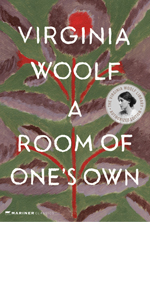
La portada es bonita, y la calidad de impresión es óptima. De la novela: Es densa, con muchos significados y muchas lecturas posibles dentro de su contexto e historia. Tiene un carácter autobiográfico que refleja aspectos vivenciales de la autora, y es una de sus obras importantes.
M**L
Super merci!
C**N
Tmucho
Trustpilot
Hace 2 días
Hace 2 meses