We remain fully operational. Our teams are working around the clock to ensure your deliveries continue safely.

Descargar la aplicación


Servicios al cliente
Sobre nosotros
Copyright © 2025 Desertcart Holdings Limited
Descargar la aplicación

Buy anything from 5,000+ international stores. One checkout price. No surprise fees. Join 2M+ shoppers on Desertcart.
Desertcart purchases this item on your behalf and handles shipping, customs, and support to Argentina.
🌿 Elevate your herbal expertise—don’t just treat symptoms, restore harmony with every page!
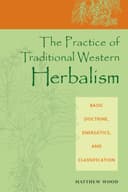
The Practice of Traditional Western Herbalism by Matthew Wood is a highly rated, essential guide that distills complex herbal energetics into an intuitive system. Perfect for both beginners and seasoned herbalists, this book offers a practical framework for selecting remedies that treat the whole person, not just symptoms. With 329 glowing reviews and a strong presence in herbal remedy literature, it’s a must-have for anyone serious about mastering Western herbalism.
| Best Sellers Rank | #340,731 in Books ( See Top 100 in Books ) #270 in Herbal Remedies (Books) #4,962 in Medical Books (Books) |
| Customer Reviews | 4.8 out of 5 stars 329 Reviews |
S**N
I had the great fortune to study herbs with Matthew Wood
I had the great fortune to study herbs with Matthew Wood, and the unpublished, unedited manuscript of this book was the class book for one of his classes. I still have the spiral bound book from class, and I have also purchased this book for my library. The published version has been truncated from the manuscript, but the main essence of the book remained and herbal information intact. Matthew Wood has a vast knowledge of herbs coupled with his knowledge of the body's systems. He is intuitive with his approach and combines that with his knowledge of herbs. He also works homeopathically with herbal tinctures. This book is the book that I refer to the most for this knowledge and remedies. Note that I was a book seller, and my personal library has about 400 volumes of various herbal books, including old herbalist volumes out of print and not available. This book is succinct for remedies and cross-referencing is easy. This is a must for every herbalist whether seasoned or beginner.
L**Y
The key to Western Herbalism
This is the single most useful book on Western Herbalism I've ever seen, the key that lets you figure out how a condition will interact with a plant. Without this system of energetics, choosing a remedy is reduced to picking one of many plants that may or may not help a condition, among long lists of properties. It gives us a vocabulary to treat the whole person, rather than just battling their symptoms as allopathic medicine does. When you battle symptoms, you ignore the body they're in and often weaken it. You may win the battle but lose the war. This is the overall strategy for restoring harmony, and goes beyond the three categories of building, eliminating and maintaining -- which are about as much theory as other authors go into. Imagine having to consult a book just to add 2 + 4, and not even being able to recognize that 4 + 2 gives the same result. Knowing this system is akin to learning simple addition: whereas everyone else is stuck memorizing addition tables or looking them up each time, you just know the answer. You don't have to memorize tons of information for a plant, just the keys to its energetic action.
M**R
Western Herbalism
Great book. Well written.
J**M
Explains the techical side of herbalism and integrates Eastern and Western schools
I really enjoyed this book. This is a scholarly book for students of herbal medicine, and is a tough slog through for the casual reader. But if you are prepared to look up words in the glossary and dig through the theories and jargon, you will be richly rewarded with a deeper understanding of what we've lost as a culture, by our dependence on chemicals and corporations, and what we have to gain by moving closer to natural health and wellness. I especially enjoyed the anecdotal examples in the materia medica in the second half of the book. I was able to understand some of the thinking that goes on when a person presents with a health inquiry and how to decide which herb profile would best answer the need. Is the person hot or cold; wet or dry? The author's explanations of these concepts in traditional western herbalism and eastern holistic medicine, brought the aha moment for me. This book was recommended reading for the Intermediate Herbal Medicine course from the Herbal Academy of New England.
V**R
Comprehensive and Then Some
Excellent book on western herbalism! This book is chock full of detailed factual information about each plant. In addition to the drawings and facts the author has included information he has intuited, personal observations and some snippets of case histories from his practice as an herbalist. I particularly appreciated his clear reverence for Nature and Earth. Many books on herbalism are best as reference sources. You pick them up to research a particular symptom or to look up a plant and its attributes. Matthew Wood's books are unique in this genre as they make a good read. I read this book from cover to cover and it is both interesting and enjoyable. It is also a valuable reference - one to which I will frequently refer.
D**N
Better than others
This book is written by an author who is so full of knowledge and love of Herbalism that he can tend to run on and on, but I try to bear with him because eventually he gets to the point you want to hear. He is just so passionate about Herbalism and his work that other books he has written I struggled to stay interested. This one has not been that way. I was pleased to see him stay on track with focus on the information versus his phylosophy. Interesting theroy and one that most all can agree on. You either will relate or it'll be over your head. But the information is good.
S**Y
Herbal Remedies from the Old Ways
Matthew Fox has brought the Old Ways of Herbal Medicine to our modern world. This book speaks in a language I can understand. His descriptions of the underlying imbalances within the tissue that results in symptoms made such an impression on me. He lists signs which we all can identify in our illness. The book gives a description of the plants that can favorably affect these tissue states. Once the underlying cause of an illness is brought back to normal, a balanced state, then the disease goes away. Makes sense to me!!! Clear and to the point, but also has such a warm, personal touch. Buy this book, you won't be disappointed.
B**T
Foundational for learning herbalism
If you’re new to learning herbs and serious about it, start here. The section on energetics is absolutely foundational to everything else you will ever learn. If you’ve been using herbs with the “take this herb for that ailment” mindset, you’re still using an allopathic model, you’re not working holistically, and you’re doing yourself (and the herbs!) a disservice. Learning the energetics of plants is fundamental in learning to use them well. And for those who don’t know what I mean by “energetics”, it’s not *energy* in the new agey, light worker, vibrational, crystal healing, woowoo, or any of that sort of way (unless you want it to be, haha).
Trustpilot
Hace 1 semana
Hace 2 meses