We remain fully operational. Our teams are working around the clock to ensure your deliveries continue safely.

Descargar la aplicación


Servicios al cliente
Sobre nosotros
Copyright © 2025 Desertcart Holdings Limited
Descargar la aplicación

Buy anything from 5,000+ international stores. One checkout price. No surprise fees. Join 2M+ shoppers on Desertcart.
Desertcart purchases this item on your behalf and handles shipping, customs, and support to Argentina.
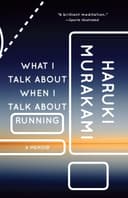
What I Talk About When I Talk About Running: A Memoir (Vintage International), Book Cover May Vary [Murakami, Haruki] on desertcart.com. *FREE* shipping on qualifying offers. What I Talk About When I Talk About Running: A Memoir (Vintage International), Book Cover May Vary Review: Wonderful running memoir by one of my favorite authors. - I have placed this book atop my listmania group of literary running books. Haruki Murakami's marvelously entertaining WHAT I TALK ABOUT WHEN I TALK ABOUT RUNNING is about his running, yes, but it also touches on other interesting ideas, including the author's affinities for music, literature, and baseball, Japanese and American: "As if to lament the defeat of the Boston Red Sox in the playoffs (they lost every game in a Sox vs. Sox series with Chicago), for ten days afterward a cold rain fell on New England. A long autumn rain. Sometimes it rained hard, sometimes softly; sometimes, it would let up for a time like an afterthought, but not once did it clear up." "From beginning to end the sky was completely covered with the thick gray clouds particular to this region. Like a dawdling person, the rain lingered for a long time, then finally made up its mind to turn into a downpour. Towns from New Hampshire to Massachusetts suffered damage from the rain, and the main highway was cut off in places." Murakami says he took the title of his book from the title of the Raymond Carver short story collection, WHAT I TALK ABOUT WHEN I TALK ABOUT LOVE, and thanks Carver's widow for giving him permission. Murakami has translated many of Carver's works into Japanese, as well as other American fiction. He says: "One other project I'm involved in now is translating Scott Fitzgerald's THE GREAT GATSBY, and things are going well. I've finished the first draft and am revising the second. I'm taking my time, going over each line carefully, and as I do so the translation gets smoother and I'm better able to render Fitzgerald's prose into more natural Japanese." "It's a little strange, perhaps, to make this claim at such a late date, but GATSBY really is an outstanding novel. I never get tired of it, no matter how many times I read it. It's the kind of literature that nourishes you as you read, and every time I do I'm struck by something new, and experience a fresh reaction to it. I find it amazing how such a young writer, only twenty-one at the time, could grasp--so insightfully, so equitably, and so warmly--the realities of life. How was this possible? The more I think about it, and the more I read the novel, the more mysterious it all is." Music, baseball, literature, and running. My kind of writer. Runners looking for a similar read might want to try Don Kardong's THIRTY PHONE BOOTHS TO BOSTON. Readers new to Murakami who enjoyed this one might be inspired to try one of the author's many novels, and I highly recommend THE WIND-UP BIRD CHRONICLE. Review: 024 Me running together with Murakami - WHAT I TALK ABOUT WHEN I TALK ABOUT RUNNING Me running together with Murakami This is a very special kind of book. I wonder whether anybody having nothing to do with running would be interested in reading this book. On one hand the subject matter of the book calls for personal engagement with running, but on the other, the author is a big master of formulating his ideas so that.... He could make an interesting story out of a block of wood, why then not of his personal experiences of looking around while using the simplest means of transportation in a most effective way. Murakami really runs his eyes open and observing. Having done that already a quarter of a century as a means to writing books and distributing them in millions of copies in tens of languages all over the world is utmost impressive. What a fantastic simplicity in combination! Just running, seeing and writing! While reading this book I felt myself his co-runner, already for the reason that I started my running only a few years before Murakami, in 1977 at the age of forty years. But sadly enough, especially looking at it now, in the light of this story, finished my career only seven years later, physically, but not spiritually. Twelve marathons, half an hour faster than Murakami - proud to say. Once runner, always runner, that is the main thing and the motivation to read this book. The second chapter of the book is a good rough description of my own career. The same steps, same transformation of every day habits in eating, resting, body hurting and enjoying a new way of life. Murakami started his career as writer about parallel to his running. I also wrote books, text books in economics, but was at that time already finishing my career after tens of thousand books and going over to computer programming, still continuing it today. And differently from Murakami, never have I been able to see any direct connection between my motioning and writing. Murakami's devotion and stamina are impressive. At several occasions he is telling, how important it is to make running an everyday habit. I found it shocking, when he tells about leaving his smoking. Perhaps, instead of pills, running should be advised as a means of getting rid of smoking! Running and smoking - a completely impossible combination, it really seems to me. My big thing was getting rid of 20 kg overweight. Another big was that I first time found myself a long distance runner after having been a sprinter in my young days, up to 20 years of age. Starting this running book I was already familiar with Murakami's grass root level writing style from his later book about the lone rider Tsukuru in 'Colorless Tsukuru Tazaki and His Years of Pilgrimage'. Now having finished this running book I only remember, how I was somewhat disappointed with some overly detailed description of certain technicalities after the takeoff of the flight in running and even more interesting in the parallel start of his author's career. There are two more very big causes of disappointment in this otherwise so excellent and under the skin going story. One is his, or the editor's, or the translator's, or the publisher's harring to miles as the measure of distance. Is it only the English translation that requires miles, or is this true also in Japan in general? Another disappointment was that he never gives his exact running times in plain numbers. I would have preferred that way in stead of roughly putting it in words like three hours forty five minutes etc. There is still another very personal disappointment to me. I expected that I would find in this book the solution of the main riddle after the other book mentioned above. How on Earth does Murakami give my country Finland a special treatment in that other book? Perhaps something to do with running? With the Finnish great champion, his exact coeval Lasse Virén, double gold medal winner of long distance running in two olympic games, that is: one man, four gold medals! No answer to this question. Not in the other book, not in this, not even in Wikipedia. So perhaps I must continue reading Murakami. Not an unpleasant undertaking for the future! Do I dare to give only four stars - mainly because of the continuous nuisance of miles in stead of kilometers? 20150204
| Best Sellers Rank | #4,400 in Books ( See Top 100 in Books ) #6 in Running & Jogging (Books) #16 in Author Biographies #173 in Memoirs (Books) |
| Customer Reviews | 4.4 4.4 out of 5 stars (10,127) |
| Dimensions | 5.13 x 0.58 x 7.97 inches |
| Edition | Reprint |
| ISBN-10 | 0307389839 |
| ISBN-13 | 978-0307389831 |
| Item Weight | 2.31 pounds |
| Language | English |
| Print length | 192 pages |
| Publication date | August 11, 2009 |
| Publisher | Knopf Doubleday Publishing Group |
J**R
Wonderful running memoir by one of my favorite authors.
I have placed this book atop my listmania group of literary running books. Haruki Murakami's marvelously entertaining WHAT I TALK ABOUT WHEN I TALK ABOUT RUNNING is about his running, yes, but it also touches on other interesting ideas, including the author's affinities for music, literature, and baseball, Japanese and American: "As if to lament the defeat of the Boston Red Sox in the playoffs (they lost every game in a Sox vs. Sox series with Chicago), for ten days afterward a cold rain fell on New England. A long autumn rain. Sometimes it rained hard, sometimes softly; sometimes, it would let up for a time like an afterthought, but not once did it clear up." "From beginning to end the sky was completely covered with the thick gray clouds particular to this region. Like a dawdling person, the rain lingered for a long time, then finally made up its mind to turn into a downpour. Towns from New Hampshire to Massachusetts suffered damage from the rain, and the main highway was cut off in places." Murakami says he took the title of his book from the title of the Raymond Carver short story collection, WHAT I TALK ABOUT WHEN I TALK ABOUT LOVE, and thanks Carver's widow for giving him permission. Murakami has translated many of Carver's works into Japanese, as well as other American fiction. He says: "One other project I'm involved in now is translating Scott Fitzgerald's THE GREAT GATSBY, and things are going well. I've finished the first draft and am revising the second. I'm taking my time, going over each line carefully, and as I do so the translation gets smoother and I'm better able to render Fitzgerald's prose into more natural Japanese." "It's a little strange, perhaps, to make this claim at such a late date, but GATSBY really is an outstanding novel. I never get tired of it, no matter how many times I read it. It's the kind of literature that nourishes you as you read, and every time I do I'm struck by something new, and experience a fresh reaction to it. I find it amazing how such a young writer, only twenty-one at the time, could grasp--so insightfully, so equitably, and so warmly--the realities of life. How was this possible? The more I think about it, and the more I read the novel, the more mysterious it all is." Music, baseball, literature, and running. My kind of writer. Runners looking for a similar read might want to try Don Kardong's THIRTY PHONE BOOTHS TO BOSTON. Readers new to Murakami who enjoyed this one might be inspired to try one of the author's many novels, and I highly recommend THE WIND-UP BIRD CHRONICLE.
A**A
024 Me running together with Murakami
WHAT I TALK ABOUT WHEN I TALK ABOUT RUNNING Me running together with Murakami This is a very special kind of book. I wonder whether anybody having nothing to do with running would be interested in reading this book. On one hand the subject matter of the book calls for personal engagement with running, but on the other, the author is a big master of formulating his ideas so that.... He could make an interesting story out of a block of wood, why then not of his personal experiences of looking around while using the simplest means of transportation in a most effective way. Murakami really runs his eyes open and observing. Having done that already a quarter of a century as a means to writing books and distributing them in millions of copies in tens of languages all over the world is utmost impressive. What a fantastic simplicity in combination! Just running, seeing and writing! While reading this book I felt myself his co-runner, already for the reason that I started my running only a few years before Murakami, in 1977 at the age of forty years. But sadly enough, especially looking at it now, in the light of this story, finished my career only seven years later, physically, but not spiritually. Twelve marathons, half an hour faster than Murakami - proud to say. Once runner, always runner, that is the main thing and the motivation to read this book. The second chapter of the book is a good rough description of my own career. The same steps, same transformation of every day habits in eating, resting, body hurting and enjoying a new way of life. Murakami started his career as writer about parallel to his running. I also wrote books, text books in economics, but was at that time already finishing my career after tens of thousand books and going over to computer programming, still continuing it today. And differently from Murakami, never have I been able to see any direct connection between my motioning and writing. Murakami's devotion and stamina are impressive. At several occasions he is telling, how important it is to make running an everyday habit. I found it shocking, when he tells about leaving his smoking. Perhaps, instead of pills, running should be advised as a means of getting rid of smoking! Running and smoking - a completely impossible combination, it really seems to me. My big thing was getting rid of 20 kg overweight. Another big was that I first time found myself a long distance runner after having been a sprinter in my young days, up to 20 years of age. Starting this running book I was already familiar with Murakami's grass root level writing style from his later book about the lone rider Tsukuru in 'Colorless Tsukuru Tazaki and His Years of Pilgrimage'. Now having finished this running book I only remember, how I was somewhat disappointed with some overly detailed description of certain technicalities after the takeoff of the flight in running and even more interesting in the parallel start of his author's career. There are two more very big causes of disappointment in this otherwise so excellent and under the skin going story. One is his, or the editor's, or the translator's, or the publisher's harring to miles as the measure of distance. Is it only the English translation that requires miles, or is this true also in Japan in general? Another disappointment was that he never gives his exact running times in plain numbers. I would have preferred that way in stead of roughly putting it in words like three hours forty five minutes etc. There is still another very personal disappointment to me. I expected that I would find in this book the solution of the main riddle after the other book mentioned above. How on Earth does Murakami give my country Finland a special treatment in that other book? Perhaps something to do with running? With the Finnish great champion, his exact coeval Lasse Virén, double gold medal winner of long distance running in two olympic games, that is: one man, four gold medals! No answer to this question. Not in the other book, not in this, not even in Wikipedia. So perhaps I must continue reading Murakami. Not an unpleasant undertaking for the future! Do I dare to give only four stars - mainly because of the continuous nuisance of miles in stead of kilometers? 20150204
J**A
Adoro o estilo de escrever do Murakami. O relato de como começou a correr e a tomar gosto pela atividade é criativo e interessante. O gosto pelas maratonas inspira e faz com que eu tenha ainda mais admiração por este autor. Recomendado!
E**N
I.am not a runner. But I am a cyclist, and I ride long distances. I am also a writer, though of business content, not fiction. And I'm getting on a bit. I found this to be a meditation on running, but for running I could easily substitute cycling, a bit on writing, and a little bit on ageing, though the last is what resonated the most with me. I too note that my race times at getting slower, despite no reduction in effort. I blame myself for not working hard enough and feel dejected when my times are slower than they were five years ago. Murukami reminds me I am normal. Ageing is normal. More than that, it is a privilege. He describes his personality as not very attractive. He is an introvert. So am I. I'd love to meet him. I think I'd like him very much. A book to read and re-read at different stages of life.
C**N
loved this book! picked it up based on ana wallace on youtube recommendation - she rereads it every year. for her it’s a reference points that she goes back to, and it’s the same for me! would love to get a hardback version signed by him someday
S**N
Murakami has become my favourite author. I’d not expected that he would also be my running guide. This is a surprisingly engaging and delightful account of his passion for writing and running. I’ve recently rediscovered an interest in running- and I find it almost impossible not to think of him while I’m lapping the block. “Pain is inevitable, suffering is optional.”
C**S
Que l'on soit coureur de fonds expérimenté ou joggeur occasionnel, on ne pourra qu'être touché et se reconnaître dans cet ouvrage. Car ici il ne s'agit pas d'un ouvrage technique sur la course à pied mais davantage sur l'auteur en tant que marathonien. Ainsi sont explorés les doutes, les satisfactions et les raisons qui poussent un coureur à se lever le matin et à enfiler ses chaussures pour entreprendre un exercice le plus souvent harassant. Cet essai nous éclaire également sur ce qu'apporte à l'auteur la pratique du sport d'endurance. Il nous en apprend davantage sur son caractère et sa façon d'envisager sa vie d'écrivain. Le parallèle entre sa carrière professionnel et son parcours en tant que coureur apparaît alors. Cela en fait un ouvrage indispensable à tout amateur de de Murakami (ce dont je suis). C'est finalement un ouvrage sur l’accomplissement personnel, la nécessité, pour certains, de se poser sans cesse des objectifs et des défis à relever. Au final, la qualité intrinsèque de l'ouvrage fait qu'il n'est nul besoins d'être un coureur ou un familier de Murakami pour pleinement l’apprécier. De mon côté, en tant que coureur occasionnel et admirateur, je ne saurai que trop le recommander.
Trustpilot
Hace 2 meses
Hace 3 días