We remain fully operational. Our teams are working around the clock to ensure your deliveries continue safely.

Descargar la aplicación


Servicios al cliente
Sobre nosotros
Copyright © 2025 Desertcart Holdings Limited
Descargar la aplicación
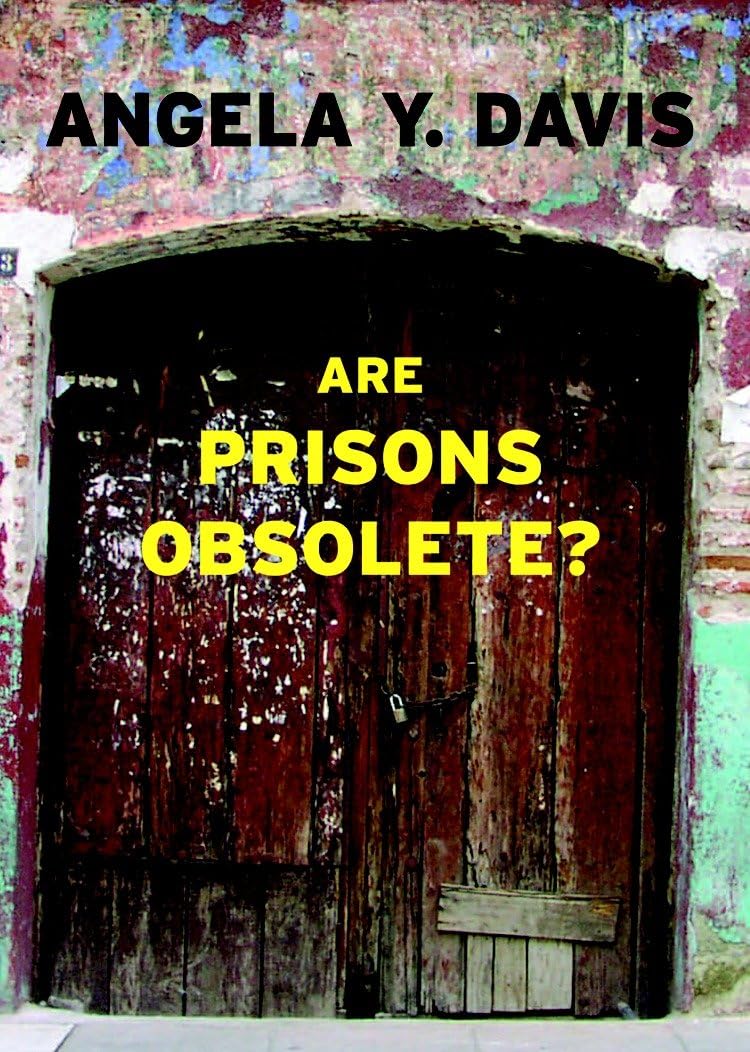
📖 Unlock the truth behind the prison system—because knowledge is the ultimate power move.
Are Prisons Obsolete? by Angela Y. Davis is a critically acclaimed, bestselling book that challenges the foundations of the US prison system. With a 4.7-star rating from over 2,000 readers, this used copy in good condition offers a powerful, eye-opening analysis of mass incarceration, social justice, and policy reform. Ranked top 10 in Government Social Policy, it’s a must-read for professionals seeking to understand and influence the future of criminal justice.
| Best Sellers Rank | #16,533 in Books ( See Top 100 in Books ) #6 in Criminal Procedure Law #31 in Criminology (Books) #111 in Sociology Reference |
| Customer Reviews | 4.7 4.7 out of 5 stars (2,077) |
| Dimensions | 5 x 0.36 x 6.98 inches |
| ISBN-10 | 1583225811 |
| ISBN-13 | 978-1583225813 |
| Item Weight | 3.6 ounces |
| Language | English |
| Print length | 128 pages |
| Publication date | April 1, 2003 |
| Publisher | Seven Stories Press |
U**U
SMART, CLEAR, WORTH THE READ, CRITICAL
The average person in the USA likely thinks like I did for many decades. Prisons are for sociopaths, most deserve at least their sentence, and the death penalty is possible in some cases. Most of all was a certainty that I was not like the jailed. They were law breakers and I was a friend to many cops, sheriffs, troopers, and federal law enforcement. Over years of doing prison work and being an expert witness jobs and experiencing sadist and criminal law enforcement harming others and that includes quality patients I have a few comments that make this book useful. 1) I believe in capital punishment, but NOT in the USA any longer until all aspects of corruption,money making, arrest rewards and stupidity is removed from the place between the scene of a crime to the execution. In those layers is dirt and trash--and as a believer in USA liberty we have fascist cops, lawyers, attorney generals naive as popcorn, and appeals judges in a space suit. DEATH BY STATES WITH HIGHEST PRISON POPULATION ON EARTH, AND MORE PRISONS THAN PAST HUNDRED YEARS IN A DECADE IN SOME PLACES? We have more inmates than the population of many countries. WE HAVE DEATH PENALTY CASES WITH LESS EVIDENCE THAN HEBREW AND CHRISTIAN BIBLE REQUIREMENTS--MAKES FOR A SOBERING READ THAT THE JEWS WERE BETTER IN LAW THOUSANDS OF YEARS AGO THAN THE USA. One needed witnesses and not circumstantial evidence. The witness was the executioner, not someone 300 miles away--this is merely one example. 2) IF YOU ARE A "CHILD" WHO HAS NEVER SEEN A COP LIE OR WRITE A CANNED REPORT MATCHING THE LAST 50, like I was childish and naive, please stop the stupid idealism of my 40's. Some police are dear and loved friends, and some are freaking criminals who deserve jail. If that does not translate, you are not in touch with USA reality. 3) Be honest. Most do not care a dime about jailed people. It will never happen to me. Ha ha ha... We are all a cranky mad cop away from arrest--30 seconds. And I do mean the well off, super educated and very pro-social like me. NO PASS FOR US ANYMORE--WE ARE HATED FOR EDUCATION, INTELLECT, SNOBBISHNESS--REAL OR IMAGINED AND OTHER REASONS. 4) Spend a day in a prison. You will never be the same. You will understand the bill of rights--they do not exist in prisons. YOU DO NOT HAVE TO BE A DAVIS CLONE TO LISTEN TO SMART POINTS! OR DO YOU FEAR OTHER TV OR RADIO STATIONS ALSO? THAT IS ANTI-KNOWLEDGE, AND A DASH FASCIST. In sum, she was right. We have gone from 20% of world inmates to 25%!!!
D**L
Beautiful Voice
What beautiful writing on an argument that is counterintuitive, but convincing! She has changed many minds on the topic, including my own, mobilizing a social justice movement with huge multiplier effects for many underserved communities.
B**Y
Interesting and vital look at the modern prison system
I believe that this is a very important book. In it, Angela Davis puts forth an extremely compelling case for the abolition of the modern prison system. It was a complete surprise to me to learn that the modern prison system (being locked up as the final punishment) is a fairly recent phenomenon that was considered to be very progressive and humane compared to the former shaming, corporal, and capital punishments that were meted out hundreds of years ago. This book focuses a great deal on the intersection of African American history with prison history, which adds a whole extra layer of horror to the way the system works. I'd be very interested to see how the numbers and statistics have changed (or not) in the past 15 years since it was published, but the book is definitely still relevant and informative. It's also easy to read, not dry or dull at all. Very interesting and flows well which makes the reading enjoyable even while the subject matter is often difficult. As a Quaker, prison reform is an important topic in my social circles, but I had never seriously heard anyone put forth the idea that prisons should somehow be done away with. I finished this book with a new perspective with which I wish more people would become familiar. I recommend this book to anyone who's interested or involved in prison reform, African American history, and/or social justice issues in general.
A**R
Interesting and thoughtful perspectives on prison reform
This was a reasonably quick and compact book on prison reform. The book’s strength lies in the contextualisation of incarceration in its broader history in the United States. The book raised many important issues, including: - The privatisation of prisons in terms of ownership and service delivery, and the perverse incentives this can create. - The vulnerability of prison populations (eg the book gives the example of prisoners who were used for dermatological experiments some of which were deeply harmful to the prisoners’ health) - The link between slavery, convict leases, chain gangs and incarceration. - The gendered dimensions of incarceration. - The racialisation of prisoner populations especially for people of colour who are disproportionately represented in such populations. The last chapter deals with the issue of alternatives to prison. And here, too, the author raises important points, including: - It is too narrow to think of only a single option to replace prisons. We need a multi-faceted approach. - Many think of the alternative to the death penalty as being life imprisonment. But the issues with prisons are so great that it is not necessarily a more “humane” alternative. - Just because it is difficult to imagine society without prisons does not mean it isn’t feasible. There are many things that once seemed permanent and necessarily so — eg slavery. - Horses for courses. Different solutions are needed for different types of offences. Some examples included decriminalisation of drug use, prostitution etc. - We need to address the root cause of criminality, including poverty, failure to provide mental health services, failure to provide services generally to the poor. - We need to think more time terms of reparation than punishment. I think this book did a very good job of introducing some general themes. I think some of its points could have been supported by more research and examples. I think the last chapter was important but it probably covered too much ground. It would have been good to have a longer section on alternatives to prison. This is especially because if you are open to the idea that prisons may be obsolete, the next question is what can either take the place of prison or how would you make punishment for criminal offences (which would otherwise have justified a prison term) no longer necessary? This is eg we can move to reparative models of justice. The author uses the example of the parents of a murdered daughter, who befriended and even came to love some of those who murdered their daughter. This was an enjoyable book given its length but I think it could have benefited from more research and also a more coherent theme to tie the individual chapters together. I thought the book did a good job of explaining why prisons have a lot of problems, but there needed to be more explanation of why the answer is to do away with prisons altogether. I would recommend this book to those who are interested in the US criminal justice system. This was interesting to read given my recent reading of the Sun Does Shine, written by a black man on death row for three decades for a crime he did not commit.
M**N
Um bom livro.
Z**N
Great book. I started this book unsure of where I stood on the topic but by the end of chapter 1 I wanted all prisons gone. It examines the nature of prison through so many different lenses (racism, feminism, class struggles, etc.). It’s short and very easy to read which I appreciated as it draws from so many historical texts, and lots of other writings around prison to inform. It is also very insightful as to the history of prison, how it was formed and why.
V**A
A fantastic read about how the prison system has been used for capitalistic greed
C**N
This book helps the reader get rid of some tough received ideas about the system of confinement as THE form of punishment and gives a pretty great analysis of the prison industrial complex. A must read !
S**H
An eye-opening book! Must read for people who are interested in Criminology. Davis explains how corporate interests and the penal system is interconnected in a toxic way and exposes the lie of justice through punishment.
Trustpilot
Hace 3 semanas
Hace 1 semana