We remain fully operational. Our teams are working around the clock to ensure your deliveries continue safely.

Descargar la aplicación


Servicios al cliente
Sobre nosotros
Copyright © 2025 Desertcart Holdings Limited
Descargar la aplicación
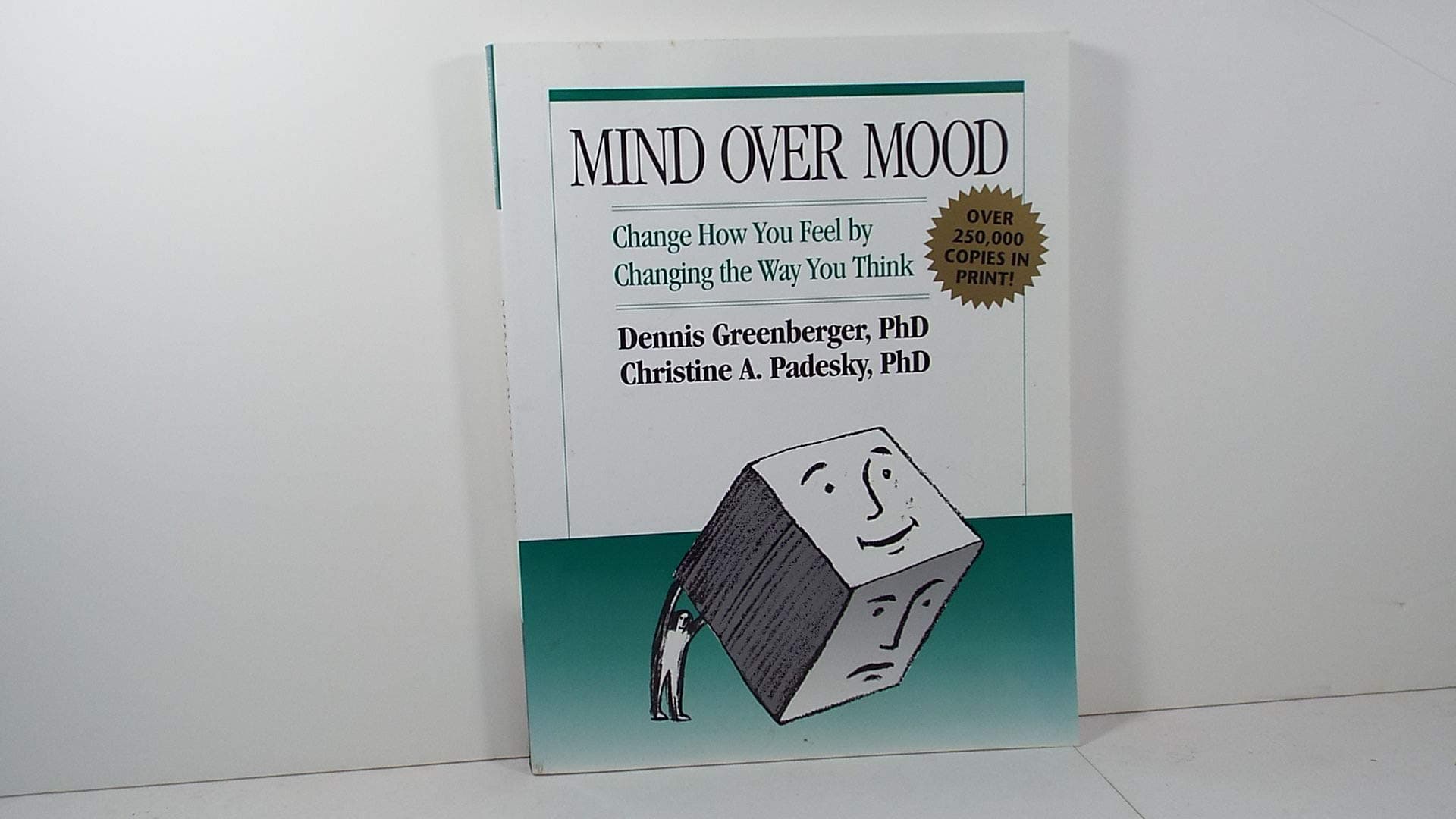
Mind Over Mood: Change How You Feel by Changing the Way You Think: 8601404207419: Medicine & Health Science Books @ desertcart.com Review: A great book - lives up to its title - A great book - lives up to its title. I've read half a dozen or more books on battling depression and anxiety. I must confess I've not completed the book but I'm very intrigued. This is the freshest approach to the topic I've seen thus far. I believe it will help a lot of people as long as they do the exercises and perhaps with the mentoring of a licensed counselor. This book tells the stories of actual people and their journey through their broken states. There's 5 or 6 people that all have differing and unique backgrounds that shows how their lives were damaged and how they address their emotional triggers and recovery. The authors take us step-by-step in understanding these patients' conditions; their altered perspectives, their thought processes, and the reasons behind their personal views and triggers. And with these case studies the reader is taught how thoughts, moods, environment, events influence each other and ultimately drive specific feelings. This is how the authors teach us "Mind over Mood". Cognitive therapy is a powerful and useful method but I suspect many patients give up because it takes a lot more effort than pharm-therapy. The reader/patient must take full ownership of the process and then not quit. I don't recommend this book for a novice reader or a person who just wants a couple of quick fixes to feel better. This book addresses real pain and real problems. I do recommend this book, however, for people who have tried other books and counseling and only felt educated; not healed. I believe this book can bring broken people real and lasting healing. Review: An Excellent Source for Cognitive Behavioral Intervention in Therapy - As a clinical social worker and marriage and family therapist, I have been using "Mind Over Mood" with my clients for close to a decade. It is an essential part of therapy for a certain portion of my patient population who respond best to a cognitive behavioral approach. I have found no other resource that comes close to this in its efficacy, clarity, and outcome. The basic premise is very simple - - our physical reactions, thoughts, moods, behaviors and environment are all connected. The workbook starts with helping clients to understand their problems. They are then taught to identify the underlying thoughts and moods that contribute to these perceived problems. They are shown how some of their thoughts and feelings are automatic but that there are alternatives and options for change. Utilizing what is called a "Thought Record", clients are able to record and analyze situations or events that create anxiety or depression. Then, along with their therapist, they can examine triggers and ways to develop more balanced thoughts which end up improving their mood. I highly recommend this book for any therapists who practice cognitive behavioral therapy. I took a course with Christine Padesky, one of the authors and that was very helpful. However, Clinician's Guide to Mind Over Mood is very helpful and should be sufficient for any seasoned therapist.
| Best Sellers Rank | #333,489 in Books ( See Top 100 in Books ) #388 in Medical Psychotherapy TA & NLP #486 in Social Work (Books) #729 in Cognitive Psychology (Books) |
| Customer Reviews | 4.3 4.3 out of 5 stars (1,129) |
| Dimensions | 8.75 x 0.75 x 11 inches |
| Edition | First Edition |
| ISBN-10 | 0898621283 |
| Item Weight | 1.1 pounds |
| Language | English |
| Print length | 243 pages |
| Publication date | March 15, 1995 |
| Publisher | The Guilford Press |
K**7
A great book - lives up to its title
A great book - lives up to its title. I've read half a dozen or more books on battling depression and anxiety. I must confess I've not completed the book but I'm very intrigued. This is the freshest approach to the topic I've seen thus far. I believe it will help a lot of people as long as they do the exercises and perhaps with the mentoring of a licensed counselor. This book tells the stories of actual people and their journey through their broken states. There's 5 or 6 people that all have differing and unique backgrounds that shows how their lives were damaged and how they address their emotional triggers and recovery. The authors take us step-by-step in understanding these patients' conditions; their altered perspectives, their thought processes, and the reasons behind their personal views and triggers. And with these case studies the reader is taught how thoughts, moods, environment, events influence each other and ultimately drive specific feelings. This is how the authors teach us "Mind over Mood". Cognitive therapy is a powerful and useful method but I suspect many patients give up because it takes a lot more effort than pharm-therapy. The reader/patient must take full ownership of the process and then not quit. I don't recommend this book for a novice reader or a person who just wants a couple of quick fixes to feel better. This book addresses real pain and real problems. I do recommend this book, however, for people who have tried other books and counseling and only felt educated; not healed. I believe this book can bring broken people real and lasting healing.
B**Y
An Excellent Source for Cognitive Behavioral Intervention in Therapy
As a clinical social worker and marriage and family therapist, I have been using "Mind Over Mood" with my clients for close to a decade. It is an essential part of therapy for a certain portion of my patient population who respond best to a cognitive behavioral approach. I have found no other resource that comes close to this in its efficacy, clarity, and outcome. The basic premise is very simple - - our physical reactions, thoughts, moods, behaviors and environment are all connected. The workbook starts with helping clients to understand their problems. They are then taught to identify the underlying thoughts and moods that contribute to these perceived problems. They are shown how some of their thoughts and feelings are automatic but that there are alternatives and options for change. Utilizing what is called a "Thought Record", clients are able to record and analyze situations or events that create anxiety or depression. Then, along with their therapist, they can examine triggers and ways to develop more balanced thoughts which end up improving their mood. I highly recommend this book for any therapists who practice cognitive behavioral therapy. I took a course with Christine Padesky, one of the authors and that was very helpful. However, Clinician's Guide to Mind Over Mood is very helpful and should be sufficient for any seasoned therapist.
L**A
A great tool for a visual/interactive user who still likes using paper!
I'm not all the way through. This book was recommended by my counselor. I was definitely skeptical, but I am a very interactive/visual learner, but I love paper/books versus online/simulated learning. So far the activities in the book have kept my attention, and I have found them very useful. In fact, starting with the first one, they've really forced me to sit back and think/dig - they are not just "fill in the blank, pass go and collect $200", you have to take the time and really want to find the answers. The worksheets are at the end of the chapters, for the most part, and relate very closely with the examples that are given, which I feel are very relatable scenarios, which have helped me look back and try to compare my experiences in an effort to complete the tasks so that the overall exercise is useful to me. In addition, I've been able to take the book in to counseling sessions and work on things with my counselor, which has been a great tool as well.
T**.
Helpful insights
This is a great book for those who may want to alter their moods, perspectives, and ability to cope with difficulties. I bought this during a particularly rough time when I was finding it increasingly difficult to remain positive and not allow depression/frustration to interfere with my relationships. I found it very helpful. I think for many people this book will provide an alternative to using medications-it may help some people to cope with mild to moderate stress or depression on their own. The authors are very present in the book and you feel like you have completed a counseling session after doing the exercises. I really liked that it taught me how to recruit my own strength to get through tough times. I feel like it helped with some difficult relationship issues as well-because it taught me how to approach certain situations more effectively. I will keep it and review as needed because it makes me feel like I'm strong and capable. Even when things are tough, I can still control my reactions.
B**N
Great Introduction to Cognitive Therapy
This book is one of the top 3 books I have recommended over and over during the last decade to my psychotherapy clients. It is a simple (but not simplistic) and practical workbook for those wishing to learn the techniques of Cognitive-Behavioral Therapy and apply them to their daily lives. The case studies/examples help clients make the necessary connections between the concepts taught in the book and how to apply them personally. The "Thought Record" forms described in detail and included in the book show exactly how to practice the cognitive techniques that research has demonstrated to be very effective in changing upsetting emotions and behavior. This workbook is helpful for people dealing with a number of different issues: anxiety, depression, loss, or anger, and it is unusual to find a single resource that addresses all those issues. This is an outstanding resource!
E**R
J'ai achete ce livre pour un ami qui souffre et il me dit qu'il le trouve tres bien. J'ai utilise des livres de ce genre deja et ils m'ont beaucoup aide aussi.
S**E
Firstly, I understand there is now a 2nd edition out so you may want to have a look at that. I bought this book to study while on a Level 5 CBT course. I am already a professional counsellor working from a Cognitive Behavioural approach. This book is written to supplement CBT for a client. It is meant to give the therapist a structure to work to and the client a reference and enlargement of what was said in therapy. Arguably, if the therapist is experience neither of these is necessary. However, if the therapist is still gaining their confidence this book in invaluable. This book is about applying the skills of CBT in practice. If you want theory, there are better books out there i.e. Cognitive Behaviour Therapy - Basics and Beyond, Judith S Beck. However, if you feel the theory books are great for passing exams but not so good for actually applying the skills, this book is written for you. This book will inform you, step by step, in clear and simple language, how to apply Cognitive Behavioural Therapy. It is not a substitute for a reputable therapy course (for would be Therapists) nor do I think it should be used as a self help book without the guidance of a qualified Counsellor/Therapist.
S**N
This is by far the best practical book on CBT out there. I use it frequently and has been a significant help for patients. Excellent!
V**R
Useful book..
J**Z
This is more then a book, its a hands on way to continue or begin proper CBT therapy. I highly recommend this book to anyone who wants to figure out why they think the thoughts they do, how to properly interpret them and best of all how to create positive ones. Its written in such a way that is easy to comprehend even if you have no experience in Cognitive Behavioural Therapy (CBT).
Trustpilot
Hace 3 semanas
Hace 1 mes