We remain fully operational. Our teams are working around the clock to ensure your deliveries continue safely.

Descargar la aplicación


Servicios al cliente
Sobre nosotros
Copyright © 2025 Desertcart Holdings Limited
Descargar la aplicación
Buy anything from 5,000+ international stores. One checkout price. No surprise fees. Join 2M+ shoppers on Desertcart.
Desertcart purchases this item on your behalf and handles shipping, customs, and support to Argentina.
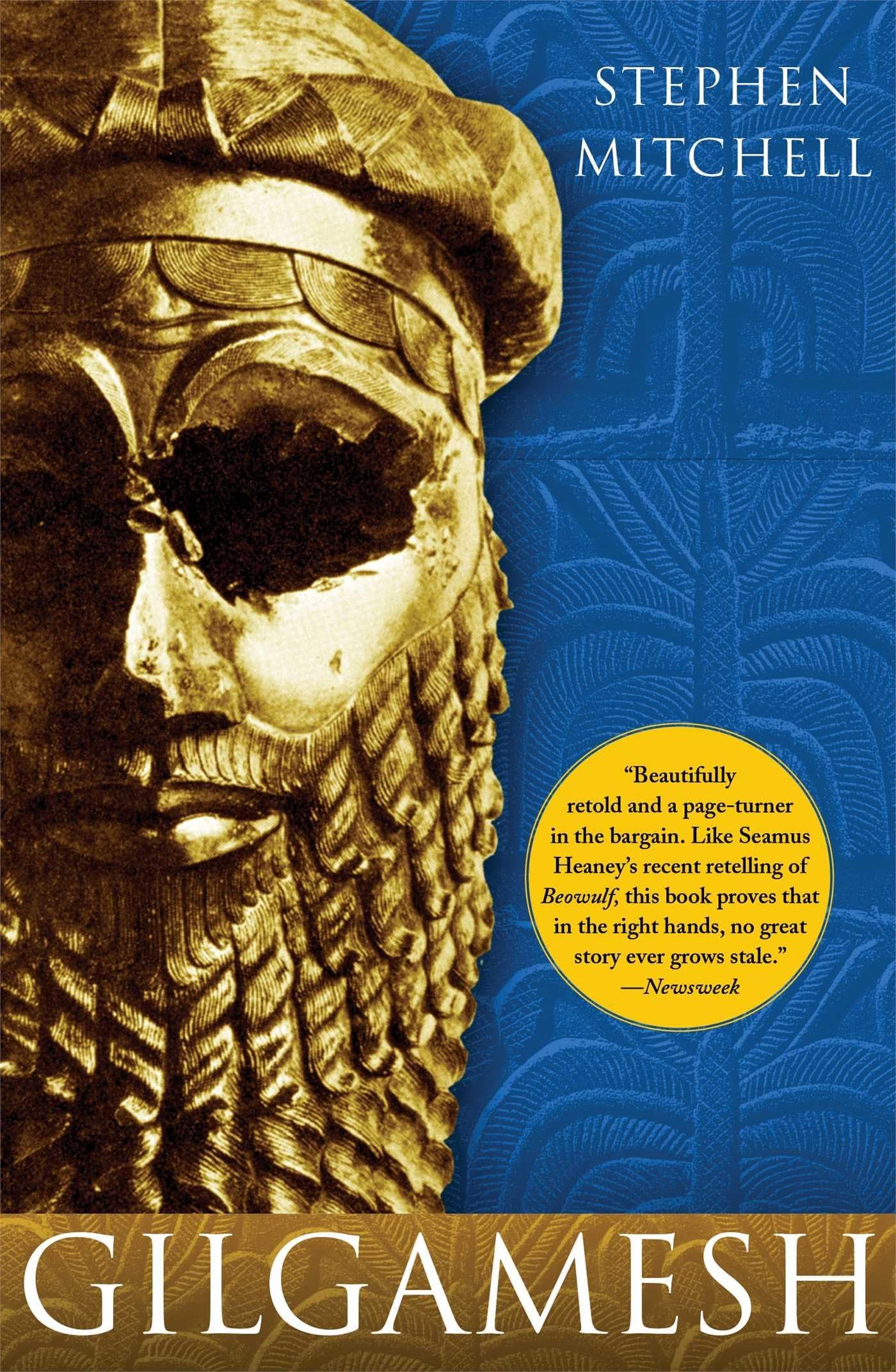
desertcart.com: Gilgamesh: A New English Version: 9780743261692: Mitchell, Stephen: Books Review: A non-specialist's humble opinion: stop browsing and read this version! - The Epic of Gilgamesh is a classic work of humankind, a tale rich in adventure, sensuality, and psychological depth and complexity. The narrator reaches out and grabs the reader immediately by inviting him or her to look around the mighty city of Uruk, to observe its walls, temples, and gardens (in our mind's eye, if nothing else)--all the works of the man-god Gilgamesh. Yet, our picture of Gilgamesh quickly becomes rather complex--we see him first as a mighty hero, then we see that he is both loved and feared by his subjects, as he fully exercises his sovereign powers. Gilgamesh tames Enkidu, his wild brother in arms, in a rather unorthodox way but in the end we see it is Enkidu who civilizes and humanizes Gilgamesh, who is forced to face his own mortality. Long after the Sumerian civilization ceased to exist and the grand city of Uruk disappeared beneath the sands, through this tale Gilgamesh lives on in the human consciousness--ironically, granting him the immortality he so desperately sought. When I set out to read the Epic of Gilgamesh, I learned that reading *THE* Epic of Gilgamesh is an impossible task--it doesn't exist! As a tale that is perhaps more than 4000 years old and likely started as a story told orally, it has been passed down in a number of versions in various levels of completeness, in a number of different languages, over a span of several millennia. When I browsed the reviews here on desertcart, I ran across a number of comments disparaging this "version" on a variety of points--the author does not speak the original languages of the tale (Sumerian, Akkadian, etc.), he has "filled in blanks" and moved around pieces of the text, etc. Some reviewers have mentioned that "truer" and "more scholarly" versions exist, but given the extremely wide and indeterminate origins of this tale mentioned above, those claims seem about valid as someone claiming to have the "true" recipe for chicken soup. What exactly does that mean, after all? I imagine a comment like that will send a few scholars into apoplexy (if the title of my review did not already), but being an academic myself (albeit in a very different field) I feel it is important to add a healthy dose of skepticism to these claims of the existence of an "original" or "true" story lest one think they are being cheated out of the "real deal" by reading a version such as this one. Likewise, as a speaker and translator of foreign languages myself, I understand the delicate balance (some might call it a trade-off) between staying faithful to the letter versus the spirit of the text--in other words, translation is as much art as it is science. The versions full of brackets and ellipses might be technically accurate, so-called "scholarly" translations of a given intermediate version (such as Sin-leqi-unninni's) or two, but at the same time it is not a faithful recreation of the experience of a Sumerian hearing the tale for the first time. Technical accuracy is easier to quantify than the aesthetic appeal of a given version or translation, but that does not mean that aesthetics are not important--especially for the non-specialist (which I would imagine includes the majority of desertcart shoppers). To that end, I highly recommend Mitchell's version as it gives the best of both worlds. Through copious notes, Mitchell cites where he varies from the older texts and translations so that one may track and compare versions. Meanwhile, he has crafted English verse that cleanly and clearly tells the tale of Gilgamesh better than any "scholarly" or other "non-scholarly" version that I have laid eyes on. His detailed introduction helps set a context for the text, its discovery, its relationship to other texts (such as epics in other traditions, and the tale's similarities with the story of the Biblical flood), and its relevance today. If you are interested in more technically accurate versions of the Epic of Gilgamesh (such as more conventional translations of Sin-leqi-unninni's "standard" version) then by all means explore other versions recommended by the reviewers much more knowledgeable than me in this area. But for people like me--the non-specialist more interested in reading the epic (with a lower-case "e") of Gilgamesh than chasing after the phantom "original" or "true" Epic of Gilgamesh--save yourself the trouble of thumbing through different versions and pick this one up. Review: Great Read - I was looking for the story of Gilgamesh and this is a great edition. It is NOT a direct translation! It is a modern language telling of the story. It is beautiful and engaging. There is great info in this book as well. It has a great introduction to the story at the beginning. Definitely my favorite version of the story!
| Best Sellers Rank | #10,218 in Books ( See Top 100 in Books ) #18 in Epic Poetry (Books) #71 in Folklore (Books) #186 in Classic Literature & Fiction |
| Customer Reviews | 4.6 4.6 out of 5 stars (1,728) |
| Dimensions | 5.5 x 0.9 x 8.44 inches |
| Edition | Reprint |
| ISBN-10 | 0743261690 |
| ISBN-13 | 978-0743261692 |
| Item Weight | 2.31 pounds |
| Language | English |
| Print length | 304 pages |
| Publication date | February 1, 2006 |
| Publisher | Washington Square Press |
C**S
A non-specialist's humble opinion: stop browsing and read this version!
The Epic of Gilgamesh is a classic work of humankind, a tale rich in adventure, sensuality, and psychological depth and complexity. The narrator reaches out and grabs the reader immediately by inviting him or her to look around the mighty city of Uruk, to observe its walls, temples, and gardens (in our mind's eye, if nothing else)--all the works of the man-god Gilgamesh. Yet, our picture of Gilgamesh quickly becomes rather complex--we see him first as a mighty hero, then we see that he is both loved and feared by his subjects, as he fully exercises his sovereign powers. Gilgamesh tames Enkidu, his wild brother in arms, in a rather unorthodox way but in the end we see it is Enkidu who civilizes and humanizes Gilgamesh, who is forced to face his own mortality. Long after the Sumerian civilization ceased to exist and the grand city of Uruk disappeared beneath the sands, through this tale Gilgamesh lives on in the human consciousness--ironically, granting him the immortality he so desperately sought. When I set out to read the Epic of Gilgamesh, I learned that reading *THE* Epic of Gilgamesh is an impossible task--it doesn't exist! As a tale that is perhaps more than 4000 years old and likely started as a story told orally, it has been passed down in a number of versions in various levels of completeness, in a number of different languages, over a span of several millennia. When I browsed the reviews here on Amazon, I ran across a number of comments disparaging this "version" on a variety of points--the author does not speak the original languages of the tale (Sumerian, Akkadian, etc.), he has "filled in blanks" and moved around pieces of the text, etc. Some reviewers have mentioned that "truer" and "more scholarly" versions exist, but given the extremely wide and indeterminate origins of this tale mentioned above, those claims seem about valid as someone claiming to have the "true" recipe for chicken soup. What exactly does that mean, after all? I imagine a comment like that will send a few scholars into apoplexy (if the title of my review did not already), but being an academic myself (albeit in a very different field) I feel it is important to add a healthy dose of skepticism to these claims of the existence of an "original" or "true" story lest one think they are being cheated out of the "real deal" by reading a version such as this one. Likewise, as a speaker and translator of foreign languages myself, I understand the delicate balance (some might call it a trade-off) between staying faithful to the letter versus the spirit of the text--in other words, translation is as much art as it is science. The versions full of brackets and ellipses might be technically accurate, so-called "scholarly" translations of a given intermediate version (such as Sin-leqi-unninni's) or two, but at the same time it is not a faithful recreation of the experience of a Sumerian hearing the tale for the first time. Technical accuracy is easier to quantify than the aesthetic appeal of a given version or translation, but that does not mean that aesthetics are not important--especially for the non-specialist (which I would imagine includes the majority of Amazon shoppers). To that end, I highly recommend Mitchell's version as it gives the best of both worlds. Through copious notes, Mitchell cites where he varies from the older texts and translations so that one may track and compare versions. Meanwhile, he has crafted English verse that cleanly and clearly tells the tale of Gilgamesh better than any "scholarly" or other "non-scholarly" version that I have laid eyes on. His detailed introduction helps set a context for the text, its discovery, its relationship to other texts (such as epics in other traditions, and the tale's similarities with the story of the Biblical flood), and its relevance today. If you are interested in more technically accurate versions of the Epic of Gilgamesh (such as more conventional translations of Sin-leqi-unninni's "standard" version) then by all means explore other versions recommended by the reviewers much more knowledgeable than me in this area. But for people like me--the non-specialist more interested in reading the epic (with a lower-case "e") of Gilgamesh than chasing after the phantom "original" or "true" Epic of Gilgamesh--save yourself the trouble of thumbing through different versions and pick this one up.
D**N
Great Read
I was looking for the story of Gilgamesh and this is a great edition. It is NOT a direct translation! It is a modern language telling of the story. It is beautiful and engaging. There is great info in this book as well. It has a great introduction to the story at the beginning. Definitely my favorite version of the story!
D**L
Very rewarding encounter with our ancient ancestors
A profound and compelling introduction to one of Earth’s earliest works of literature that connects the reader to an ancient history that is still very much our own
D**.
Great starter edition (I think)
My interest in ancient religions lead me to Gilgamesh. This is the Mitchell version, he's unable to read or translate from the cuneiform but instead took several literal and not so literal English translations, using them he created his own "version". From reading other reviews this has lead to mixed opinions, it seems that he was very loose with the translations and being so free bothers some of the purists. For me personally, I don't mind a very loose rendering, I plan to follow this up with the Andrew George edition and I got this easier to read version as a sort of commentary. The introduction on this edition is some what long about 65 pages and he gives the entire plot summary for Gilgamesh, so if one is worried about spoilers then this should be saved for the end. I read it first and knowing the plot before hand didn't seem to hurt my opinion of the story. Most of the end notes are the more literal translations of certain passages that Mitchell was very free with, I read them but since I'm about to read another edition, I don't think it was worthwhile. As for the Epic of Gilgamesh itself, it was a great read. The version was very easy to read and the story itself was pretty interesting. I got way more into this one that some of the other early texts I've read. I think the most common thing known about Gilgamesh is that it contains its own version of the flood. Of course this brings comparisons to the Genesis account of the flood and the two stories are surprisingly similar, even down to both Noah and Utnapishtim sending out some sort of bird to see if the land was yet dry. One of the main differences between the two is that the boat in Gilgamesh is smaller and cubed, which reminded me of one Genesis commentary I read/heard which pointed out that the boat in Gilgamesh couldn't possibly float so therefore this has to be myth and the Genesis account is the true one, which caused me to chuckle a little. Anyways, the flood account was less than a tenth of this book and the rest was equally fascinating. I'm looking forward to read this one again.
B**Y
Best Translation of the first story.
I got this accidentally. My daughter needed an edition of Gilgamesh for school, and I got this instead of the edition she needed. I am SO glad I did. I have been wanting to read Gilgamesh for years. I got a copy in college, I couldn't make it through. I picked up another copy on some other occasion, I couldn't make it through. Barely got through the first few pages. THIS one... I love it. Easy to read. Easy to follow the story. Plenty of notes in the back where he explains when and where and why he made the translation choices he did. Simply fantastic. Can't say enough good things about this edition.. Well worth reading. It is actually a fun and exciting story once you get past all the scholarly stuff, which is to be expected. Gilgamesh wasn't written as literature, it was an adventure story, and Stephen Mitchell brings it back to it's very, very, very old roots.
F**J
El libro se encuentra en perfecto estado, cumple con lo previsto en un libro.
E**E
A captivating translation, well read and presented. The accompanying author's essay both supported and highlighted the main themes of the epic.
I**M
The best translation that i have come across. It is easy and comprehensible. You do not have to go through it twice or more to to get the drift. The author mentioned that he referred to five or more available translations from the experts in the field before coming up with this book. A must first read if you want to refer to works by other experts in the field of translation.
I**S
Gilgameshが現存する最古の叙事詩であること、物語の原型を示すものであることなどは知っていたが、いかめしくて古くさい、いかにもという翻訳からは、これほどのパワフルな物語であることが全くうかがい知れなかった。友情と、勇気と死に関する、全く古びない英雄物語であり、まさしく物語の原型の一つと納得するとともに、深く感動する。残存する断片をつなぎ合わせなければならないため、どうしてもギャップが生じるようで、そのあたりをStephen Mitchellが捕捉したり、あるいは一部順序を変えたり、異稿をつなぎ合わせたりしている。このあたりは詳細な注釈で説明されている。また、既存の翻訳をもとに再構成していることから、学問的正確さについては疑問があるかもしれない。しかし、それを超えて、今の言葉で、しかも格調高く謡われており、一気に読み切った。広くお勧めします。
M**M
A great interpretation of the classic story. Easy to read and the introduction explains the background to this epic. A must for the bookshelf.
Trustpilot
Hace 3 semanas
Hace 2 semanas