We remain fully operational. Our teams are working around the clock to ensure your deliveries continue safely.

Descargar la aplicación


Servicios al cliente
Sobre nosotros
Copyright © 2025 Desertcart Holdings Limited
Descargar la aplicación
Buy anything from 5,000+ international stores. One checkout price. No surprise fees. Join 2M+ shoppers on Desertcart.
Desertcart purchases this item on your behalf and handles shipping, customs, and support to Argentina.
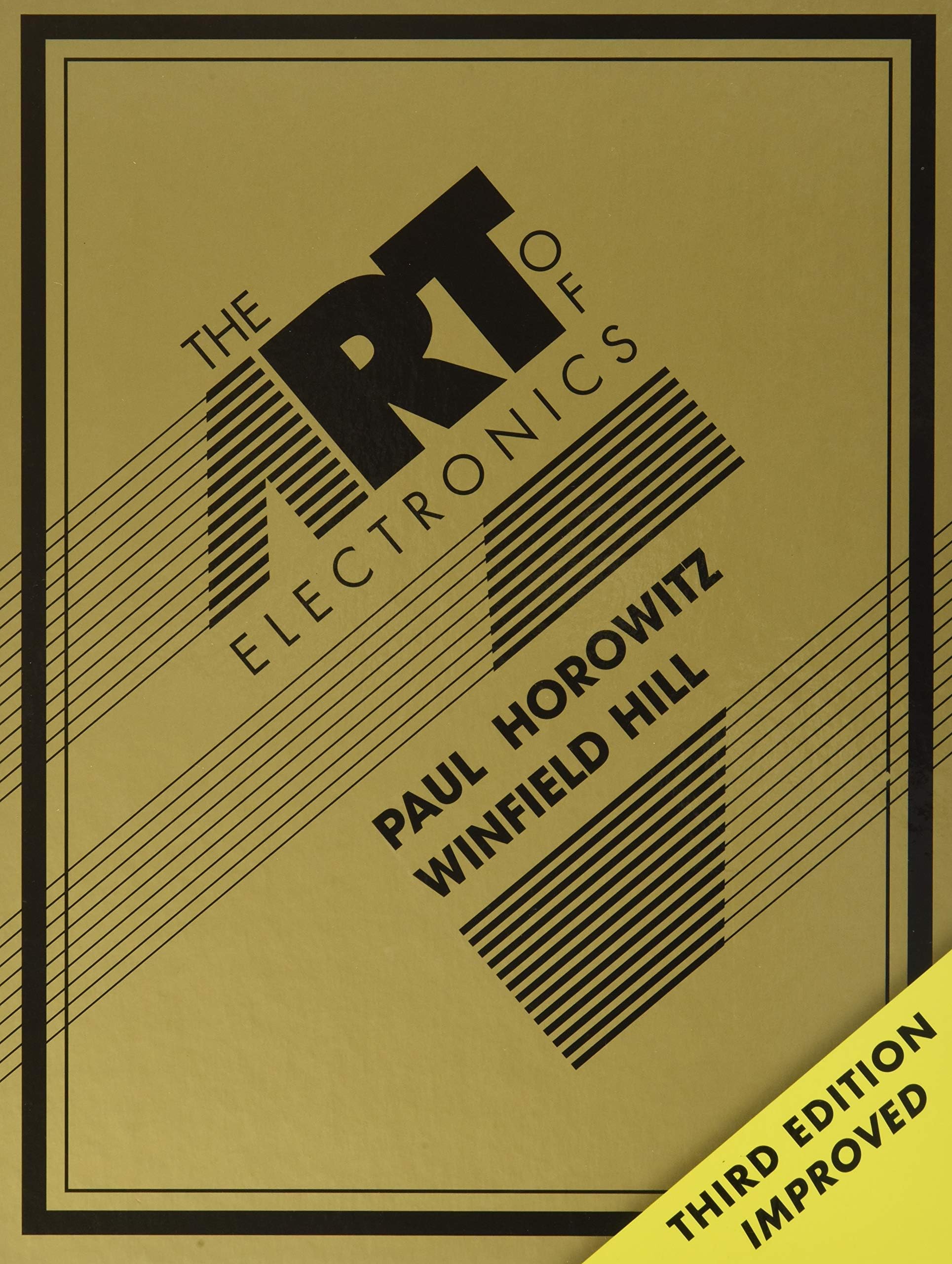
The Art of Electronics [Horowitz, Paul, Hill, Winfield] on desertcart.com. *FREE* shipping on qualifying offers. The Art of Electronics Review: A Must-Have Reference for those aspiring Electrical Engineers - I originally bought The Art of Electronics as a gift for a friend who's into circuit design. After flipping through it before handing it over, I was so impressed that I immediately bought a second copy for myself. It's now one of my most-used reference books in the lab. ✅ Why I Recommend It: Comprehensive Coverage – This book dives deep into core electronics principles, from basic components to complex analog and digital circuits. Practical & Theoretical Balance – What makes it stand out is the blend of solid theoretical grounding with practical application. It’s not just textbook fluff—this is stuff you can really use. Clear Explanations – Concepts are explained clearly, with helpful diagrams and real-world examples. Great for Engineers, Hobbyists, and Students – Whether you're brushing up on fundamentals or designing a complex system, this book delivers. I've used it repeatedly as a go-to reference for both professional projects and personal builds. If you're serious about electronics, this is one of those books that truly belongs on your bench. ⚠️ Disclaimer: This review reflects my personal experience and is for informational purposes only. The Art of Electronics is a technical book intended for readers with some background in electronics. I do not assume any responsibility for how the information in the book is interpreted or applied. Always use proper safety practices and consult multiple sources when working with electrical systems. In short, this book is a classic for a reason. I highly recommend it to anyone looking to deepen their understanding of electronics or keep a reliable reference close at hand. Review: The bible of electronics - Amazing book. It has everything about electronic components and design. Very helpful. It is not so beginner friendly.

| Best Sellers Rank | #25,093 in Books ( See Top 100 in Books ) #7 in Electrical & Electronic Circuits #324 in Textbooks (Special Features Stores) |
| Customer Reviews | 4.8 4.8 out of 5 stars (2,161) |
| Dimensions | 8.27 x 2.6 x 11.42 inches |
| Edition | 3rd |
| ISBN-10 | 0521809266 |
| Item Weight | 5.38 pounds |
| Language | English |
| Print length | 1220 pages |
| Publication date | April 9, 2015 |
| Publisher | Cambridge University Press |
A**G
A Must-Have Reference for those aspiring Electrical Engineers
I originally bought The Art of Electronics as a gift for a friend who's into circuit design. After flipping through it before handing it over, I was so impressed that I immediately bought a second copy for myself. It's now one of my most-used reference books in the lab. ✅ Why I Recommend It: Comprehensive Coverage – This book dives deep into core electronics principles, from basic components to complex analog and digital circuits. Practical & Theoretical Balance – What makes it stand out is the blend of solid theoretical grounding with practical application. It’s not just textbook fluff—this is stuff you can really use. Clear Explanations – Concepts are explained clearly, with helpful diagrams and real-world examples. Great for Engineers, Hobbyists, and Students – Whether you're brushing up on fundamentals or designing a complex system, this book delivers. I've used it repeatedly as a go-to reference for both professional projects and personal builds. If you're serious about electronics, this is one of those books that truly belongs on your bench. ⚠️ Disclaimer: This review reflects my personal experience and is for informational purposes only. The Art of Electronics is a technical book intended for readers with some background in electronics. I do not assume any responsibility for how the information in the book is interpreted or applied. Always use proper safety practices and consult multiple sources when working with electrical systems. In short, this book is a classic for a reason. I highly recommend it to anyone looking to deepen their understanding of electronics or keep a reliable reference close at hand.
K**U
The bible of electronics
Amazing book. It has everything about electronic components and design. Very helpful. It is not so beginner friendly.
D**D
This Book Lives on my Workbench
Overall, this book is really great. It covers a wide range of topics. It presents some relevant theory and historical perspectives. And, it contains schematics of sample circuits and references part numbers of components currently in production. Keep in mind that the 3rd edition of this book was published in 2015 so there are definitely some more contemporary components out there but often they are still made by the same manufacturer. One of my favorite parts about owning this book though is that it has often been quicker, less frustrating, and more illuminating than doing a simple online search when I first sit down to design a circuit. Of course, this statement should be treated with a caveat: I am not a professional electrical engineer. I don't have any educational nor vocational experience in analog electronics, and I'm not designing insanely complicated circuits. Most of what I have learned comes from this book, online forums, and technical datasheets from manufacturers. Because of this, I would say it is an incredibly beginner friendly text for those designing circuits. It does contain math, uses technical vocabulary, and asks you to read a schematic/graph/table, but these are all well labeled, accurately defined, and clearly depicted. I haven't found myself lost because of a simple omission that the authors felt was too obvious to mention nor a poorly defined or ambiguous term. Needless to say, it sits happily on my workbench full of notes and a couple burn marks from my soldering iron.
A**S
Fantastic Book if You're Serious
By far the best professional electronics reference ever written. This has been a classic for as long as I can remember. Countless readers, from hardcore EEs to hobbyists have spent endless hours with this book. If you are serious about learning electronics, it's history and future directions, this is the book for you. You will be able to dive as deep or just skim the surface, it's your choice. I have two things to consider when purchasing this work. First, think about both the hardcopy and eBook offerings. I find having both is a big help. One is the classic form you can sit with and pounder. The other provides rapid search and linking ability so you can jump straight to the web to expand your knowledge. The second point is not so happy. If you suffer from Arduino cancer and can not see yourself looking at an equation or learning what is going on inside the little board in front of you, go learn something on YouTube and come back when you're ready. All in all, if you're serious, this is the right place to start your work.
G**E
The book is well written.
The book is well written, and handles complex electronics information well in an everyday language. The engineer, and the electronics technician should find the book somewhat informative.
G**N
Must have. Instructive and reference. The Bible of electronics.
This is THE must have book if you have any interest in electronic circuit design or need a better understanding of electronics and you don't want to go through a year of calculus first. Whether you're a student, a tech, a maker, an EE major or graduate, a scientist, a part time hobbyist or something else and want to gain an understanding or especially master electronics, then get this book. The shipping was true Amazon Prime fast and the price that was the cheapest I've found. The book is a 1000 page hardcover thing that starts at the component level of introduction and quickly develops into a very accessible compendium of useful how to practical understanding and teaching that it will take what ever it is you are doing and just make you sharper. You know? It's one of those tools that will give you an edge. I find this book is too good to put on the shelf. I like to keep it nearby. For fun, you may want to look up the YouTube interview that the author Paul Horowitz did with Adafruit. The interview will give the history and philosophy and reason for the book in addition to content insight. Fascinating stuff.
A**A
Great book. But received damaged
G**O
LLego en perfecto estado, es un libro "extraño" practicamente no maneja matemáticas eso puede gustar pero se adentra en el funcionamiento de los dispositivos y obviamente el autor consideera que el lector tiene el bagaje mantemático necesario para enternder correctamente. Hace mucho enfasis en el uso de tablas y graficas de características del dispositivo "Datasheets". Es entretenido pero si hay que estudiar alguno otro el de Sedra o Rashid , boylestad. etc
N**E
Um livro que traz dicas práticas de grande valia para quem já tem base teórica e trabalha em projetos e manutenção de circuitos eletrônicos. Resume a maioria de dicas encontradas em "datasheets". Aborda asssuntos correlatos de determinados componentes ou dispositivos, indicando vantagens e soluções de compromisso ("trade-offs"). Penso que seja uma publicação mais orientada a profissionais do ramo, ou então iniciantes que querem dominar o assunto. Acredito não ser muito adequado como publicação para uma sequência didática, e sim para consultas.
D**R
Packaging was really good. No damages in the book. Paper quality is really good. Images (not the circuits) could be better. but, when i compared the book with the kindle edition both seems similar. So, Seems I got Original book. So, happy to start my new journey learning the bible of Electronics. Since thanks to Oggy books who was the seller of this book. Amazon for the amazing package. All the books which I purchased from amazon is in good quality than Flipkart.
D**L
This book is a good read and is very detailed. It is structured well. I find I read my lighter books as an introduction and rely on this one to then fill in the detail. It also helps to come into this book pre-prepared. The book has two siblings. One is a follow along with physical experiments. I have both and they cross reference each other well. The third book is all digital electronics, which I may purchase as I learn more. I have the real books, not e-books and the quality from Cambridge University press is superb. The first book is hard cover and no they don't come cheap. The one serious criticism is that as University type texts, they pose problems to work through. They do NOT provide the worked solutions, so you don't know if you are correct or not. Being picky now - it would look nicer without the horrible yellow triangle on the cover! Otherwise - highly recommended.
Trustpilot
Hace 3 semanas
Hace 2 meses