We remain fully operational. Our teams are working around the clock to ensure your deliveries continue safely.

Descargar la aplicación


Servicios al cliente
Sobre nosotros
Copyright © 2025 Desertcart Holdings Limited
Descargar la aplicación
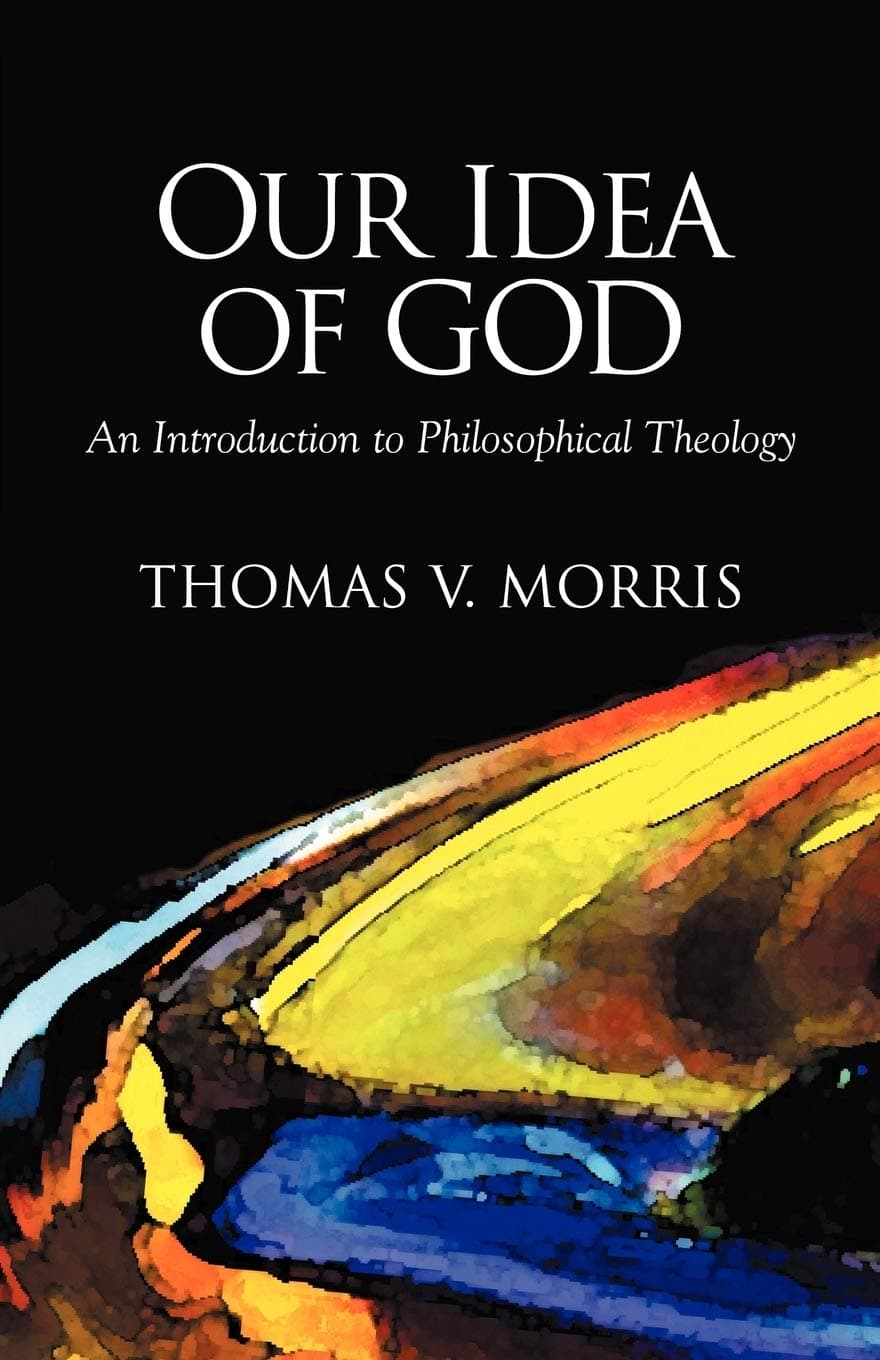
Our Idea of God [Morris, Thomas V., Morris, Thomas, V.] on desertcart.com. *FREE* shipping on qualifying offers. Our Idea of God Review: BEST INTRODUCTION TO PHILOSOPHICAL THEOLOGY - I believe Tom V. Morris' Our Idea of God is the best introduction to philosophical theology out there. It covers the key areas of interest with insight, precision and readability. The section on Divine Simplicity alone is worth the cost of the book. It covers the various issues and the debates associated therewith in a fair and balanced way while at the same time providing the reader with direction and a path forward. Tom V. Morris is an incredibly gifted thinker and writer and Our Idea of God is one more masterpiece in his ever growing collection of writings. I strongly recommend this book. Review: Dr. Morris doesn't disappoint. - An excellent introduction to both philosophical theology and perfect being theology. This work by Dr. Morris will give you a philosophically robust concept of God.
| Best Sellers Rank | #1,813,903 in Books ( See Top 100 in Books ) #2,555 in Religious Philosophy (Books) #21,080 in Christian Theology (Books) |
| Customer Reviews | 4.7 out of 5 stars 22 Reviews |
R**I
BEST INTRODUCTION TO PHILOSOPHICAL THEOLOGY
I believe Tom V. Morris' Our Idea of God is the best introduction to philosophical theology out there. It covers the key areas of interest with insight, precision and readability. The section on Divine Simplicity alone is worth the cost of the book. It covers the various issues and the debates associated therewith in a fair and balanced way while at the same time providing the reader with direction and a path forward. Tom V. Morris is an incredibly gifted thinker and writer and Our Idea of God is one more masterpiece in his ever growing collection of writings. I strongly recommend this book.
S**R
Dr. Morris doesn't disappoint.
An excellent introduction to both philosophical theology and perfect being theology. This work by Dr. Morris will give you a philosophically robust concept of God.
K**R
Our Idea of God
Several recent studies remind us of the perennial importance of "our idea of God," the title of Thomas V. Morris's recent work: Our Idea of God: An Introduction to Philosophical Theology (Downer's Grove, IL: InterVarsity Press, c. 1991). Designed "as an elementary introduction to philosophical theology," this treatise seeks "to provide an example of how some simple, straightforward philosophical methods of thinking can shed light on theological matters which might otherwise remain obscure" (p. 11). And while the "simplicity" of the presentation might be questioned by those lacking some proficiency in philosophy, Morris's stated intent works itself out in this clear and cogent case for theism. First, one must believe God-talk has merit. Morris examines the claims of those who declare that if God's really an infinite Being we finite beings can never understand Him. Certainly the task must be approached humbly; but the use of analogies and symbols, carefully employed by persons created in God's image, offer us hope as we strive to craft a suitable idea of God. "If God is infinite Mind and has brought into existence minded creatures in his image, then it might be expected that those creatures' minds could grasp something of his existence and nature" (p. 25). Not everything, mind you, but something! While Morris acknowledges the value of various ways of thinking about God (e.g. biblical theology or creation theology) he favors "perfect being theology," settling into the tradition of Anselm, who judged God an infinite Being--"that than which no greater can be conceived." At the heart of this theology is this thesis: "God is a being with the greatest possible array of compossible great-making properties" (p. 35). By careful reasoning, one can move from this core conviction to the conclusion that God is "a thoroughly benevolent conscious agent with unlimited knowledge and power who is the necessarily existent, ontologically independent creative source of all else" (p. 40). Given this concept, Morris first explores God's Goodness. In Boethius' judgment, "'The substance of God consists in nothing but in goodness'" (p. 47), and when we think seriously about it we discover "that beneath the surface of this apparently simple affirmation about God lies a surprising wealth of conceptual commitments" (p. 48). After exploring several of them, Morris then turns, in successive chapters, to questions concerning God's Power, Knowledge, Being, and Eternity, offering insights and clarifications in the process. For example, in his chapter on God's Knowledge, he delves into the ancient argument that omniscience effaces free will. After considering some of the philosophical options, Morris suggests that Luis de Molina's notion of "middle knowledge" pro¬vides a clue for thinkers concerned with preserving both divine foreknowledge and human freedom. (Interested in the resolution? Buy the book and study pp. 92-102!) In chapter eight Morris turns to "The Creation." In Genesis 1:1--"In the beginning, God created"--we find "the key to a distinctively theistic perspective on reality. This one statement captures the heart of a theistic world-view." Still more: "it is no exaggeration to add that it is one of the most important truths about God" (p. 138), a truth concisely worded by Aquinas: "'Anything that exists in any way must necessarily have its origin from God'" (p. 139). The metaphysical doctrine of creation must not be reduced to or confused with scientific hypotheses--physics is not metaphysics! "We are seeking a level of understanding distinct from that promised by any application of the methods of the natural sciences" (p. 140). We seek to discern a divine creativity which is at once free, rational, and good--characteristics of a true Creator. Rightly pursued, "the theist can subsume all things distinct from God under the umbrella of divine creation. The greatest possible being will be the most thorough source of reality imaginable. Everything will testify to his greatness" (p. 158). Our Idea of God is one of those books which makes sense the first time you read it--but you know you must re-read and ponder it to fully appropriate the author's treasures. An associate professor at Notre Dame, Morris writes within the context of modern thought. But he is steeped in the ancient Christian tradition as well. In this treatise he nicely illustrates the worth of philosophical thinking within the context of the Christian faith.
B**M
A good summary of theology from one of America's top philosophers ...
A good summary of theology from one of America's top philosophers of religion. Also helps deal with atheistic arguments against God based on his nature.
H**E
Ideas of God
Many Christians have only a faint idea of what God is like. However, knowledge about God is too important to be reserved for experts only. It is crucial to a proper relationship with God and the world. But how do we start? Thomas V. Morris wrote "Our Idea Of God: An Introduction to Philosophical Theology" to provide non-specialists with an accessible introduction to philosophical theology. There are different ways of doing theology or rational discourse about God. For example, systematic theology seeks to integrate diverse biblical teachings on a given topic (i.e. God's power) into a coherent whole. In this book, the focus is to explore a concept of God that is both biblically faithful and rationally plausible. It seeks to do so by exploring theological concepts, presuppositions and their inter-related connections through primarily the methods and tools of philosophical reflections and observations about the universe. The present review would briefly survey how the author has approached the subject and evaluate the degree in which he has achieved his objective. Morris started Chapter 1 as a defense for the possibility that finite beings like us could have a rational discourse about God. Basically, he sought to demonstrate as logically self-defeating the skeptics' assertions that no human concepts or language could apply to the infinite God. How could one `know' that God is utterly unknowable? However, the mere possibility of thinking and talking reasonably about God does not mean we can find sure ground for confidence. In Chapter 2, the author discussed the method of how we could go about doing it. At this stage, he proposed a methodology attributed to Anselm called `perfect being theology' which I would elaborate on later. Subsequently, he put this method to the test in discussing major theistic concepts like God's goodness, power, knowledge, being, eternity and creation. In the final chapter, he sought to vindicate the particularly Christian doctrines of Trinity and Incarnation as logically possible without watering down any of the mentioned divine attributes. The discussion on methodology is the most crucial part of his thesis that deserves further discussion. Firstly, Morris rejected the approach to develop a concept of God from every claimant to divine revelation because it offers no measuring standard for conflicting truth claims. Secondly, he explored the approach of a purely biblical theology. However, the Bible is not a philosophical theology textbook. We may ask legitimate questions for constructing a comprehensive worldview that is compatible with biblical portrayal yet not strictly confined by what it already said. Thirdly, based on the biblical portrait of God as creator, we may also do `creational theology' by inferring a First Cause whose nature would be sufficient to explain the existence of the universe. However, this approach would not tell us much about God's character or how much power is required to do so . Finally, Morris proposed the procedure called perfect being theology. Following Saint Anselm, God is described as `that which no greater can be conceived' or the Being with the greatest possible combination of intrinsically good properties. Some immediate questions that arise would be "What is greater? Is He bigger? Is power intrinsically good?" Morris explained that we would consult our `value intuitions' about what these great-making properties are. Here, he is not referring to some mystical subjectivism but naturally formed belief, `whose acceptance does not derive entirely from linguistic convention, evidence, testimony, memory, inference or sense experience' . For example, we intuitively know that it is wrong to torture babies for fun and that 2+2 = 4. These beliefs should be considered `innocent until proven unreliable'. By consulting our intuitions, could we not arrive at the concept of God as `a thoroughly benevolent conscious agent with unlimited knowledge and power who is the necessarily existent, ontologically independent creative source of all else' ? Although I have some disagreements with the favorable review on Molinism, the methodology itself to be generally helpful to vindicate, augment and develop rationally what biblical revelation has unveiled . The treatments on God's attributes were enlightening to gain a clearer picture on, for example, what we could conceive of omnipotence. Omnipotence doesn't mean that God could actualize contradictions inconsistent with His own nature. The author has succeeded in showing that rational discourse about God is possible and fruitful in refining such ideas. I would suggest that the last chapter on "God Incarnate and Triune" would have immense apologetic value in dialogue with Muslim neighbors in Malaysian context. At least, it would help to remove some obstacles for those who believe that these doctrines are logically impossible. However, I wonder if the perfect being method could even get off the ground if we start by consulting value intuitions. To his credit, Morris recognized that intuitions have defeasible epistemic status. An open theist friend would mistakenly feel that the `ability to be surprised' is a great-making property a relational God should have which would necessarily limit His exhaustive foreknowledge. Could not another person who felt femininity as `intrinsically good' employ the method to construct a goddess instead? If not by revelation, how would we ever be able to intuitively develop a concept of Trinity or Incarnation by proceeding from perfect being theology? Gerald Bray also made this caution, "To conceive of relative greatness is to assume that the scale is open-ended; it will always be possible to conceive of something greater than the maximum" . Although Morris does recognize that perfect being theology could be corrected, complimented and augmented by creational or biblical theology, it seems that we need to be more explicit in incorporating biblical theology as its starting point and controlling presupposition. In summary, the author has been meticulous to argue for his method and applied it in a way that restated the basic contours of classical theism in a way that is sensitive to how these concepts interact with each other. He offered many helpful illustrations to make the abstract ideas more comprehensible to the target audience. Alternative views were fairly presented and evaluated in a concise and incisive manner. I believe that this book would benefit those who would seek to complement devotional fervor with rigorous reflections about our understanding of God and His attributes.
S**O
Superb introduction to Philosophical Theology!!!
Highly recommedable to people interested in philosophy and theology. Its strength lies in clarity and depth, a good combination for a philosophy book. Morris' articulation of many basic philosophical issues in theology is as clear as it can get, (speaking from a theology/philosophy student's point of view). At the same time, its content exceeds way beyond simplistic explanations that fall so short of our expectations. I think that if you have some aquaintance with philosophy (ex, having taken some introductory level classes), you will, with a reasonable amount of effort, find this book immensely satisfying and rewarding. Morris' "Our Idea of God" deals with such topics as (1) compatibility between God's foreknowledge and human freedom, (2) the relationship between biblical theology and philosophy, (3) God's omnipotence and challenges posed against it, (4) Incarnation and Trinity, and many more. Written from a Christian perspective, I believe it can greatly strengthen and further one's thinking of God - which is, to say the least, very very exciting!! I wish I could have read it sooner.
R**N
Very thick
Had to read this for a class. Very thick. The author definitely presented various sides of argument, but always left you wondering which argument he thought was best. Give us some direction, pal! :)
D**.
Morris on Philosophical Theology
This is a very good book. While Morris is not entirely balanced on all parts of the book--e.g. his chapter on God's relationship to time--this is a wonderful work as an introduction to philosophical theology. It's a shame to me that he is not currently writing more on the subject. dp
Trustpilot
Hace 1 mes
Hace 2 días