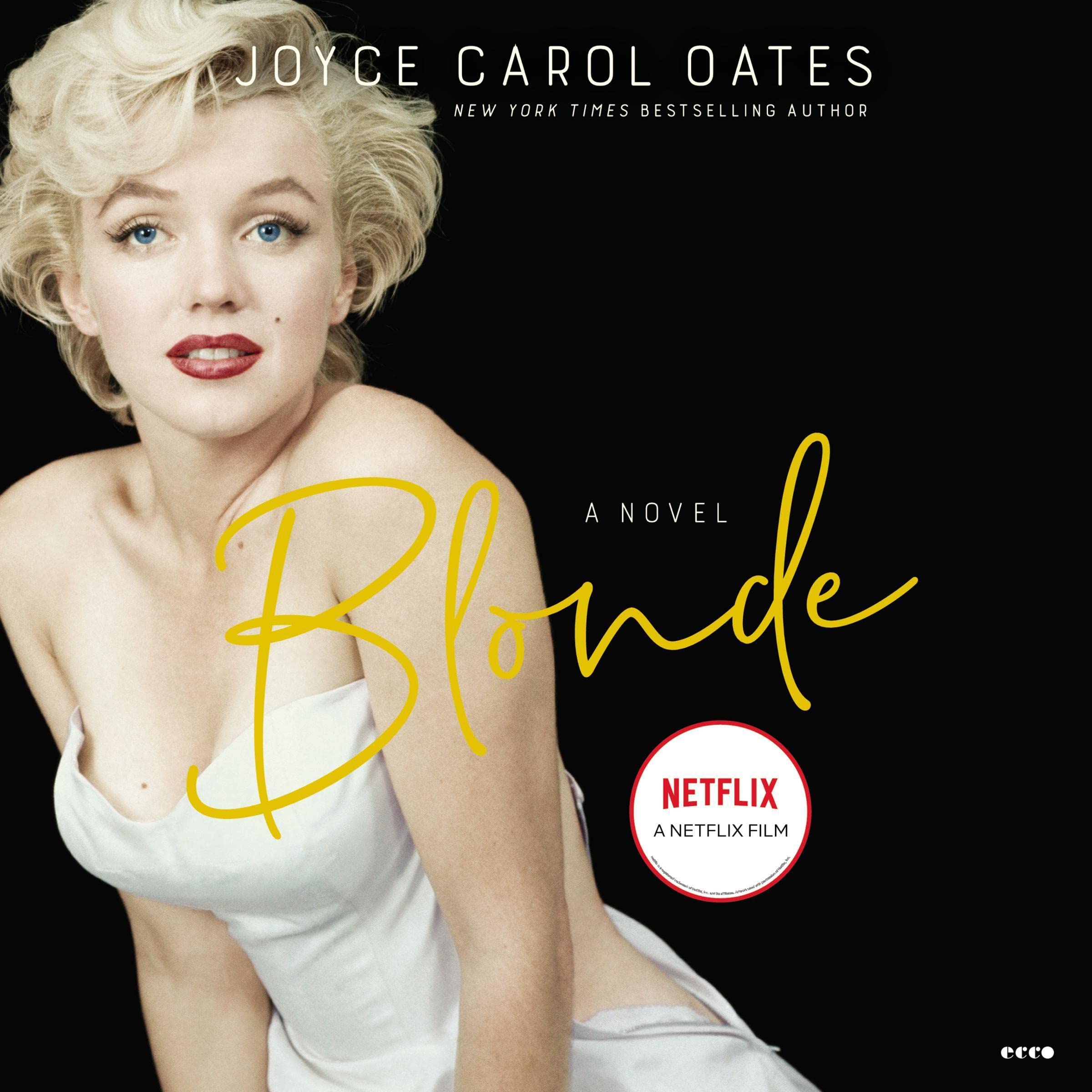
Blonde
J**S
Blonde Ambition
Americans have long had a love affair with our original sexy blonde icon, Marilyn Monroe. Even Billie Eilish these days is channeling Marilyn. After her untimely death in 1962, interest in Marilyn's story peaked again in 1974 when her unfinished autobiography, My Story, was published. The book is an easy, straightforward read from beginning to end, and it details her constant battles with the studio bigshots who unsuccessfully kept trying to get her into bed with them. She called them all “wolves.”Joyce Carol Oates writes the fictional biography, Blonde (2000), in which JCO exhaustively researches the person Norma Jeane Baker and the icon that was 'Marilyn Monroe,' and then tells her story with great imagination and psychological insight. The underlying question in Blonde, and on all the minds of those of us who are obsessed with 'Marilyn Monroe,' is why do Americans still love this busty, flirty woman with the breathy voice and voluptuous hips? Norma Jeane as 'Marilyn' created her own style of stardom, and her movies showcased her casually flaunted sexuality with her seeming inattention to the uproar she created simply by walking onto the movie set. Bus Stop (1956), Some Like It Hot (1958), Let’s Make Love (1960), with Yves Montand, her co-star and apparently at the time her lover, and her last movie The Misfits (1961), filmed while her marriage to Arthur Miller was breaking up, are probably her most famous. She was ambitious and her movie characters prominently displayed that ambition. Michelle Williams was great as Marilyn opposite Kenneth Branaugh in My Week with Marilyn (2011). I'm looking forward to Ana de Armas as Marilyn in the screenplay of JCO's Blonde (not out yet as I write this.) (P.S. It's out now on Netflix, and Ana de Armas is spectacular as Norma Jean's 'Marilyn Monroe').JCO masterfully reveals the innate skill 'Norma Jean' brought to each of "Marilyn Monroe's" movie characters, showing how she inhabited her specific role as an archetypical character, each different, each easily recognizable as a living personality. JCO also reveals the inner character of each of Norma Jean's three husbands, the clueless young buck, the brutal ex-athlete, and the self-conscious intellectual. All eventually mistreated her.JCO's Norma Jean's slow descent into grave abuse of prescription drugs (amphetamines, barbiturates, tranquilizers) and alcohol didn't help matters any, as she began to suffer from insomnia, memory loss, lethargy, lack of mental focus. Indeed, the Studio provided easy access to their Dr. FeelGood for prescriptions, which Norma Jean (and other Studio actors) relied upon to manage the stress and anxiety they experienced when filming. Our pop icons of the 1950's paid a heavy price with eventual loss of their health from addiction to pills and alcohol: Elvis, Brando, Johnny Cash, Ray Charles, and others in addition to Norma Jeane's 'Marilyn Monroe.'In her Author's Note introduction to Blonde written just before 2000, JCO characterizes her monumental work of fiction as 'synecdoche'--the specific for the general--clearly meant among other things to reference the experience 'Norma Jean' had with the Studio system and its horrible sexual exploitation of the young, pretty women who aspired to be in the movies by the men holding absolute power over them. JCO anticipates the MeToo Movement and the Harvey Weinstein revelations by well more than a decade. There are very graphic scenes in the novel of such exploitation (among others, a particular scene with "Mr. Z," and we all know who she is referencing) and the acquiescence of others, including older women, who have positions in the Studio system. They all knew, but no one blew the whistle. At the time, the only way to overcome this institutional exploitation was to become such a popular star in her own right that the Studio had to bend to her will. That, indeed, was what Norma Jeane accomplished. She paved the way for generations of talented, beautiful actresses to practice their craft without having to sacrifice themselves to the creepy, pathetic lust of the powerful Studio executives.
S**R
An interesting take on Marilyn's life
I read this in anticipation of the Netflix movie adapted from this book that is set to be released in September of 2022. This is a fictional biography of Marilyn Monroe's life, taking real elements from her life like the fact that her mother was institutionalized and so she grew up in foster homes, her various marriages and affairs, and blended them with things that the author made up. The author tries to portray the fact that Marilyn and Norma Jean (spelled Jeane in the book) were almost separate personalities, and that Norma Jeane essentially had to "summon" Marilyn to get through her movie roles and appear in public, which accounted for her notorious unreliability. In real life, she was known for making comments like having to "give" people Marilyn, so that Marilyn was a performance she put on. The author extended that to Marilyn being a person that Norma Jeane hated and never wanted to be called in real life. The book also touches on her abuse of prescription drugs and her own mental illness.The book is very long, about 730 pages, and is not always the easiest read. It spans her entire life from when she was a year or two old, to her death in 1962. Interestingly, the author had Marilyn aware that she was going to die and kind of did a dance with maybe she killed herself and maybe she was murdered. There is a lot of sex in the book and if even some of the material that was included about halfway through the book makes it into the movie, it definitely will earn the NC-17 rating.Overall, you have to take the book with a grain of salt. It is not a real biography, which the author admits up-front in the forward, and gives a bibliography for those who are looking for non-fiction books devoted to her life. It definitely has enough real elements that are known about her life, but unless you have really read about her or seen documentaries about her life, it is hard to know what is real and what is made up. So, I would describe it as an interesting take on her life, but nothing that should be taken too seriously.
A**4
Terrifying and wonderful
I have read most of the MM books and by far the best of them is this whirlwind of fiction as fact (or fact as fiction) and remarkably seductive tale of this tragic heroine. You cannot help but feel absolutely compassion and admiration and sorrow for this force of nature that became a goddess. She has become as important and as relevant as any historical character and has defined what America is actually all about, the grandeur the wonder and the emptiness and the tragedy of fame.
R**I
Painstaking reading
I tried my best to finish this but it is just too painstaking to finish. Clearly focused on Monroe and the troubles Norma Jean went through to become Marilyn, it gets into so much detail and gets a bit gross at times that I could not get to the end. Maybe for others who love these type of long character life stories, but this book wasn't for me!
S**A
Stunning read!
A wonderful book on MM - I've read a few - this is easily the best - a real tour de force - so imaginative - hooks you from the first page - highly recommended..
A**R
No existe traducción en español.
Magnífica novela sobre aspectos de la vida de Marylin Monroe.
C**M
Um perfil psicológico de Norma Jeane
Blonde não é uma biografia de Marilyn Monroe; por meio de ficção, a autora traça o perfil psicológico de Norma Jeane enquanto percorremos os acontecimentos que tiveram mais impacto em sua mente e fizeram dela a mulher sensível, talentosa, insegura e autodestrutiva escondida por trás da imagem de Marilyn Monroe. Apesar de longo, o livro é fascinante e muito bem escrito. Recomendo.
J**S
Better off with one of the quality biographies...
This is an odd book - successful novels wear their research lightly, in "Blonde" the researched reality-based characters and scenes were the most engaging especially when the narrative covered the production of each of her movies.The problem with the more creative aspects of the book is that this writing is most heavily weighted at the beginning of the book (when less is known of Blonde's life) and once the writing fails to convince you - then the author has lost the reader.It was unsurprising that Andrew Domink's Netflik's version also failed.The book greatly improved after the first 25%, once JCO was on more solid ground, documenting "Blonde's" career but again, each time Oates lapses into more inventive prose, she immediately loses the reader's attention.I feel that there was a good book in there somewhere but it needed a major edit - with at least 50% of the text needing to be excised.
Trustpilot
Hace 2 meses
Hace 3 semanas